









On the 40th day, the unprovoked, unnecessary, and unilateral attacks on Iran ceased. But the attacks on Lebanon became the deadliest of the unlikely war. Iran maintains that Lebanon was part of the ceasefire agreement arrived at with Washington, but the belligerent allies claim differently. Shipping across the Straits of Hormuz has trickled to a halt, and the fate of the ceasefire remains uncertain. It is unlikely that the truce will collapse entirely; there is too much at stake.
The outcome has ultimately been unclear. This is especially so, given the initially declared endgame that the United States and Israel announced with much fanfare at the beginning of hostilities on 28 February. The strategic objectives of going into war with Iran, as enunciated by US President Donald Trump, have not been met. In fact, the opposite has happened. Iran has appeared from the rubble far more united within, far more resilient outside, with credentials enhanced, spiritually and politically.
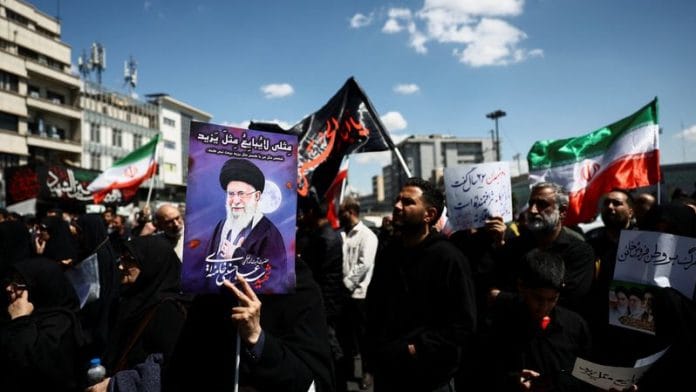
With typically Western operating procedures, Israel and the US pursued a policy of targeting individual political, security, and military leaders in Iran. In most cases, the targets were probably the individuals who were part of Tehran’s negotiating team. This tactic did not make the Iranian government buckle, and instead, the assassinations ended up bestowing martyrdom on those killed. Chief among them was Ayatollah Ali Khamenei. Among the believers, and more so in Shia philosophy, these deaths were a continuity of martyrdom imposed on the believer since the Battle of Karbala in October 680—an elevation from the dreams.
The onset of the ceasefire on the 40th day of the attack is another signal of higher powers that the believers and the atavistic will not miss. A mourning period of 40 days is customary in Islam, especially for Shias, who mourn the lives lost at Karbala. Arbain—forty in Arabic—denotes a pilgrimage, a holiday, and a date to mark resistance against tyranny.
In this light, Trump’s unreal language and justification for war resonate at similar levels of confrontation with an unjust power, elevating the status of those killed by Israel and the US.
Also read: India didn’t just advance its nuclear programme. Here’s a less talked-about breakthrough
Media mightier than military
The conduct of military operations by the two allies followed largely predictable patterns of warfighting first seen during the 1991 Gulf War. It involved waves of aerial attacks against key infrastructure and military targets, with an occasional decapitation strike on an important official. Ground attacks came only after the targeted country had already been pulverised. Iraq and Afghanistan followed this script. But Iran turned out to be a different story altogether—bruised and battered but not defeated. Iran conducted its operations as though it was anticipating the patterns of US-Israeli attacks even before they unfolded. Especially on social media.
The scale of sophistication and speed in Iran’s social media campaign during the war suggests planning that not many could have foreseen. The Iranian message was conveyed on every platform that matters in the US, and in a pedestrian style. The use of Lego imagery suggests a well-coordinated information campaign that raised the bar considerably, blunting US military gains.
Ironically, nobody saw this coming with a sharper foresight than Ali Khamenei. At a Persian poetry event two years ago, he extolled the value of media over missiles.
Iran has been under some form of sanctions since 1979, when university students took some US diplomats hostage at the embassy in Tehran. The pauses have been few and far between. The sanctions were only tightened over the years and could well be the most far-reaching ever. The European Union and the US have their own set of sanctions over and above those mandated by the United Nations. Despite such severe restrictions, the fact that the US largely accepted the ceasefire conditions set by Tehran is an assertion with serious long-term regional security implications.
“We received a 10 point proposal from Iran, and believe it is a workable basis on which to negotiate. Almost all of the various points of past contention have been agreed to between the United States and Iran, but a two week period will allow the Agreement to be finalised and consummated,” read Trump’s Truth Social post.
This, after most of the US troops in bases across the Gulf were moved to safer locations, and its two carrier groups against Iran were anchored in waters more than 1,000 km from the Strait of Hormuz.
Despite severely unequal military and economic conditions, Iran managed to preserve its limited operational objectives. And in the ceasefire agreement, it retained enough of a threat to compel Washington to announce a truce, albeit for two weeks. Given the battering in the markets and serious economic stress caused by the closure of the Straits of Hormuz, it is no surprise that the US accepted Iran’s 10-point proposal. Diplomacy must now take over and finish where the Omani intermediaries had left off. The military can only do so much, as Washington has realised 40 days too late.
Manvendra Singh is a BJP leader, Editor-in-Chief of Defence & Security Alert and Chairman, Soldier Welfare Advisory Committee, Rajasthan. He tweets @ManvendraJasol. Views are personal.
(Edited by Prasanna Bachchhav)