






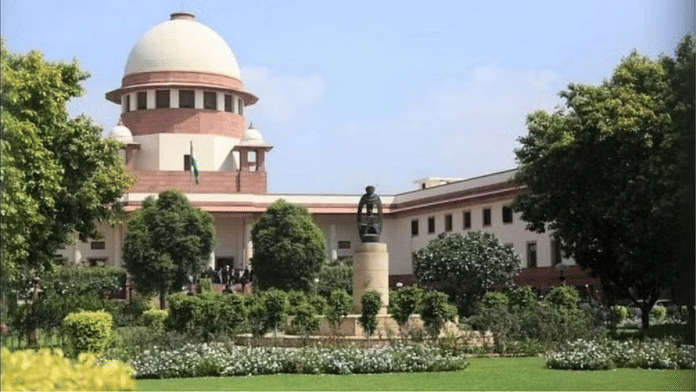



A two-judge Bench of the Supreme Court recently delivered a split verdict on the constitutionality of Section 17A of the Prevention of Corruption Act, 1988. Section 17A requires approval from the appropriate government or competent authority before a police officer can conduct an enquiry, inquiry, or investigation into an alleged PC Act offence relevant to a public servant’s official recommendations or decisions.
In practical terms, the provision binds not only the Central Bureau of Investigation but also the State Vigilance Bureau whenever the PC Act is invoked—with one crucial exception. No prior approval is required in trap or “red-handed” cases involving arrest on the spot while accepting or attempting to accept an undue advantage.
In the 13 January verdict, Justice BV Nagarathna held Section 17A to be unconstitutional. Her reasoning is that the provision blocks scrutiny at the threshold and risks converting an anti-corruption law into an executive-controlled gate, tilting the balance toward protectionism rather than accountability. In her view, the PC Act already contains safeguards (notably, prosecution sanction), making a further pre-investigation barrier disproportionate and contrary to the statute’s purpose.
Justice KV Viswanathan took the opposite approach. He upheld Section 17A in principle as a legitimate legislative filter to protect honest decision-making from malicious or ill-informed complaints. But he simultaneously acknowledged the danger of a conflict of interest when the executive itself decides whether its decisions may be investigated. His solution was institutional: the filter may be retained, but the gatekeeper must be independent—anchored in an ombudsman framework rather than remaining an executive permission slip.
With the Court divided, the matter will now go to a larger Bench. What is at stake is not merely the fate of one section but the design of India’s post-2018 anti-corruption architecture.
Why Section 17A was introduced in 2018
Section 17A was introduced with the 2018 amendments to the PC Act against a backdrop of two decades of high-decibel corruption controversies and the governance paralysis they often triggered.
In complex domains—from procurement to natural resources to taxation—administrative discretion can be attacked long after the event, frequently by aggrieved interests or political successors. The reform argument was that a broad corruption net, combined with complaint-driven preliminary enquiries, had created a chilling effect on decision-making. Officers learned to “play safe”, delay decisions, seek endless cover, or avoid innovation.
Parliament’s impulse was to create a threshold screen—time-bound and limited to decisions taken in official capacity—so that investigative agencies weren’t forced into fishing expeditions on vague or motivated allegations. At the same time, by preserving the trap-case exception, the law sought to ensure that classic bribery detection would not be throttled at birth.
Also read: India’s taxation system needs key reforms. Three suggestions to the Finance Minister
5 recommendations for the larger Bench
1. Define ‘official duty’ without creating a cloak
Section 17A is triggered only when an allegation relates to a “recommendation” or “decision” taken in discharge of official functions. The larger Bench must ensure that this phrase does not become a refuge for plainly unauthorised acts or those conducted outside an officer’s remit. At the same time, it must protect bona fide administrative discretion from being criminalised by hindsight. The workable line is simple: where allegations are supported by specific documents, credible quid pro quo indicators, or a financial trail, the matter should cross the threshold. Where they are vague, speculative, or mere policy disagreements dressed up as corruption, the gate should hold.
2. Insist on accountability from the gatekeeper
The Court must decide who grants prior approval, but it must also prescribe how the decision is made. If the executive remains the gatekeeper, concerns of a conflict of interest will persist. If an independent body is chosen, capacity and procedural congestion will need attention. Either way, the approving authority must operate under minimum constitutional disciplines: a strict timeline, intelligible reasons, and an appropriate scrutiny standard. Above all, approval or refusal must be capable of meaningful judicial review—so the gate does not become a black box.
3. Resolve the federal routing problem for All India Services in state affairs
This is the hardest—and most practical—question. A large part of consequential state-level decision-making is done by IAS, IPS, or IFoS officers serving in connection with state affairs. The text of Section 17A points toward state approval at the front end, but the prosecution pipeline later intersects with sanction practice under Section 19 and AIS discipline architecture, making central involvement unavoidable. Without harmonisation, the result is predictable:Centre-state buck-passing, delay as structure, and politicisation by federal friction. The Bench should therefore articulate a routing principle for AIS cases that prevents both paralysis and single-point political control.
4. Clarify ministers, legislators, and other special categories
Section 17A fits uneasily when the public servant is a minister or legislator, as conventional appointing or removal hierarchies do not map neatly onto electoral office. The Bench should lay down a uniform, principled approach that prevents vindictive criminalisation while also preventing political solidarity from mutating into immunity. This clarity is essential for public confidence: nothing corrodes legitimacy faster than the perception that gatekeeping rules shift with status.
5. Decide the consequence of silence
Section 17A prescribes a three-month timeline (extendable by one month) but is silent on the consequences if the authority simply does nothing. That silence can convert a time-bound filter into an indefinite veto. The Bench should settle whether expiry leads to deemed approval, a mandatory direction to decide forthwith, or another enforceable consequence. The gate must not be allowed to become a deadbolt. Otherwise, agencies and complainants will litigate procedure while corruption allegations—and reputations—remain suspended in limbo.
Vigilance and CBI inquiries—even before an FIR—are often enough to stall a public servant’s career, block promotions, and deny vigilance clearance for empanelment. Once an FIR or CBI RC is registered, search, seizure, and arrest can follow, and proceedings may linger long after retirement, sometimes affecting retirement benefits. Political actors, meanwhile, often suffer no comparable disability during the process and can even convert allegations into electoral capital by alleging vendetta. That asymmetry is precisely why the Supreme Court Bench must ensure that the anti-corruption law remains fair, just, and workable for all stakeholders.
KBS Sidhu is a former IAS officer who retired as Special Chief Secretary, Punjab. He tweets @kbssidhu1961. Views are personal.
(Edited by Prasanna Bachchhav)