






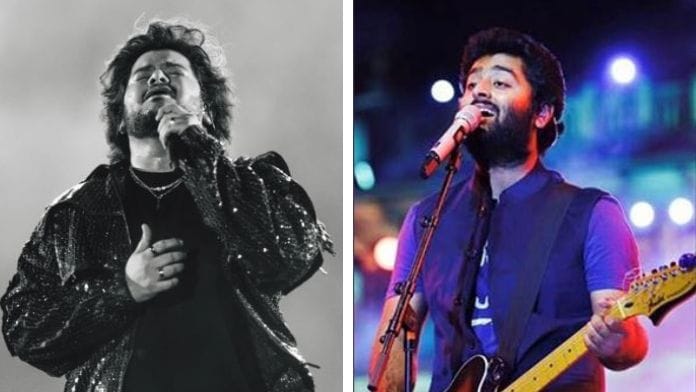



New Delhi: Arijit Singh’s sudden decision to bid adieu to playback singing has left many fans disheartened. The shock, however, like other things in life, will fade with time, forcing the industry and its audience to search for the next defining voice of mainstream Hindi cinema.
Filling the exact space that Singh occupied is no easy feat. For seven consecutive years, he was the most-streamed artist in India and went on to become the country’s most-followed artist on Spotify. He became central to modern Bollywood music and how it was experienced.
Still, if there is one singer who might become mainstream in a post-Arijit landscape, it is 34-year-old Vishal Mishra.
A few hits of Vishal Mishra
Over the past few years, Mishra has steadily climbed the industry ladder, becoming a consistent presence in high-grossing, mainstream films. His work includes songs like “Naacho Naacho” from RRR, “Kaise Hua” from Kabir Singh, “Pehle Bhi Main” and “Yaar Yaaro” from Animal, “Feel of Jailer” from Jailer, “Chal Tere Ishq Mein” from Gadar 2, and “Jaanam” from Bad Newz. These tracks have performed well commercially. And, some of the songs have embedded into the emotional vocabulary of recent Bollywood cinema.
He has increasingly become the voice associated with contemporary heartbreak and romance. Songs like “Kaise Hua,” “Pehle Bhi Main,” and “Janiye” have cemented his image as a singer who understands longing and emotional vulnerability. Much like Singh, Mishra is also a composer and music producer. This gives him a creative advantage—creating the entire song and delivering the emotional tone filmmakers are seeking.
Consistency, too, works strongly in Mishra’s favour. He doesn’t need to build momentum because he already has it. His songs are regularly featured in major film projects and dominate digital playlists. In today’s streaming-driven ecosystem, that sustained visibility matters.
Also read: Arijit Singh’s story is like a Bollywood film — from reality TV shows to the voice of romance
Timing and consistency
There is also a noticeable shift in industry demand.
Filmmakers are actively looking for fresh voices that can replicate the emotion of a deep, soulful song, and also have a little peppy and fun beat to it. Artists like Sachet Tandon, Darshan Raval, Armaan Malik, Jubin Nautiyal, and Stebin Ben are also contributing to this evolving space.
What gives Mishra a slight edge over his contemporaries is timing and consistency. Singh’s retirement comes at a time when Mishra is already riding on back-to-back successes in mainstream Bollywood music.
That said, the shadow of Singh’s legacy looms large. He became the definitive voice of Indian popular music for generations. His fan base is vast and deeply loyal, making comparisons inevitable, and maybe sometimes unfair. Any singer stepping into this space will face scrutiny that has little to do with their individual merit.
Another challenge for Mishra is range. While he excels in soulful and romantic numbers, he has not yet demonstrated the same level of versatility. So far, his work has largely positioned him within the romantic bracket, which risks boxing him into a specific identity.
None of this undermines Mishra’s potential. Rather, it highlights the scale of the space Singh leaves behind.
Arijit Singh may be irreplaceable, but Bollywood still requires a leading voice for mainstream romance. At present, Mishra is their best bet to fill that commercial and emotional demand. Not as a replacement for Singh’s legacy, but as the next dominant presence.
(Edited by Saptak Datta)