






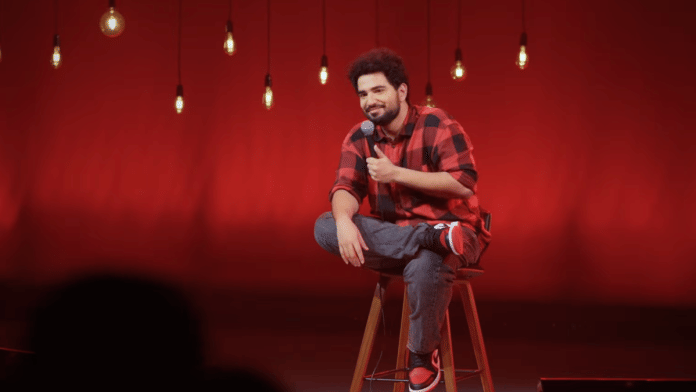



Comedian Samay Raina’s YouTube special Still Alive has found resonance with a peculiar audience—Kashmiri Pandits. When Raina said, “You only fight when the fight is fair, else you f*** off from there. Kashmiri Pandit wisdom,” it struck a chord with the community.
Kashmiri Pandits were forced to leave the Valley in the 1990s, and lived through years of violence, including the massacres of 1998 and 2003.
But what Raina said has deeper roots. When Kashmiri Pandits began rebuilding their lives in Jammu—after years spent in camps and cramped rented apartments—they were often confronted with a question: “Panditji, why didn’t you pick up the gun?”
The questions soon turned into ridicule. For Dogras in Jammu, we were “Kashmiri Lolle”—a slur for “sissy Kashmiris” who left the Valley instead of fighting back. My childhood was inundated with such mockery, directed at my cousins and me.
Kashmiri Pandit boys would be bullied in Jammu while playing cricket. “Aagaye Kashmiri Lolle (Here come the Kashmiri sissies),” was the greeting they received. Many would resort to blows, then return home to ask their parents why they were called such names. These moments were imprinted on the minds of Kashmiri Pandit children as they grew up.
These were first-hand experiences of bullying and shaming for not choosing violence. For not picking up the gun.
For many Kashmiri Muslims, we were “Dal baat”—Pandits who ate dal. The vegetarian dal was shorthand for weakness against the meat-eating, and therefore supposedly stronger, Muslim identity.
In this deeply masculine worldview, bravery and honour were inherently tied to violence. And saving one’s life, or the life of one’s family and community, was seen as cowardice.
Also read: Amitav Ghosh wants to fight climate change with faith, not reason
‘Still alive, still rocking it’
So when Raina spoke about a “fair fight”, it made sense. As a Kashmiri Pandit, he was right to say:
“If we had picked up arms and fought, we would all be dead. Today, videos would have been made on our bravery. Akshay Kumar would have played some Kashmiri Pandit… I am so glad Kashmiri Pandits fled overnight. Today, they are still alive, still killing it, still rocking it wherever we are.”
Several Kashmiri Pandits shared the Reels, writing, “Proud to be a Kashmiri Pandit.” Others called it “an era of Kashmiri Pandits”.
Pandits were barely five per cent of the Kashmiri population. It was never a fight of equals; it was a question of survival.
Our names were blared from the loudspeakers of mosques, along with slogans against us. Posters with the names of men and families—a hit list—were pasted on neighbourhood electricity poles. Our women were kidnapped, raped, and killed. Twenty-seven-year-old Sarla Bhat’s body was thrown in the street with marks of cigarette butts on her wrists.
There were only two choices: pick up the gun and risk the decimation of an already small community, or leave—and live.
We chose the latter. Today, Kashmiri Pandits are alive to tell their story.
Views are personal.
(Edited by Prasanna Bachchhav)