






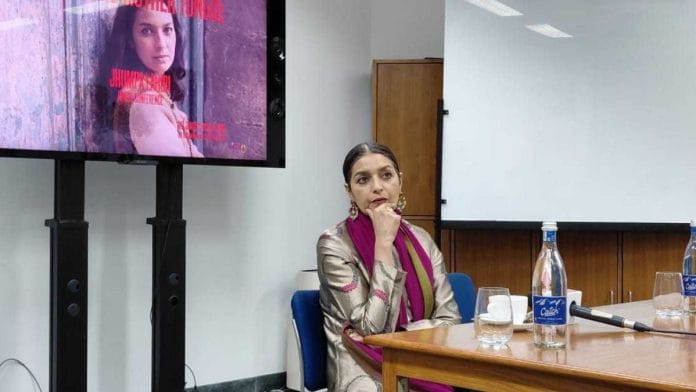



I am writing this now not out of literary nostalgia. But after listening to author Jhumpa Lahiri speak about language and names in Delhi recently, an old grief suddenly turned uncomfortably current for me. The way she spoke about how a name can fail to hold you, and how a language can remain foreign even after a lifetime of use, landed differently in a world that is newly obsessed with identity, origins, belonging, and loyalty.
I first read Jhumpa Lahiri’s The Namesake as a student in Calcutta, long before I began editing other people’s words for a living, and long before I understood how deeply a name can script a life. I remember thinking, with a mix of recognition and embarrassment, that Gogol’s discomfort with his name was excessive. Surely a name was only an inconvenience, I told myself. Surely identity had sturdier foundations.
I was wrong.
What Lahiri writes about in The Namesake is not merely the oddness of a Russian writer’s name sitting awkwardly on a Bengali-American boy. It is the deeper humiliation of being misread before you have even spoken; of having your first introduction to the world carry confusion, explanation, and correction.
My ‘foreign’ name
Growing up in Calcutta, I had a different problem. My name was Stela. A Latin-origin name with roots in Italian, unmistakably foreign and ornamental in a city where names usually announce region, religion, caste. In school registers, in classrooms, in roll calls, and even family gatherings, my name always arrived before I did, and it arrived carrying questions.
“Is it your real name?”
“What is your religion?”
“Do you have a Bengali name?”
Sometimes, no one was trying to be cruel. But over time, the questions began to feel like small border checks. And the fact that my name was ‘foreign’ and had an even more unique spelling, didn’t help.
Like Jhumpa and her protagonist Gogol, I grew up learning early that a name is not neutral. It signals how much explaining you will be asked to do. It can turn something as ordinary as introducing yourself into a performance of origin.
Calcutta is intimate with language. It listens closely; accents are noticed, vocabulary is weighed. The way you pronounce your name can betray more about you than you intend. My ‘foreign’ name floated awkwardly over a life that was otherwise firmly rooted in Bengali culture, Bengali music, and Bengali social rhythms. It made me feel, irrationally but persistently, like I was failing to match the story people expected my face and upbringing to tell.
And slowly, that unease slipped from my name into my language.
What does it mean to have a mother tongue when your public voice increasingly belongs to an “other tongue”? What does it mean to write, argue, report, and edit in a language that is not the one in which your earliest emotions were formed?
Listening to Lahiri in Delhi, the politics of language stayed with me and with it something more intimate: the idea that language can remain foreign even after a lifetime of use, and that even one’s “own” language can fail to offer complete refuge.
Because of my name, I felt I never belonged to my culture. I learned to argue in English, to persuade in English, to write in English, and even think in English.
And yet, the emotional precision of Bengali — the sharpness of its humour, the intimacy of its anger, the texture of its silences — never quite transfers. I realised that much later after moving away from home to a city where my mother tongue was alien and so was my name.
Also read: I was nervous about speaking my parents’ language Bengali, says Jhumpa Lahiri
Liberation and limitation
Like Lahiri describes, there were years when I did not have the vocabulary to name what this fracture was doing to me. The vocabulary exists now. We speak fluently of hybridity, migration, displacement, and linguistic identity. We know how to describe the feeling of living between languages.
But naming it does not resolve it.
A name, after all, is also a language. It is the first word that represents you. When that word feels mismatched, you begin to second-guess the fit of everything else: the place you occupy, the voice you carry, the loyalties others assume.
Changing your name, like Gogol did, will not dissolve the unease. The problem is the fractured inheritance of migration itself — the impossibility of translating belonging cleanly across generations and geographies.
My name never changed. But the tension it created trained me to live with misalignment — to accept that parts of me would always arrive slightly out of sync with expectation.
Writing in English, today, gives me reach, authority, and professional survival. But it also carries a quiet loss. It means accepting that some emotional registers will always remain untranslatable in my public life. It means learning, like Lahiri has, that language can be both liberation and limitation.
A mother tongue, I learnt from Jhumpa, is not just a language you speak. It is the language you retreat into when no audience is watching. It is the language in which grief and joy do not require explanation.
And a name is not merely what you answer to.
It is the first negotiation you make with the world over who you are allowed to be, and how much of yourself you will be asked to justify.
Views are personal.
(Edited by Aamaan Alam Khan)