






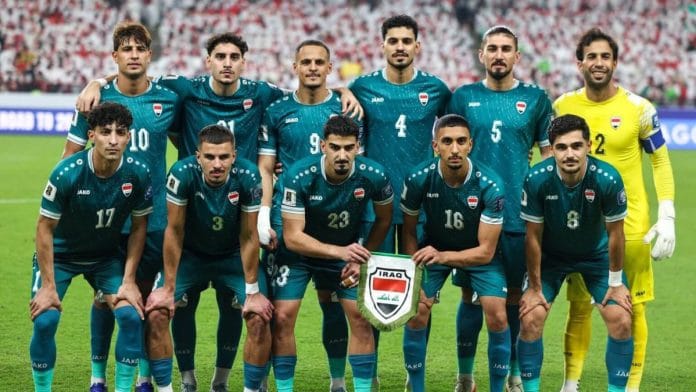



The football team of Iraq on 1 April defeated Bolivia 2-1 to secure its place in the 2026 FIFA World Cup, scheduled to be held in 16 cities across the US, Mexico, and Canada. The Lions of Mesopotamia qualified for the tournament after 40 years. Notably, from this year, the usual 32-team tournament will feature 48 teams.
However, this article is not about analysing Iraq’s game or how they got lucky this year, as eight teams are now allowed to qualify from the Asian Football Confederation (AFC), compared to four in the 2022 World Cup held in Qatar. Instead, let’s take a look at the team’s achievement despite being a war-torn country.
Iraq has been caught in the crossfire as the US, Israel, and Iran remain locked in a conflict. According to Iraqi health officials, as of 5 April, at least 109 persons have been killed, and dozens have been injured in Iraq. Despite being in such a state for four decades, Iraq’s men’s national team qualified for the world’s biggest football tournament. It did not stop at that; thousands of supporters thronged the streets of Baghdad with Iraqi flags to celebrate and praise the nation’s triumph.
The celebrations were impromptu. Nobody guided them to celebrate in that manner. Yet, they came out of their houses in dozens amid a war and celebrated — for only one game. Streets that have often witnessed grief and tension turned, if only for a few hours, into spaces of unfiltered joy. Flags replaced fear, chants drowned out sirens. For many, this was not just about reaching a tournament; it was about reclaiming the right to celebrate — celebrate with pride.
This proves that for the Iraqis, this is more about football, it’s a story about survival, it’s an act of defiance. And, this is football. Historically, the game has been used as a lens through which political anger, identity, and resistance come into focus. From Mohun Bagan to Didier Drogba’s Ivory Coast, this claim can be easily cemented.
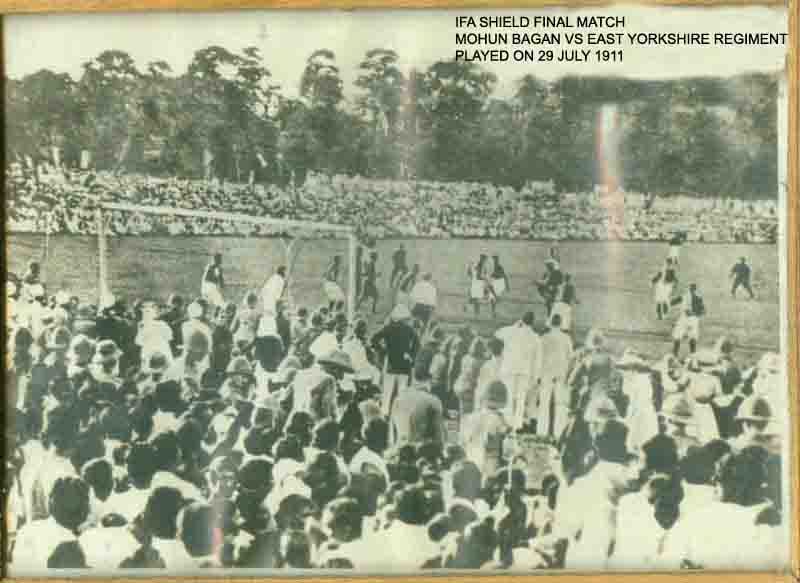
When Mohun Bagan defeated the East Yorkshire Regiment in 1911, the moment became more than just winning a shield and a victory on the pitch. It became a language of protest against colonial atrocities. Decades later, Drogba chose football to bring peace during the Ivory Coast Civil War, helping momentarily bridge a fractured nation. Not once, but time and again, football has proved itself that it’s beyond sport. It became a language through which nations voice themselves to secure their identity and counter a conflict.
Also read: Mo Salah changed Liverpool beyond football. Hate crimes dropped by 19% after he joined
40 years of wait
Iraq last qualified for the FIFA World Cup in 1986 — another year the country was embroiled in a conflict. The Iran-Iraq War forced the national team of Iraq to play its home matches on neutral grounds.
There’s a similarity when Iraq qualified again this year. Nearly four decades later, the circumstances may have changed, but the instability has not disappeared. And, once again, football emerged victorious, and Iraq has found a way to endure through the game.
The war then did not stop the men from marching toward the FIFA World Cup. The war now, too, could not stop the Iraqis from getting a glimpse of the World Cup.
Wars and conflicts redraw borders, kill and displace people. They push a region into uncertainty. Yet, wars and conflicts can never write off what a ‘simple’ game of football can mean. It cannot, no matter what may come, erase the stubborn pull of football players who are representing their nation with pride to reclaim the lost glory.
While goals and assists will come and football as a game will evolve, Iraq’s journey to the 2026 World Cup is about a nation that, despite everything, continues to show up, show up on the pitch, show up as supporters in the stands, and show up in the streets for celebration, refusing just one thing — that conflict and wars cannot define who they are. Iraq’s journey is about the captain’s scream of “chin up, lads” in the middle of a game, which pushes all the players who desperately want to get out of the constant conflict the country has endured.
Like Italian football coach Arrigo Sacchi said, “Football is the most important of the least important things in life.” It resonates.
Views are personal.
(Edited by Aamaan Alam Khan)