






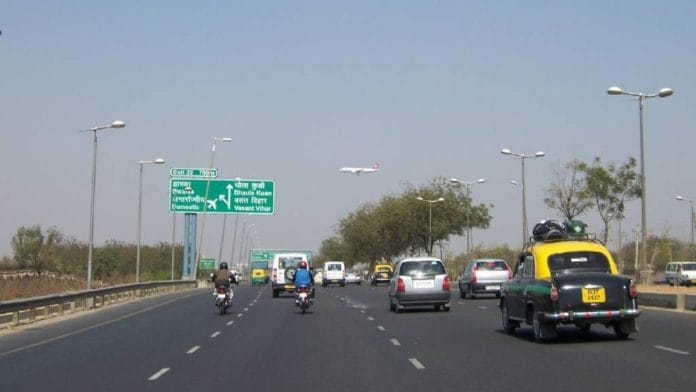



AQI levels sprinting past 700 have revealed an open secret that many were ignoring for years: stubble burning is not the biggest reason behind the blanket of smog that envelops Delhi every year. The largest contributor to pollution continues to be vehicular emissions.
And for that reason, I propose a permanent Odd-Even formula in the capital and beyond. Our roads are simply not prepared for the sheer volume of vehicles they service.
Odd-Even, as a band-aid, was effective; as a long-term policy, it could even have healing properties.
If you say it creates inconvenience, I will ask you to open a window in your house. Breathe in that acrid-smelling, putrid air that is damaging your lungs. And then we’ll debate what’s inconvenient and what isn’t.
Delhi’s thick metro network system also ensures that Odd-Even won’t be immediately restrictive for people driving cars. But elitism in our cities, especially in a city like Delhi, prevents such schemes from running long-term. Yet even the elites will agree to travelling in a crowded metro coach with a lower AQI.
The rationale for moving this from a temporary measure to a sustained policy is rooted in public health and global precedent. While temporary restrictions like construction bans and truck entry limits offer immediate, if short-lived, relief, a permanent Odd-Even scheme tackles the chronic source of pollution at its daily peak.
Vehicle rationing schemes have also formed a consistent part of sustainable urban mobility policies in megacities worldwide, offering a proven strategy for traffic mitigation and emission control.
As we look to China as a country that has mitigated its pollution problem, it is vital to examine Beijing, where the policy has generated proven results. Paris, too, has toyed with the idea and made public transport free when the rule was implemented in the city.
Delhi’s pollution is extreme, and it needs quick, radical fixes. For a decade, the government has been unable to come up with a solution, so to dismiss Odd-Even as a temporary measure makes little sense.
The policy should be implemented after a concerted effort to increase bus services in the city too, to ensure convenience on the roads.
I am not saying Odd-Even is the solution, but it’s a long-term measure that should be normalised in cities choking from congestion. What’s happening to our cities—not just Delhi—is unsustainable.
Also Read: Odd-Even policy not to be reintroduced in Delhi, says CM Rekha Gupta
Ease of driving
Nearly seven lakh new cars were registered in Delhi in 2024. Cities across India are witnessing vehicular growth, more pollution, and even more congestion.
Odd-Even will not only provide relief to the atmosphere but also make the drive to the office less frustrating. Traffic jams also impose a significant economic cost on a city’s citizens. We have some of the most polluted and often the slowest cities in the world.
Successive governments have failed to provide good public transport options—except, of course, metros in different cities, which still don’t have adequate ridership. We have failed our cities, and pollution is the most striking report card of that failure.
The Centre has been lackadaisical in its approach to tackling pollution. It is unacceptable. It has made our surroundings apocalyptic, and it must be fixed immediately. The deadline was yesterday. Bring Odd-Even, and use the eased congestion to bring in more buses and build a habit among people to use public transport. Use that time to make footpaths. Use Odd-Even to transform our cities.
(Edited by Stela Dey)
Yes, But our govt, courts will not dare to do that.
Very sorry state of thinking abilities.