






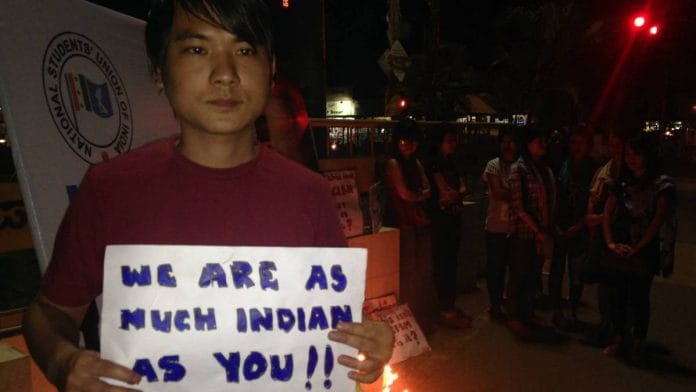



In the dense vertical sprawl of New Delhi, where balconies almost touch, and lives overlap through thin concrete, a minor inconvenience recently exposed a major fault line. In Malviya Nagar, three UPSC aspirants from Arunachal Pradesh were reportedly confronted by neighbours after dust fell during the fixing of an air-conditioner. What should have remained a routine disagreement over maintenance allegedly descended into racial and communal hostility.
This is not an isolated story. Nor is it simply about one building.
Neighbourly disputes are universal. Across high-density cities — from apartment blocks in Geneva to mixed communities in the Netherlands — research shows that conflicts commonly arise over noise, parking, privacy, or minor property damage. Sociologists call them “lifeworld conflicts”: emotionally charged, deeply personal disputes born of proximity, not ideology. When ceilings double as floors and walls are shared, friction is inevitable.
I live in one of the high-rise condominiums in Gurugram, and every year, just before summer, when my air-conditioners are being serviced, a sharp, shrill voice rises from the floor below the moment a few drops of water fall. It’s unpleasant. It’s awkward. But we leave it at that. It’s an inconvenience — and part of shared living. It is what happens when people stack their lives one above the other.
The viral video clearly showed a woman, Ruby Jain, turning a minor squabble into a personal, racially charged attack on young women from Arunachal Pradesh — and that is where the ugliness begins.
It is hard not to recall the 2014 killing of Nido Taniam, a young lad from Arunachal Pradesh in Lajpat Nagar. That memory reminds us that slurs normalise hostility and mark people as targets.
But friction is not fate. What transforms a quarrel into something corrosive is the language we attach to it.
Prejudice in proximity
In Delhi’s colonies and especially around the University of Delhi North Campus, thousands of young people from the Northeast live in rented rooms and paying-guest accommodations. Many prepare for the UPSC and other central examinations; others pursue degrees in law, medicine, commerce, and the humanities. Hostels are limited. Affordable campus housing is scarce. So they rent — often at high cost, often in cramped quarters, often navigating subtle and not-so-subtle hostility.
North Campus has, in earlier years, witnessed repeated complaints of racial slurs directed at students from the Northeast. The pattern is painfully familiar: difference becomes visible; visibility becomes vulnerability.
It is worth remembering that these young men and women did not leave home casually. They left Arunachal Pradesh, Manipur, Nagaland, Mizoram, Meghalaya, Tripura, Assam and Sikkim because ambition demanded migration.
For some, specialised courses like advanced medical training, elite law programmes, and niche technical degrees may not be available back home. That is understandable in a developing federation. But each state, given that the Northeast region is now a “powerhouse or growth engine” , is very capable of setting up robust institutes. Under the government’s Act East policy and its Ashtalakshmi (eight forms of wealth) vision for the region, more than Rs 6.50 lakh crore has been channelled into the Northeast, with major emphasis on infrastructure and connectivity, along with sectors such as hydropower, tourism and organic farming. But, where are the jobs and opportunities that are meant for its youth?
The exodus today is broader and more troubling. It is not only about rare specialisations. It is about the absence of robust local opportunities — stable employment, diverse industries, quality higher education ecosystems, and even adequate preparatory infrastructure for competitive exams. Increasingly, leaving home has become less a choice than a rite of passage. A young person finishes school, and the horizon tilts outside naturally, to Delhi, to Bengaluru, to Pune because “there are no jobs,” because “there are no colleges good enough,” because “there is nothing here.” Or, conflict or recurring violence.
That refrain should disturb us.
When every year thousands of young people feel compelled to leave their states simply to compete on equal footing, a deeper structural question arises: why have regional systems failed to retain their own talent? Why do eight culturally rich, strategically vital states struggle to create enough institutional gravity to hold their young?
The answer cannot be reduced to geography or remoteness alone. Infrastructure gaps, underinvestment, or mismanagement in higher education, limited private-sector growth, bureaucratic inertia, and uneven governance have compounded over decades. The result is a silent migration pipeline — one that fills rented flats in Delhi even as it empties potential from home districts.
And when these migrants arrive in cities already strained by density and difference, they encounter another challenge: the fragility of coexistence.
Also read: I’m single, Assamese, Muslim, and an animal feeder. I feel unsafe in Delhi
Migration and misunderstanding
Urban life produces what sociologists call “familiar strangers.” We know our neighbours in fragments, perhaps, a name on a mailbox, footsteps overhead, the faint sound of marbles rolling across a floor.
At the RC21 International Conference on ‘The Ideal City: between myth and reality’, held at the University of Urbino Carlo Bo in Italy, a paper I came across captured this perfectly. A resident described his neighbour not by nationality or class, but simply as “the one with marbles”. Not his ethnicity. Not his profession. Just a sound.
That is the strange intimacy of modern city living. We live inches apart, yet know each other only in outlines. Our understanding of those next door is built on hints, assumptions, and passing impressions, which are thin knowledge that can either remain harmlessly incomplete or, in moments of conflict, quickly harden into something else.
The tragedy unfolds when irritation seeks explanation. At times, like the one in Malviya Nagar, dust falls. Elsewhere, it is music that plays too late. A parking space is contested. Instead of confining the dispute to the matter at hand, identity rushes in to fill the gap. The neighbour is no longer just the one fixing an AC; he becomes “the outsider,” “the other,” “the different one.” A complaint becomes a caricature, and soon a quarrel becomes communal.
In a country as plural as India, this escalation is reckless.
But while we rightly condemn racial slurs and communal taunts, we must also widen the lens. The humiliation of the three young ladies in Malviya Nagar is one layer of the problem. The compulsion that brought them there in the first place is another.
If young people from the Northeast are leaving year after year because local systems cannot sustain their aspirations, then responsibility lies not only with prejudiced neighbours in Delhi but also with policymakers in the region. Where are the world-class universities? Where are the research hubs, the incubators, the diversified industries? Why must a student travel two thousand kilometres to prepare seriously for a national examination? Why are we exporting our youth as tenants instead of empowering them as stakeholders at home?
This is not an argument against mobility. Migration enriches societies. Cities thrive on inflow. Diversity can definitely generate new institutions of mediation and cooperation. A multi-ethnic community in any given space ideally should demonstrate that differences need not dissolve into distrust.
But mobility born of aspiration is different from mobility born of compulsion.
When dust from an air-conditioner becomes a trigger for racial hostility, it reveals two failures at once: the failure of urban civility and the failure of regional opportunity. One is immediate and visible; the other is structural and slow-burning.
And of course, there is a deeper and more troubling reality — the absolute lack of proper representation of the Northeast where it truly matters. If, for instance, the histories, cultures, and contributions of the Northeast were meaningfully taught in school curricula, perhaps India at large would not still be grappling with the ignorance that leads to anyone with smaller eyes being casually and offensively labelled “Chinese.”
When, for many Indians, the limited visibility of Northeast women working in salons or spas becomes the narrow definition of who Northeast women are, that perception is not accidental — it is born of systemic ignorance. People cannot know better if they have never been allowed to learn better. When the education system fails to introduce citizens to the diversity within their own country, stereotypes rush in to fill the vacuum.
Civil society will never be free of squabbles. Nor should it aspire to sterile harmony. The test is whether we can keep arguments tethered to facts — dust to dust — without dragging identity into every disagreement.
At the same time, the test for regional governance is whether it can build enough faith at home so that leaving becomes an option, not an inevitability. And the question before India at large is this: does the Northeast truly have a place at the centre of our national imagination? Or does it remain, in practice, a distant frontier, a mere cluster of border states valued primarily for guarding strategic boundaries, yet kept at the margins of mainstream attention, policy priority, and cultural understanding?
If the Northeast is seen only through the lens of security and geography, and not as an equal contributor to India’s intellectual, cultural, and political life, then we must ask ourselves what kind of union we are building — one of belonging, or one of quiet exclusion.
If we do not confront these questions, we will continue to misread the symptoms. We will argue about ceilings and floors while ignoring foundations.
Hoihnu Hauzel is the author of Stories The Fire Could Not Burn. Views are personal.
(Edited by Ratan Priya)
Just like Tina Das, Hauzel stops just short of the most important thing — the two-way bridge. Yes, Delhi residents need to shed their ignorance. Yes, curricula must include the Northeast. Yes, regional governments have failed their youth spectacularly. All true.
But nobody says what needs to be said plainly: Bharatiyata — genuine shared Indian identity — cannot be policy-decreed or guilt-tripped into existence. It has to be lived, built through ordinary daily familiarity. That requires both sides making the effort.
The structural diagnosis is correct. The Rs 6.50 lakh crore channelled into the Northeast with so little to show in jobs or world-class institutions — that is the real scandal hiding behind Ruby Jain’s ugliness.
But Hauzel, like Das before her, names the wound beautifully and then quietly exits. No tools. No blueprint. Just an eloquent indictment.
The Northeast’s youth deserve more than periodic outrage cycles that fade in a week. They deserve unglamorous, sustained institutional work — better universities at home, real jobs, genuine curriculum reform, and yes, a national conversation that goes both ways.
Name the wound. Then pick up the tools.
Ps: We need problem solvers and solution proponents not agony aunts .