






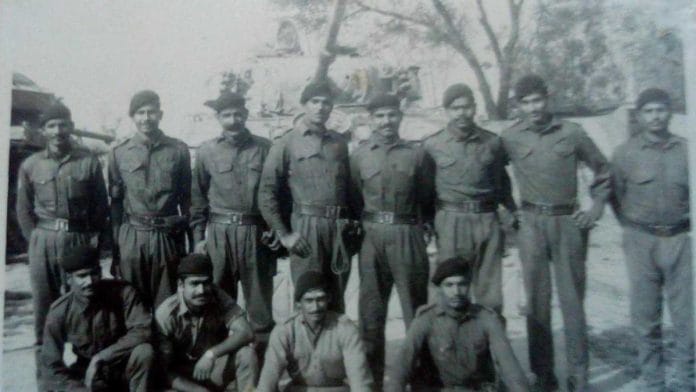



On 16 December 1971, around 11 am, as the guns fell silent and the dust settled over the Ghazipur reserve forest and Jarpal village in Pakistan’s Shakargarh sector, over 48 Pakistan Army M47/48 Patton tanks were observed burning and littering the countryside. Pakistan’s 8 Independent Armoured Brigade had been destroyed and two cavalry regiments, the 13th Lancers and the 31st Cavalry, had ceased to exist as fighting-capable units.
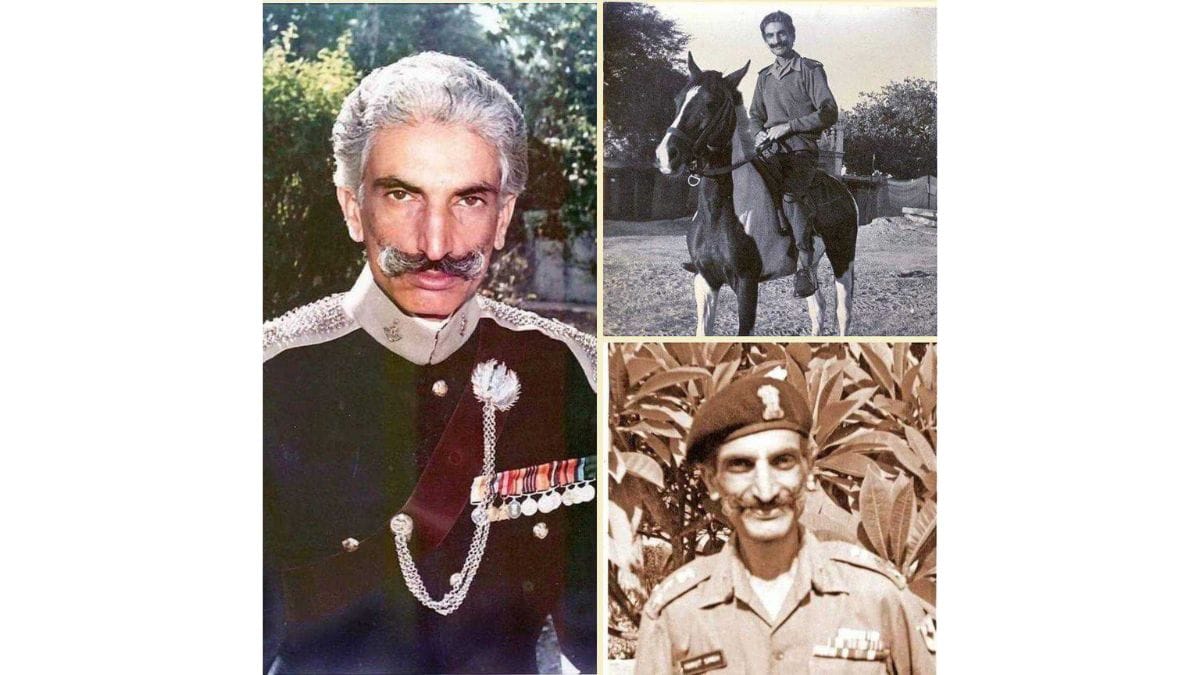
The Pakistani infantry brigade deployed along the minefields had been severely degraded and ejected from its defences. A singular victory had been secured at Basantar by the Poona Horse under the able leadership of its Commandant, Lt Col Hanut Singh.
Road to war
War clouds had been hovering over the sub-continent, triggered by the horrific atrocities committed by the Pakistan Army in East Pakistan and its resultant effects on India. By October 1971, both sides had mobilised their forces and war was imminent.
Pakistan Army 1 (Strike) Corps was deployed in the Shakargarh bulge. Commanded by Lt Gen Irshad Ahmed Khan, it had three infantry Divisions (8, 15 and 17), the 6 Armoured Division with six regiments of M47/48 Patton tanks and three battalions of armoured infantry in M113 APCs. The Corps Reconnaissance Regiment was equipped with 30 M36B3 tank destroyers and each infantry division had its divisional integral armoured regiment. In addition, the 8 Independent Armoured Brigade had also been placed under command with three M47/48 tank regiments, the 13th Lancers, 31st Cavalry and 27 Cavalry.
Pak 1 Corps deployed with two infantry divisions up, that is 15 Infantry Division north of the Degh Nadi and 8 Infantry Division south of the river stretching up to the Ravi River in the south of the Shakargarh bulge. The 8 Infantry Division occupied the towns of Zafarwal, Dhamtal, Narowal and Shakargarh as strong points, while the 8 Independent Armoured Brigade had been nominated as a counter-attack force.
Three defensive minefields had been laid in the 8 Infantry Division sector. The first generally along the International Boundary; the second lay 6-8 kms behind it; and the third, in depth, along the Basantar Nallah-Bein River-Shakargarh line. The third defensive minefield had been designated ‘limit of penetration’, that is, any breach here was to be counterattacked by the 8 Independent Armoured Brigade.
Ahead of the third minefield, mobile covering troops were deployed, based on the Corps Reconnaissance Regiment and an additional M47 regiment, supported by two infantry battalions and the divisional reconnaissance and support battalion, primarily equipped with RCL guns. Their task was to slow down the enemy advance and prevent contact with the third defensive minefield.
The armoured division and 17 Infantry Division were held as reserve, to launch an offensive in the Shakargarh sector should the opportunity arise. The Shakargarh bulge, as the name suggests, leaned dangerously toward India’s lines of communication from Gurdaspur to Jammu. It was and still is our major vulnerability.
India’s operational plan
On the Indian side, the area opposite the Shakargarh Bulge, stretching from Gurdaspur to south of Jammu, was held by our 1 Corps with three infantry divisions (36,39 and 54), two armoured brigades (16th and 2nd Independent Armoured Brigades) and supporting elements. The 16th Armoured Brigade was grouped with three armoured regiments (17 Poona Horse, 4 Hodson’s Horse and 16th Light Cavalry) equipped with British-made Centurion tanks, while the 2nd Independent Armoured Brigade had three regiments of Russian T55.
The corps was deployed with 36 Infantry Division holding the Dinanagar Gurdaspur area in the south with an armoured regiment in support. The central area of the Corps Zone was held by two infantry divisions, that is, 39 Infantry Division with 2nd Independent Armoured Brigade and 54 Infantry Division with the 16th Independent Armoured Brigade. The corps intended to go on the offensive with 39 and 54 Infantry Divisions at the commencement of hostilities to secure the Zafarwal Dhamtal complex, negating any threat to our lines of communications.
In the opening gambit of ground operations on 3 December 1971, Pakistan launched a division-sized offensive in the Chambh sector, for which three Patton regiments of the 6 Armoured Division were detached. That possibly hampered Pakistan’s 1 Corps from launching any limited offensives.
On the Indian side, 1 Corps launched two parallel thrusts in the central sector south of the Degh Nadi with 54 Infantry Division (Northern Thrust) and 39 Infantry Division (Southern Thrust) with operations commencing on 5 December 1971. By 8 December, the Northern thrust line of 54 Infantry Division had made good progress and had contacted the second defensive minefield in the Barkhaniya area.
However, 39 Infantry Division stalled at the initial objectives of Chakra-Dehlra and Harar Kalan, exposing 54 Infantry Division’s Eastern Flank, forcing it to pause its operations until 39 Division cleared Harar Kalan on 12th December.
In the 54 Infantry Division sector, a bridgehead was secured at Barkhaniya by an infantry brigade. On the night of 13/14 December, 17 Poona Horse broke out from Barkhaniya with the intention to secure an encounter crossing across the Basantar minefield in the area of Pinjori, south of Jarpal. The attempt failed owing to the tough going, enemy arty fire and loss of direction. The regiment found itself stuck north of the Basantar minefield on 14 December morning.
Based on fresh orders, the regiment cleared the area north of the Zafarwal-Dhamtal road by launching a series of mounted attacks with armour and mechanised infantry. Enemy tank and infantry positions at Shahzadpur and Ramri were eliminated, thereby securing the flank up to Karir Nadi.
With the failure to secure an encounter crossing across the Basantar, 54 Infantry Division now planned to establish a deliberate crossing across the Basantar minefield on the night of 15/16 December. Under this plan, 47 Infantry Brigade with 16 Madras was securing Ghazipur reserve forest and 3 Grenadiers Jarpal village. The 17 Poona Horse and 18 Rajputana Rifles were to be inducted to secure the bridgehead from enemy counter-attacks and thereafter expand it to facilitate a breakthrough toward Zafarwal.
The Basantar minefield was a formidable obstacle with anti-tank mines laid with a high density and held on the far side by enemy armour and infantry elements. The river bed was soft and wet, which precluded demining using mechanised trawl tanks and thus the engineers would be forced to remove the mines manually, a very difficult task given the heavy volume of arty fire incoming.
The infantry attacks went in as planned and both 16 Madras and 3 Grenadiers secured lodgments across the Basantar nallah. And after a while, both units began reporting that enemy counter-attacks were building up. The minefield lane was still not clear when, in response to incessant infantry requests for armour support, at 2 am on 16th December, Lt Col Hanut Singh decided to cross the uncleared minefield. His orders were clear. If the leading tank blows up, the next will overtake from the right and move on till some tanks cross the minefield. It was a decision fraught with great risk. Basantar was a density 1.5 anti-tank minefield. At density 1, the minefield is designed to inflict over 50 per cent casualties.
The Poona horse moved in a line-ahead formation with C squadron led by its commander, Maj Ajai Singh, who was also the regimental 2ic. At the mouth of the minefield, Ajai was stopped by the engineers as the minefield was not clear. Ajai reported the matter to Hanut, who replied, “If Poona Horse does not cross tonight, history will not forgive us,” and directed the crossing to commence and placed his command tank immediately behind C squadron with the rest of the regiment lined up behind him. The import of this prophetic radio transmission will be known later. Most fortuitously, the regiment hit a minefield gap and no tanks blew up in the crossing. However, the next day, some vehicles attempting to cross drifted away from the tank tracks and were blown up.
As the Centurions of the leading squadron reached the far side of the minefield, they were fired upon at close range by enemy tanks, and a close-range melee happened. Lacking night-fighting devices, the Centurion crews levelled their guns and fired in the direction of the incoming tank fire and hit one M36B3 tank destroyer, brewing it up. Balance enemy tank destroyers fled the engagement.
Also read: Pakistan never ‘surrendered’ in 1971. Kashmir, 26/11, Parliament show why
Fight for Ghazipur Reserve Forest
Ghazipur reserve forest, into which the regiment had been inducted, was still held by 11 Baluch and RCL guns. To clear the forest, C squadron and 18 Rajputana Rifles put in a mounted night attack. It was a knife fight with guns and machine guns of both sides thundering at each other in the darkness of the forest. By first light, all opposition in Ghazipur RF had been cleared, though elements remained active on the flanks. Contact was established with 16 Madras and B squadron was dispatched to Jarpal to link up with 3 Grenadiers.
As the morning mist around Ghazipur forest lifted around 8.30 in the morning, enemy arty smoke shells started landing in the open area beyond Ghazipur, and tank noises were heard. As the smoke cleared, enemy tanks were observed in position at a distance of 600 to 800 m. A furious fusillade ensued from both sides. It was the 13th Lancers A squadron attacking to throw back the bridgehead. Ten enemy tanks were hit and destroyed and the remnants pulled back. Simultaneously, B and C squadrons of 13th Lancers attacked toward Jarpal from the south. Ami Bal, the squadron commander, asked for reinforcements, and Capt V Malhotra of A squadron was dispatched with two troops with Lt Avtar Ahlawat and 2/Lt Arun Khetrapal as the troop leaders.
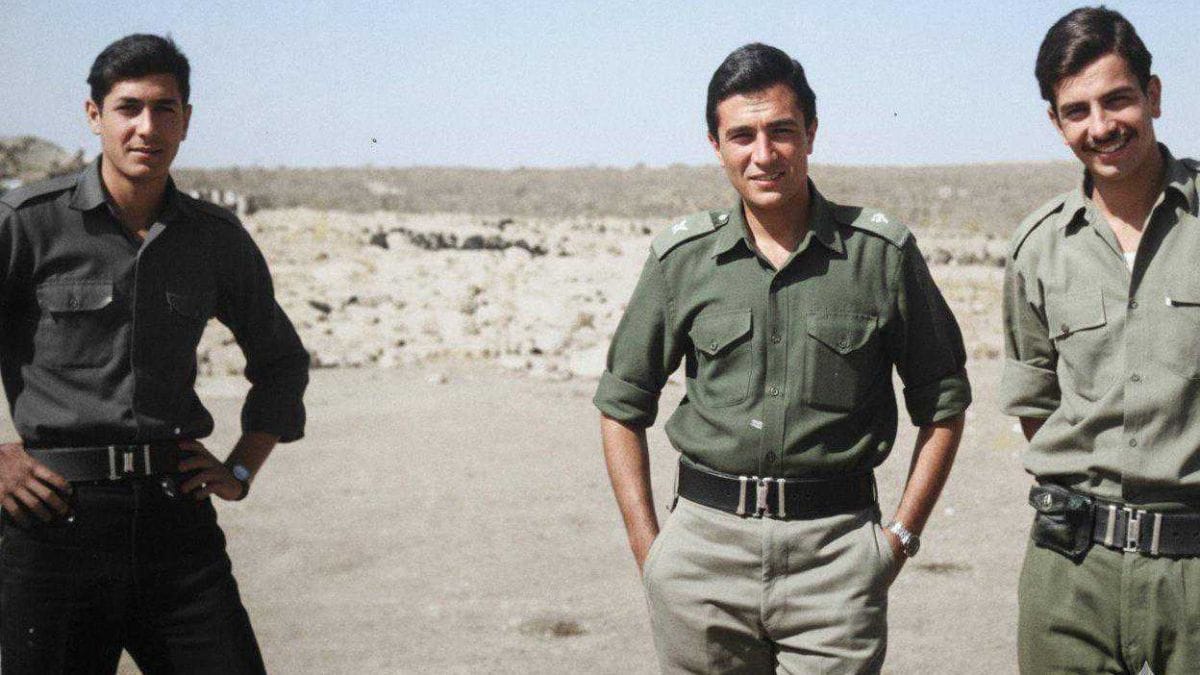
As the half squadron under Captain Malhotra emerged near Jarpal, it came into contact with enemy pattons, which were probing the area. A sharp firefight occurred and a number of enemy tanks were hit and the rest pulled back. The enemy, after regrouping, put in a concerted coordinated attack with the 13th Lancers attacking Jarpal from the south and the 31st Cavalry attacking Ghazipur reserve forest. A heavy firefight ensued. Opposite Ghazipur, 22 enemy Pattons were destroyed, and the balance pulled back. At Jarpal, the engagement turned into a close-range melee. Avtar Ahlawat’s tank was hit and he was wounded, Malhotra’s tank developed a defect and the gun became nonfunctional, leaving Arun Khetrapal as the only functional tank in that particular area.
In the fight, Arun’s tank had already been hit once; however, the shot had ricocheted off. As the firefight developed, Arun’s tank was hit a second time and his engine caught fire. Seeing that the tank was on fire, Malhotra ordered Arun to evacuate his tank and take cover. However, sensing the criticality of the situation, Arun chose to fight on. There were a few enemy tanks still pressing the attack. The Centurion named Famagusta, with its crew of 2/Lt Arun Khetrapal, Commander Sowar Nathu Singh Jodha Gunner, Sowar Prag Singh Rathore driver and ALD Nand Singh Shekhawat Loader, chose to continue the fight.
In the close 6’x6’ confines of the Centurion turret, the four crew members grimly operated their burning tank; the last tank that gunner Nathu Singh shot was at a distance of 75m. At that juncture, a tank shot hit Famagusta on the side and penetrated. It killed Nand Singh and severely wounded Arun and Nathu Singh. Prag Singh, the driver, sensing that the gun had stopped firing, came out of his hatch to check and he found the rest of the crew dead or wounded. He tried to pull out Arun, but his injuries were such that his lower body was entangled in the gun ring. He pulled out Nathu and carried him to some bushes behind, receiving a burst of MG in his legs. Prag then started the tank, pulled it back, put out the engine fire and reported the matter to the commandant. Soon help was at hand, but Arun Khetrapal did not survive his grievous injuries.
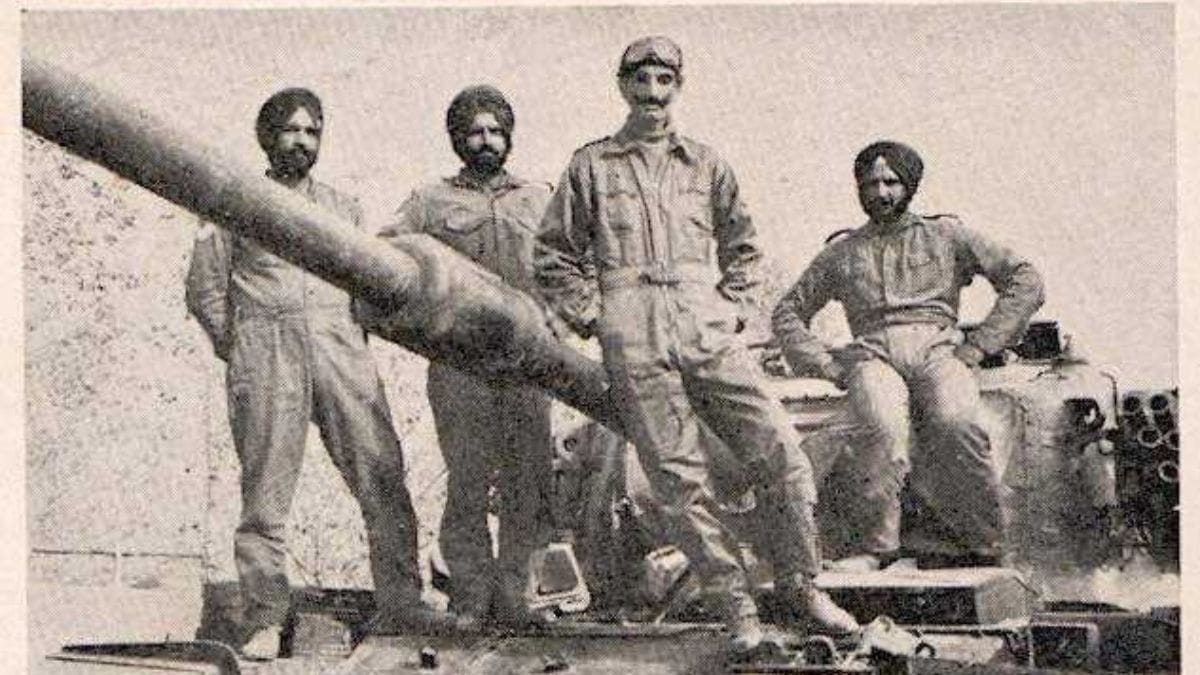
By 11:30 am that day, 16 December, the battle had ended. Enemy tanks had pulled back beyond observation and firing range. Pakistan’s 8 Independent Armoured Brigade, along with its two regiments, 13th Lancers and 31st Cavalry, were decimated, with the two units losing over 48 tanks between them. A great victory had been won. But the import of Hanut’s words became apparent.
With the loss of the 8 Armoured Brigade, Pakistan 1 Corps got fixed for the defence of Zafarwal Dhamtal complex, which was now under imminent Indian threat. It lost its ability to launch an offensive against our lines of communication. By 13 December, the three Patton regiments detached to the Chambh sector had rejoined and if 17 Poona Horse had not inducted and destroyed 8 Independent Armoured Brigade, the enemy had already planned a thrust toward Gurdaspur Dinanagar, which he would have executed with the potential of forcing a major operational disaster. Destruction of the armoured brigade and the threat to Zafarwal Dhamtal put paid to all offensive intent.
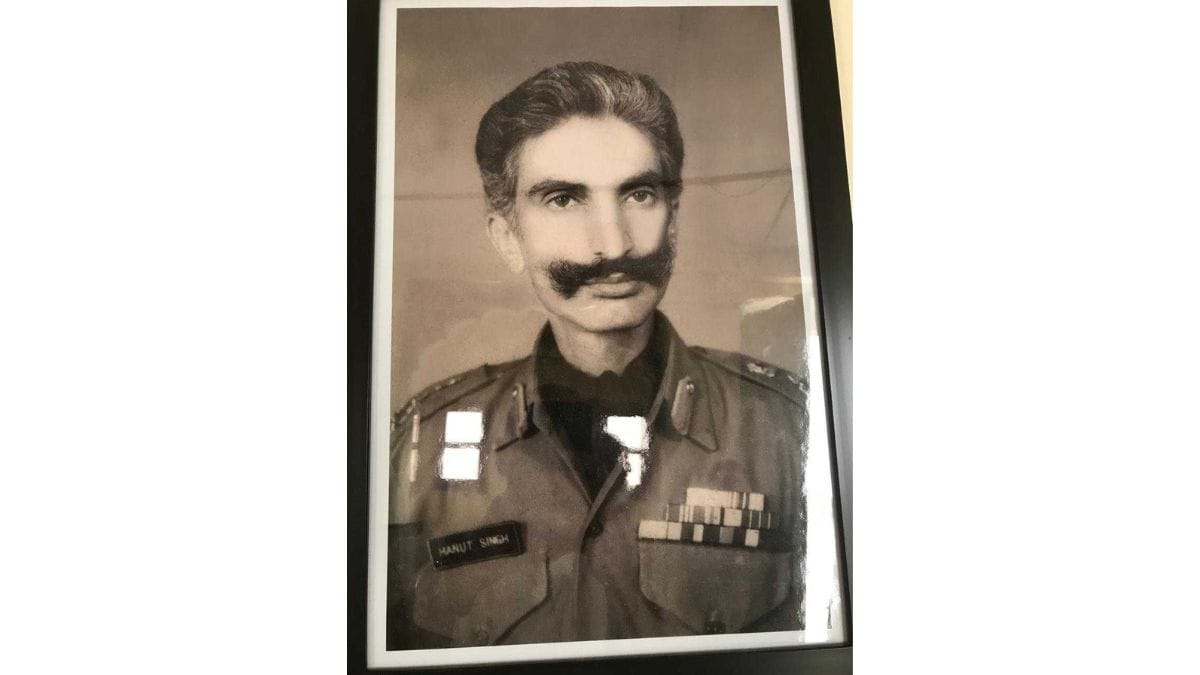
The victory at Basantar exemplified the sterling character of Lt Col, later Lt Gen Hanut Singh. His regiment, Poona Horse, reflected his character to rise to greater heights to accomplish the mission. At Jarpal, once Arun’s tank had been hit, Malhotra’s tank was the only one left standing with a nonfunctional gun. At this, Nb Risaldar Dayanand of B squadron moved his tank next to his and told him, “main aa gaya hun”. I am here. In the continued firefight, Dayanand’s tank was hit four times with two clear penetrations and twice it caught fire. On both occasions, the crew put out the fire and continued the fight.
Lt Gen Hanut Singh PVSM MVC stands among the finest soldier leaders that the Indian Army has produced. A fearless armoured commander and a man of uncompromising professional integrity, he exemplified timeless military virtues of courage, honour, and duty. He was awarded the Maha Vir Chakra for his leadership in battle. Young 2/Lt Arun Khetrapal was awarded the Param Vir Chakra (posthumously) for choosing to fight on from a burning tank and going beyond the call of duty.
Brig Karan Singh Rathore (Retd) is veteran cavalry brigadier from The Poona Horse. He tweets @rathorekaran17. Views are personal.
(Edited by Ratan Priya)