



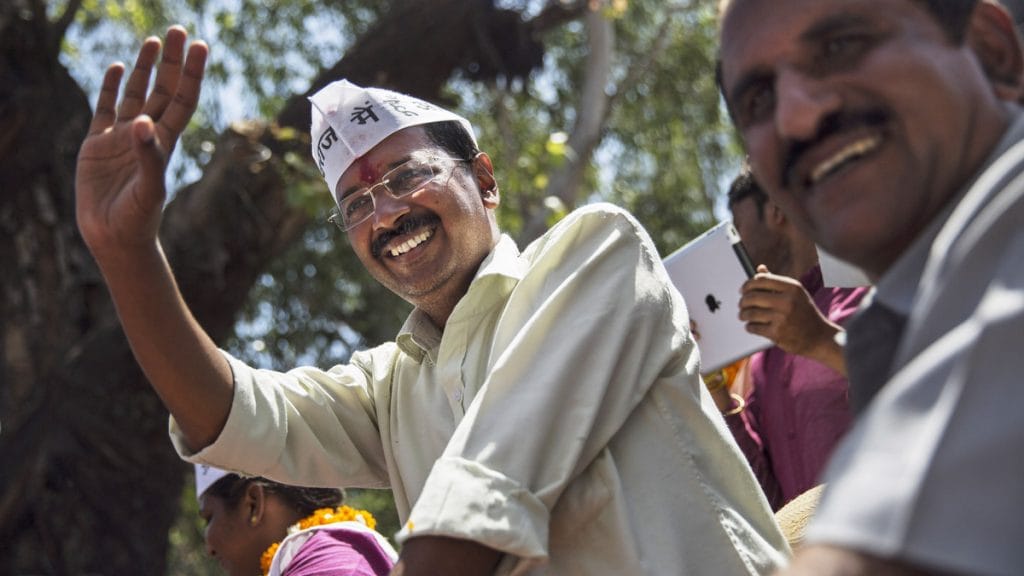
If I had these cases against me, I would have apologised on the first day itself. Why waste your energy on an outdated law, which is being used to harass you.
Delhi chief minister Arvind Kejriwal has been on an apology train ride lately, sending apology letters to various politicians to shut down the numerous defamation cases they slapped on him. This has not gone down well with a significant section of his supporters.
Defamation laws in India have long been a subject of controversy, and rightly so. Across the developed world, criminal defamation as a law is virtually non-existent, like in the USA and South Africa. It has been abolished in the UK. In most other countries, it requires proof of actual harm caused by a statement, unlike in India. These laws have been blatantly misused by the powerful to curtail the freedom of expression of the weak, often through intimidation of the critics, dissenters and opponents. On top of that, the law is vaguely defined.
The penal consequence of defamation is a fine or imprisonment of up to two years. But the real consequence is the time, energy and, most importantly, the money it requires to defend yourself in court. For the rich and the powerful, it’s easy, but not for others.
Kejriwal has more than two dozen defamation cases against him in 16 different cities across the country. It should be pretty obvious to anybody who knows about the ordeal of court cases in India why he has finally given up on fighting them. The exorbitant amount of money and time that would be required to fight these cases would compete with the time he spends in governing Delhi. If I had these cases against me, I would have apologised on the first day itself. Why waste your energy on an outdated law that is being used to harass you?
Some people, however, think it’s heroic to fight defamation cases. They say the process of fighting itself proves that your statements and accusations are legally true. This stems from a false sense of ego and pride because, in most cases, winning defamation suits is only about insisting on your right to make those statements. It doesn’t even guarantee that you cannot be charged for defamation on your next statement. However, where it does help is in your public image.
Media houses also fight defamation cases, and that fight is important in order to preserve journalistic freedom in the country. In Kejriwal’s case, however, his public image can be somewhat compromised by the apology and backtracking on statements, but it is well worth the time saved for governance. After all, a chief minister’s job is to govern and not fight cases in court all day.
The only question here is, why didn’t Kejriwal apologise earlier? And the answer lies in idealism. Perhaps he wanted to be the hero that some people want him to be. Perhaps he wanted to fight and win all the court cases against ‘evil’ forces, and legally prove all his statements. It would be the most desirable route for him to take, if you ask his supporters. But it is not practical to make this compromise against governance and he has finally realised it. Better late than never.
In the year 1663, the church threatened to burn Galileo at the stake. His only crime — his claim that the planet Earth revolved around the sun. The gravity of the threat posed by the church was too much for Galileo. He realised he would be better off apologising and admitting his ‘mistake’, instead of expending effort trying to convince them otherwise. And he did take back his statement. It was only 350 years later that the church apologised for its mistake.
Similarly, Kejriwal’s apologies do not declare that Majithia or Kapil Sibal or Jaitley are clean politicians. They merely show us that he has retreated from this court to focus on the bigger goal. Others who have more time and money are continuing to fight this battle, even through defamation cases themselves. AAP Rajya Sabha member Sanjay Singh Azad has said that he will continue to fight the defamation case filed against him by Majithia because he is willing to put in the time and money required. Both decisions are right in their own ways. However, I believe our greater fight should be against the outdated defamation law itself. It is in dire need of reform to protect the freedom of speech in our country.
This whole controversy is not a lesson for people to give up fighting for their rights. It is a lesson in real-world practicality; in when to fight against injustice and when to take a step back sensibly for the greater goal.
The apologies do not diminish a man’s fighting spirit. A true fighter knows which battles are worth fighting and which are to be walked away from.
Dhruv Rathee is an activist and YouTuber.