






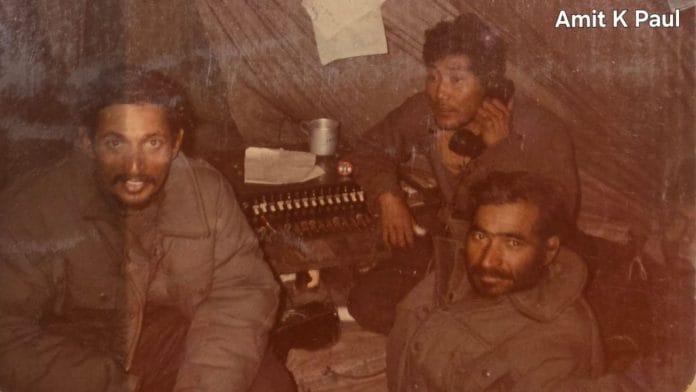



Operation Meghdoot, which commenced on 13 April 1984 and saw India take control of the strategic Saltoro Heights, is perhaps the longest ongoing Operation of the Indian Armed Forces. Timely sharing of information, correct assessment of intelligence, cooperation between different wings of the armed forces, various technological improvisations done by them to fight a battle at these heights and above all ‘silence’, stand out as some of the key aspects of this pre-emptive move which took Pakistan by complete surprise.
Intelligence reports received by the Indian Army between October and December 1983 indicated movement of troops and equipment on the Pakistani-controlled side towards Goma, fresh communication lines being laid ahead of Skardu and the suspension of turnover of troops and cancellation of leave of personnel in FCNA (Force Command Northern Areas) till September 1984.
There were also reports of Pakistan starting an intensive training program for a force named ‘Burzil Force’ at Bunji, Minimarg and Burzil. This force comprised elements of Northern Light Infantry (NLI) and the Special Services Group (SSG), and reports indicated that in late 1983, it had been moved to the general area of Noma, Haramosh and Hunza with its elements as far forward as Khapalu. All these were enough for the Northern Command of the Indian Army to conclude that something was being planned by Pakistan to possibly occupy the entire region, which it had already claimed in its protest notes of August 1983.
Once reports from the Research & Analysis Wing (R&AW) confirmed that Pakistan was in advanced stages of procuring large quantities of special snow and ski equipment from the UK and Europe to be available to the troops by January 1984, it became imminent that a military operation was on the cards. Prime Minister Indira Gandhi was briefed, and preparations commenced for Operation Meghdoot in earnest from January 1984.
With large-scale movement and deployment of men and material on the cards, requiring extensive coordination and communication, it was necessary to ensure complete secrecy and radio silence lest Pakistan get wind of the plans. The responsibility of ensuring this fell on the ‘Sparrows’—the signalmen of the Indian Army known for their swiftness and agility in establishing secure and reliable communication in battle zones.
Captain Vikram Tiwathia of the 3 Infantry Division Signal Regiment (Trishul Signals), Leh, was ordered in mid-January 1984 to be ready for a ‘task’ in the Nubra Valley. On 16 February 1984, he, along with one JCO and 30 other ranks, left Leh for Sasoma to prepare the ground for the ‘radio silence’ which was vital for the operation to succeed. While communications were possible, over the VHF radio sets (AN-PRC 25) using cipher codes, there was a risk that the chatter might be picked up by the Pakistanis and alert them to the increased activity on this side.
Therefore, the Signalmen were tasked with the work of laying field cables for land line communication from Sasoma to the proposed base camp at the snout of the glacier and beyond on a man-pack basis.
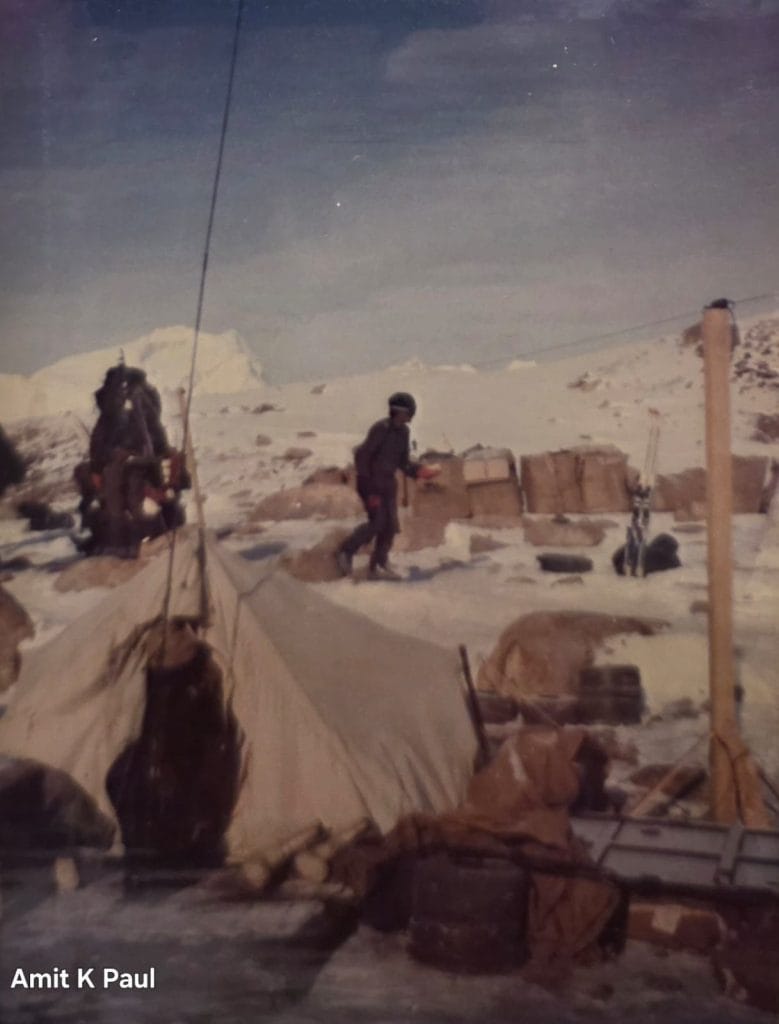
“Upon reaching Sasoma, we undertook the initial recce and identified the possible alignment of the cable land line route. Since there was no track at that time, we had to manually carry the ‘ballis’ (wooden poles) and WD1 Dispenser packs (distinct packaging for carrying the field telephony cables by man pack), dump them at different locations beyond the road head and lay the cable lines.
We were working on a very tight schedule as the Infantry and supporting troops were expected in March/April, and we had to get everything up and running before their arrival. To increase the communication distance, we used ‘spaced’ WD1’s so that the range of land line communication could be enhanced in the shortest time. You can’t imagine the extent of frenzied activity going on in the region in March/April. It was as if the choppers, the infantry, artillery, high-risk mission troopers—all had landed together, and we had the responsibility of ensuring that everyone could communicate securely without the use of any radio sets.
Any mistakes would have surely alerted the Pakistanis, and everything would have come to naught. We received considerable support from the 26 Sector Signal Company in this task’, recalls the Sparrow Siachen Tiwathia.
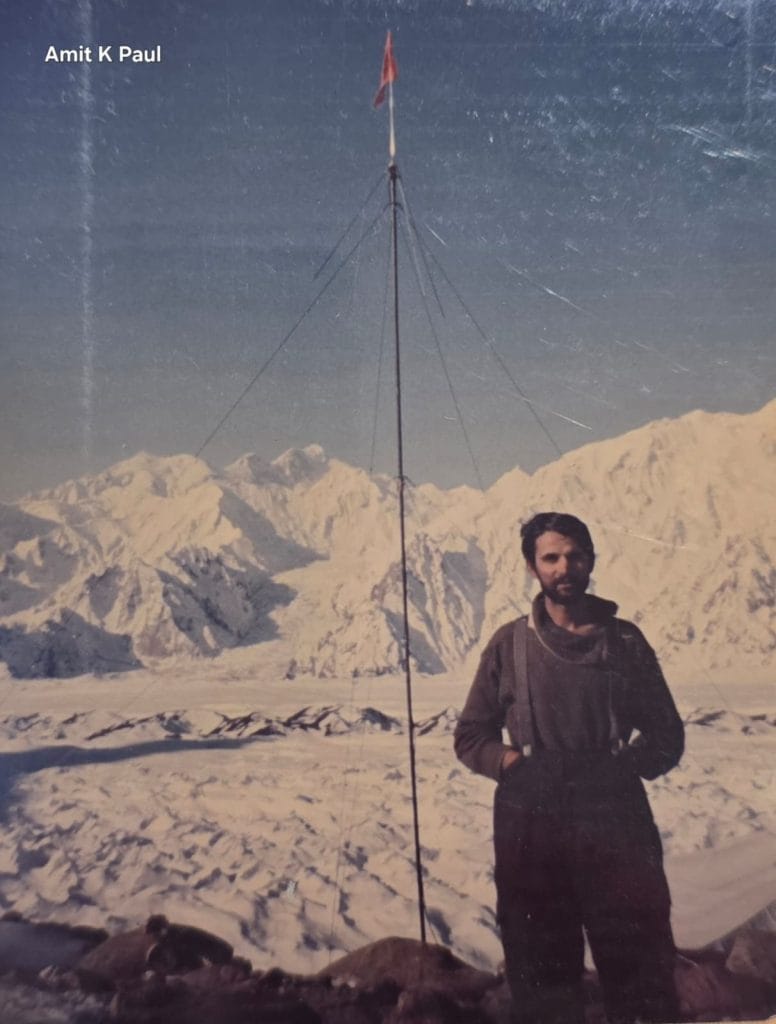
Explaining the difficulties on the glacier, he adds, ‘With one telephone exchange being set up at the Base Camp and the other planned at the Forward Logistic Base on the Teram Shehr glacier, all the equipment had to be carried up to ensure that everyone could communicate securely with the Base Camp. The glacier had its own challenges. The cable being black in colour would attract more heat on sunny days, which made the snow immediately below it melt more than the surrounding area, resulting in the cable going below, making the location and restoration of breaks difficult. The breaks were frequent due to rocks falling from the moraines. So we created a laddered network in vulnerable spots so that at least one of the wires would work if the other was down.’
Brigadier D K Khanna of 19 Kumaon recalls, ‘On 18 March 1984, we left Khrew and by 18 April the last Column had reached Sasoma. During the entire movement, we did not file any situation reports or use any radio sets for communication. All communication was only on fixed land lines as we had been directed not to do anything which would convey that the battalion was being inducted, in addition to 4KUMAON and other elements already present in the region.’
The radio silence and the secrecy paid off as Pakistan did not get a whiff of the activities taking place east of Saltoro. No wonder many in Pakistan consider its inability to pick up signs of this massive logistical exercise and deployment as its biggest intelligence failure. The radio silence was broken only around 17 April 1984, when Captain Sanjay Kulkarni, after achieving his objective of securing Bilafond La, opened it to inform the Base Camp about the death of Lance Naik Ramesh Singh due to HAPO and requested his evacuation.
Probably, this communication was picked up by Pakistan and within minutes, a chopper recce made it clear to its DDMO Brigadier Ghulam Mohammad Malik that the Indians had secured all the dominating heights of the Saltoro Range and beaten them in the race to the glacier.
Undoubtedly, complete radio silence, secrecy and secure communications played a key role in India winning this race by maintaining the element of surprise till the very end.
The writer is an independent researcher and author of the book ‘Meghdoot: The Beginning of the Coldest War’. Views are personal.