







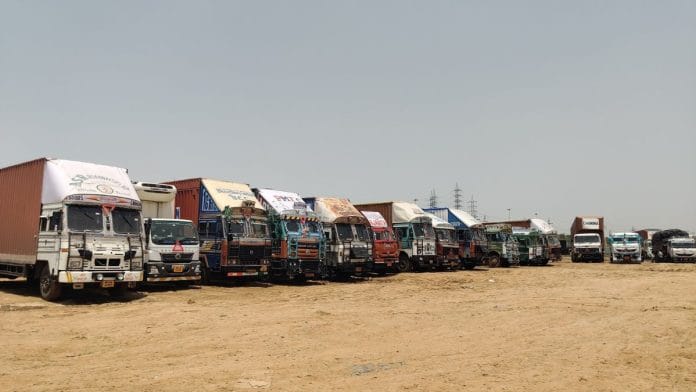



India’s clean mobility transition has a blind spot: The diesel that powers its freight system. Oil and gas markets are under stress again as disruptions in West Asia ripple across global supply chains. For India, the immediate risk goes beyond higher prices. It’s in the continued dependence on diesel, the backbone of its freight and bus transport system. Diesel accounts for roughly two-thirds of India’s conventional road transport fuels. If India wants to reduce its exposure to such global shocks, the hardest challenge will not lie in electrifying two- and three-wheelers, but in moving heavy-duty transport away from diesel.
Recent research by the Council on Energy, Environment and Water (CEEW) shows that two- and three-wheelers, largely petrol-based, will electrify fastest, with electric vehicles (EVs) accounting for over 70 per cent of the overall stock in these segments by 2050. Yet electricity is likely to supply only about 14 per cent of road-transport energy by 2050. The reason is straightforward: Trucks and buses, which account for more than half of road transport energy demand and emissions, will continue to rely heavily on diesel well into the 2040s. High capital costs, limited fast-charging infrastructure, and the absence of dedicated policy support for heavy-duty vehicles risk slowing this transition further.
The implications go beyond emissions. A slow shift away from diesel could also complicate India’s refinery economics, as petrol demand peaks by 2032 and then begins to decline. This divergence after 2030 will make it increasingly difficult for refineries to manage their product mix—reducing petrol output while meeting rising diesel demand—without a clear transition pathway for heavy vehicles.
Bringing heavy vehicles onto a clear transition pathway will require a phased approach: Lower-carbon fuels such as compressed natural gas (CNG) and liquefied natural gas (LNG) can serve as near-term bridges where electrification is not yet viable. The long-term transition must shift toward electrification and green hydrogen. While smaller commercial vehicles are already moving to cleaner fuels, the bigger challenge lies in long-haul freight.
Also read: Why shielding consumers from rising fuel prices can backfire
Three steps for the future
To accelerate this transition and strengthen energy security, India should focus on three policy priorities:
First, expand LNG refuelling infrastructure to curb diesel demand in long-haul freight. Unlike CNG, LNG can be transported by tankers and supplied directly to refuelling stations, making it better suited for long-haul trucking. Despite India’s target of developing 350 LNG stations and deploying 50,000 LNG trucks by 2030, progress remains slow, with only 29 LNG stations currently operational. Strengthening refuelling networks, particularly in peninsular states such as Tamil Nadu and Kerala that already host LNG import terminals, could accelerate LNG truck adoption and help moderate diesel demand growth, even if the short-term emissions benefits are modest. Higher gas demand would also improve the economics of India’s underutilised LNG terminals and enable diversification of import contracts, which typically lock in supply for over a decade.
Second, prioritise freight corridor electrification using real movement data. India generates valuable data through e-way bills and Fastag transactions, which could help identify the most heavily used freight routes. For example, the Golden Quadrilateral network carries nearly 40 per cent of India’s road freight demand, making it a starting point for corridor electrification. According to CEEW analysis, electrifying just 7 per cent of the truck fleet by 2050 would require more than one lakh medium- and fast-charging stations, including high-capacity chargers (100-350 kW) capable of recharging heavy trucks in roughly 45-90 minutes. Beyond chargers, corridor electrification will also require adequate grid connections, transformer capacity, and logistics hubs. While the government has issued guidelines encouraging private players to build charging stations along national highways, a more data-driven approach that prioritises the busiest freight corridors would improve utilisation. Such data is not publicly accessible at present, and detailed nationwide surveys of freight movement have not been conducted in over a decade.
Third, build a self-reliant battery value chain to reduce costs, cut import dependence, and strengthen supply chain security for India’s EV future. Electric buses and trucks are expected to reach cost parity with diesel in the early 2030s and with CNG or LNG in the early 2040s. Capturing this opportunity will require greater investment in domestic research and development and a vertically integrated manufacturing ecosystem for advanced-chemistry cell (ACC) batteries, including lithium-ion and next-generation batteries that power electric vehicles. India’s production-linked incentive scheme for ACC battery storage has set a target of 50 GWh of annual manufacturing capacity. This is an important start, but domestic cell manufacturing is still at an early stage and will need to scale rapidly to meet rising demand. Transport demand alone could exceed 110 GWh per year by 2030 and reach around 360 GWh per year by 2050.
India’s clean mobility transition will ultimately be decided by what happens to freight. Bringing trucks and buses onto a new energy pathway is the difference between managing oil shocks and remaining exposed to them.
Hemant Mallya is Fellow, and Dharshan Siddarth Mohan is Programme Associate at the Council on Energy, Environment and Water (CEEW). Views are personal.
(Edited by Theres Sudeep)