






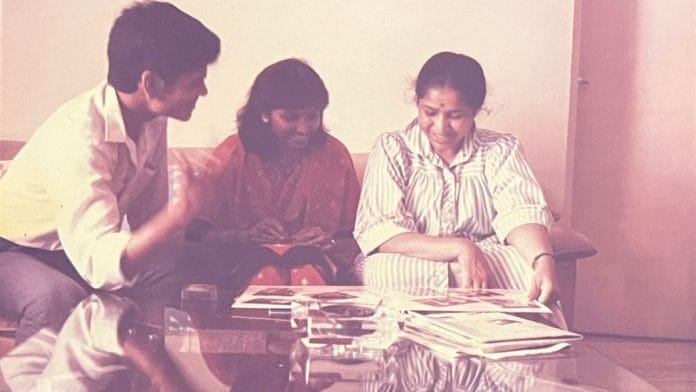



When I first began exploring old songs as a teenager with my elder brother Biren, Aaye Hain Door Se, a charming, playful duet by Asha Bhosle and Mohammed Rafi, quickly became a favourite. Little did I know then that this very song would one day become our passport to meeting the great singer herself.
We were drawn early on to Ashaji’s voice. Her remarkable range and versatility had a deep impact on us. Among music lovers of my generation, there was a quiet, almost naïve divide. While we fully acknowledged Lata Mangeshkar’s greatness, we often felt Asha was overshadowed and deserved far more recognition than she received.
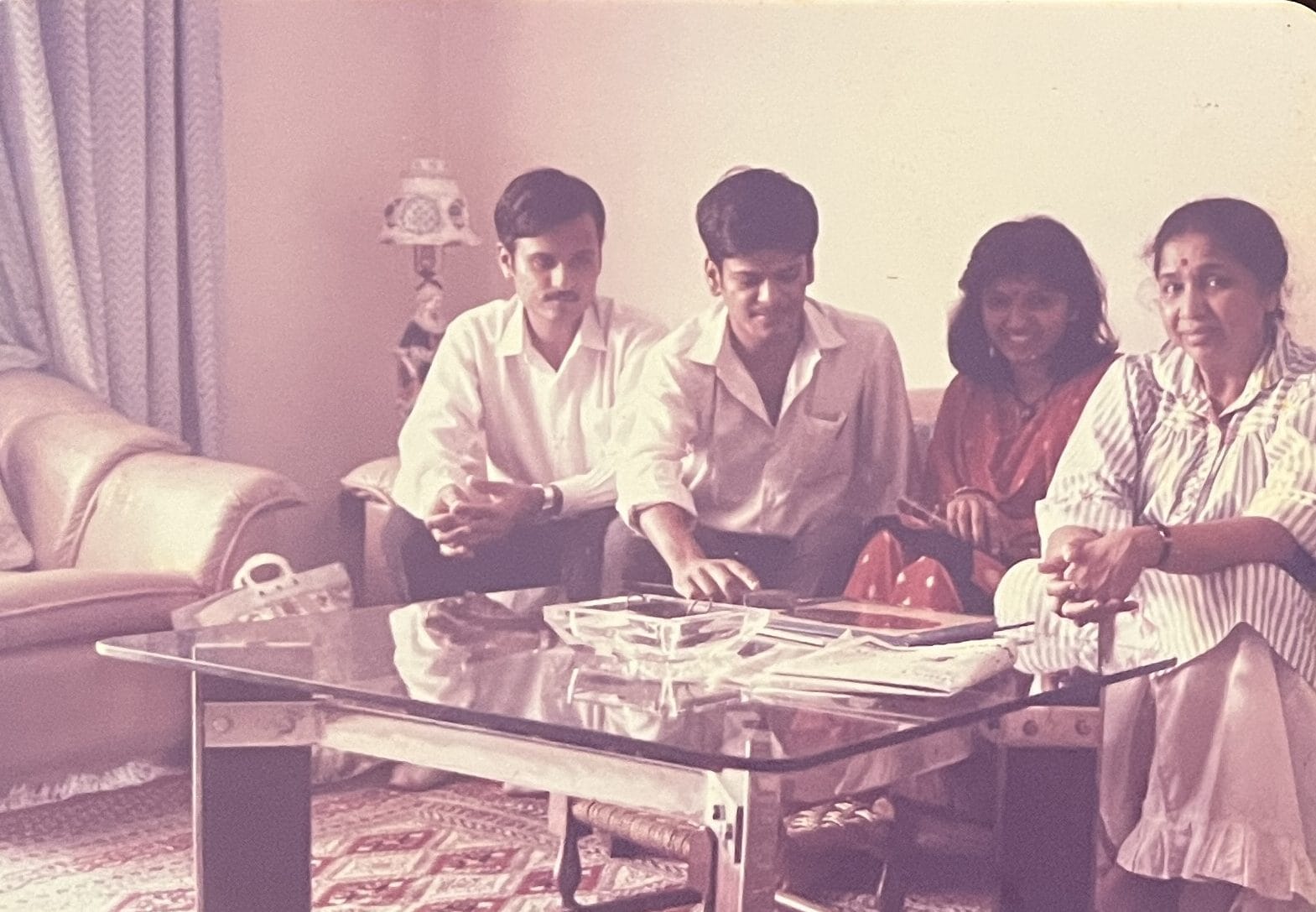
So, in the summer of 1990, Biren (25) and I (19) set out for Mumbai, determined to take our chances at meeting some of our favorite artists. Naturally, Asha Bhosle’s name was high on our list. Our cousin Paula Marwaha (neé Parikh), then 21 and living on Peddar Road, joined us in this adventure.
Our first stop was Shyam Benegal’s flat. We went there, only to find he wasn’t home. From magazines and even the telephone directory, we gathered a few more addresses. The next was ‘Himgiri,’ the residence of music director Salil Chowdhury. But we learned he had already left Bombay. Walking along Peddar Road, we decided to take another blind chance, as we had before, and headed to Prabhu Kunj—the home of the Mangeshkar sisters.
Coming from a small town in Central Gujarat, we had nothing to lose. That gave us the confidence—mixed with the foolhardiness of youth—to try our luck. At Prabhu Kunj, the guard stopped us right away. He asked if we had an appointment, a letter, or even a phone call. Paula quickly explained that we had tried to call, but the line was busy. Then the guard offered a suggestion: “Write a chit. I’ll give it to her. If she agrees, you can go in.”
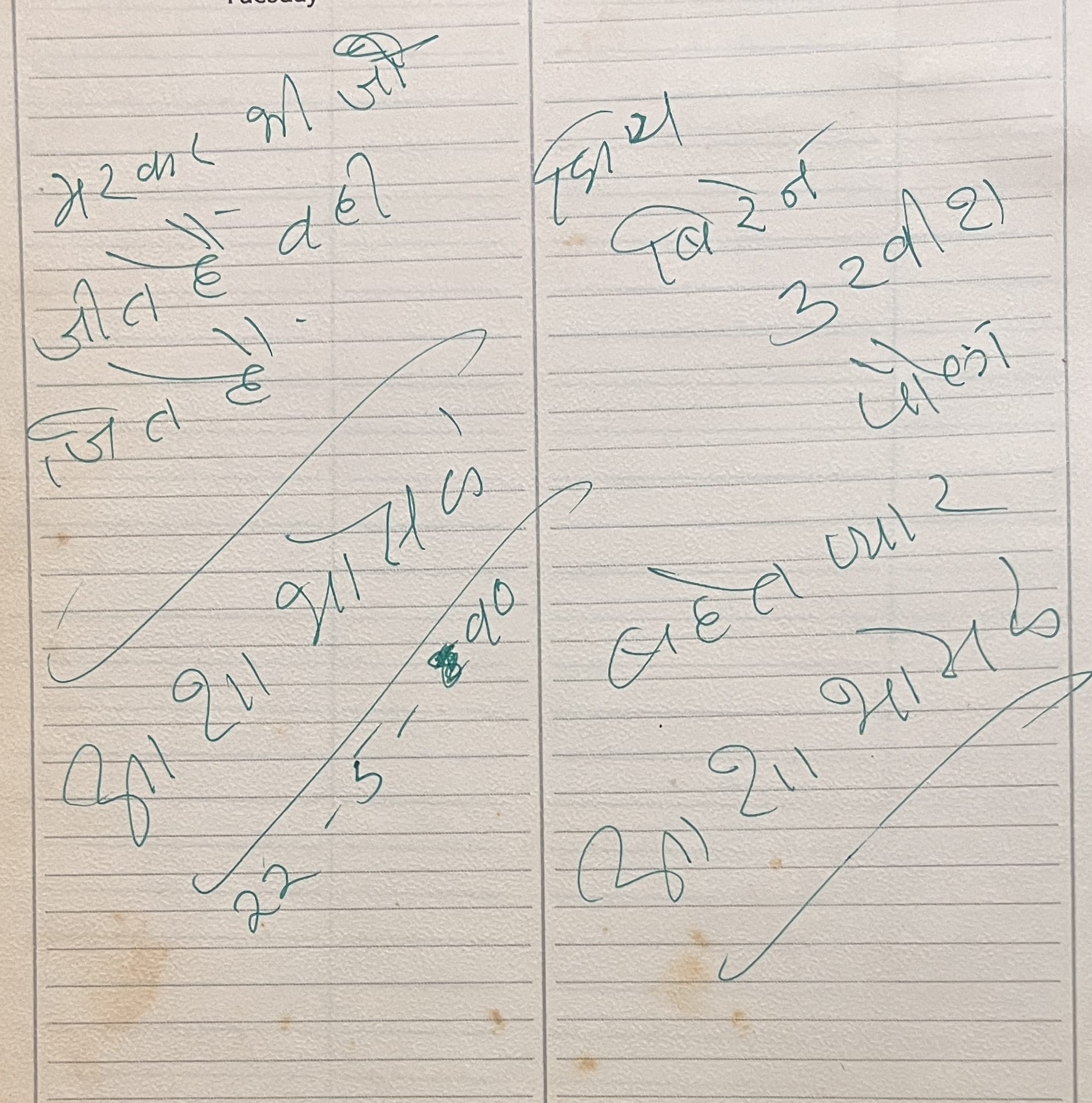
Biren tore a page from the autograph book and began: “Dear Ashaji.” What next? Suddenly, the song Aaye Hain Door Se came to mind. So I added the lines: “Aaye hain door se, milne huzoor se.” (I’ve come from far away, to meet my lover) Biren closed the note with, “Can we say this personally?”
The guard went upstairs, leaving us in nail-biting suspense. Time seemed to freeze. Then, to our astonishment, we saw him reappear at the door, signaling us to come up. It was completely unexpected, and for a moment we were stunned with delight.
Also read: Asha Bhosle was Bollywood’s queen of cabaret. She fought rejections, criticism of ‘bold’ songs
A candid conversation
As we stepped inside, the first thing we noticed was a framed photograph of Ashaji with Indira Gandhi on the left wall. A dining table stood to the right. The domestic worker asked us to sit on the sofa, and we did so, our hearts racing with excitement. A minute later, Ashaji emerged. It was around 11:30 in the morning. She was dressed casually in a night gown and overshirt, her face lit up with a broad smile. Sitting on a single-seater sofa, her very first question was, “Door se, kahan se aaye hain?” (How far have you come from?). We explained that we were from a village near Ahmedabad, while my cousin added that she lived just a few buildings away.
As she settled into her seat, Biren pulled out a tripod and an SLR camera—a rarity for ordinary people in those days. Seeing the professional-looking gear, Ashaji asked, “Professional?” We admitted candidly that it was borrowed from a friend. When Biren requested a photo, she glanced at her gown, laughed heartily, and gave us a silent but unmistakable yes.
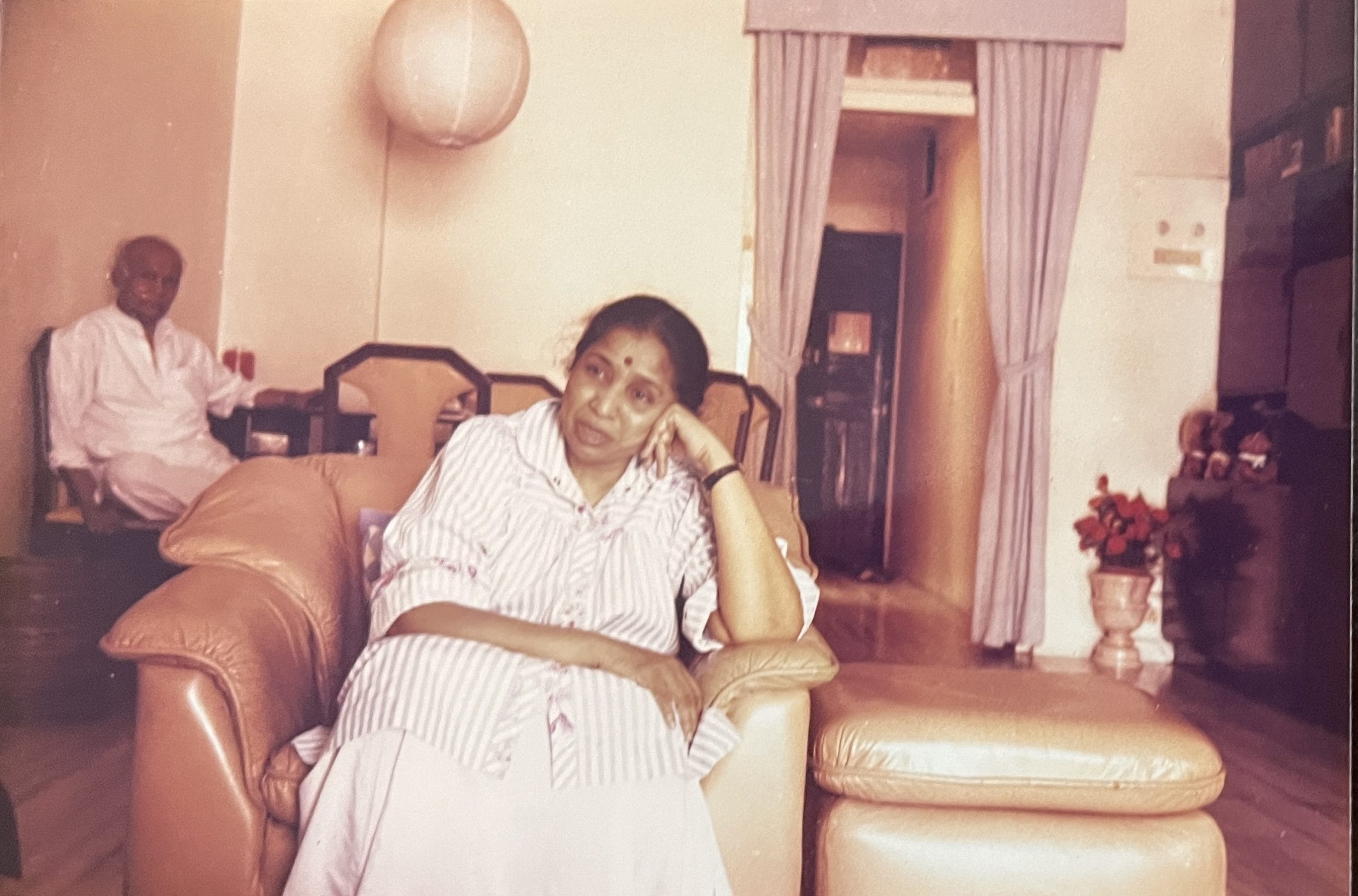
Sitting face-to-face with the great Asha Bhosle, we were awe-struck and momentarily lost for words. Gradually, the conversation found its rhythm as we spoke about her songs from the film Navrang, which we had recently been listening to. She asked, “Which one? Aadha Hai Chandrama?” We replied, “Not just that one,” and went on to mention other songs where her voice displayed astonishing variety.
As the exchange warmed up, she left her single-seater and joined us on the larger sofa. She began praising Bharat Vyas, the lyricist of Navrang, calling him a true Pandit. Then, after a thoughtful pause, she added, “Now we have Pandit Indeevar.” At the time, we knew little about Indeevar beyond a few of his newer songs, which seemed far below that level. When we mentioned this, she smiled knowingly and said, “Woh to roti ke liye” (“That’s just for the living”).
When we asked if she listened to new songs, she shook her head. She shared that she had tuned into the radio a couple of days earlier, but when a song came on, she couldn’t even make out the words, the music was poor, and everything sounded like rhymes strung together.
Also read: Ashatai was a serial stealer of hearts—her music, mimicry and kebabs will live on
Return gifts
Talking about our interest in the old songs, we told her we had visited the famous Rhythm House music store the other day and picked up some LPs. Curious, she asked which films. When we mentioned Nausherwan-e-Adil among others, she looked surprised. “That’s a very old movie,” she said.
Once the initial awe faded, our conversation with Ashaji became natural and easy—largely because she was so generous with her time and attention. She recalled the Gujarati lyricist-composer Avinash Vyas, with whom she had sung several popular songs, and even reminisced about eating at Manek Chowk, the famous food street in Ahmedabad’s old city.
At one point, I asked if there was any other instance besides Mother India where all four Mangeshkar sisters had sung together. She mentioned a Marathi film, then added that “Didi” (Lata) lived next door but was abroad at the time. “Otherwise,” she said, “I’d have asked her to meet you.” I blurted out, “Thank you, but we’re here to meet you only.” She smiled and turned to Paula, saying, “Meena [Mangeshkar] stays opposite your flat.”
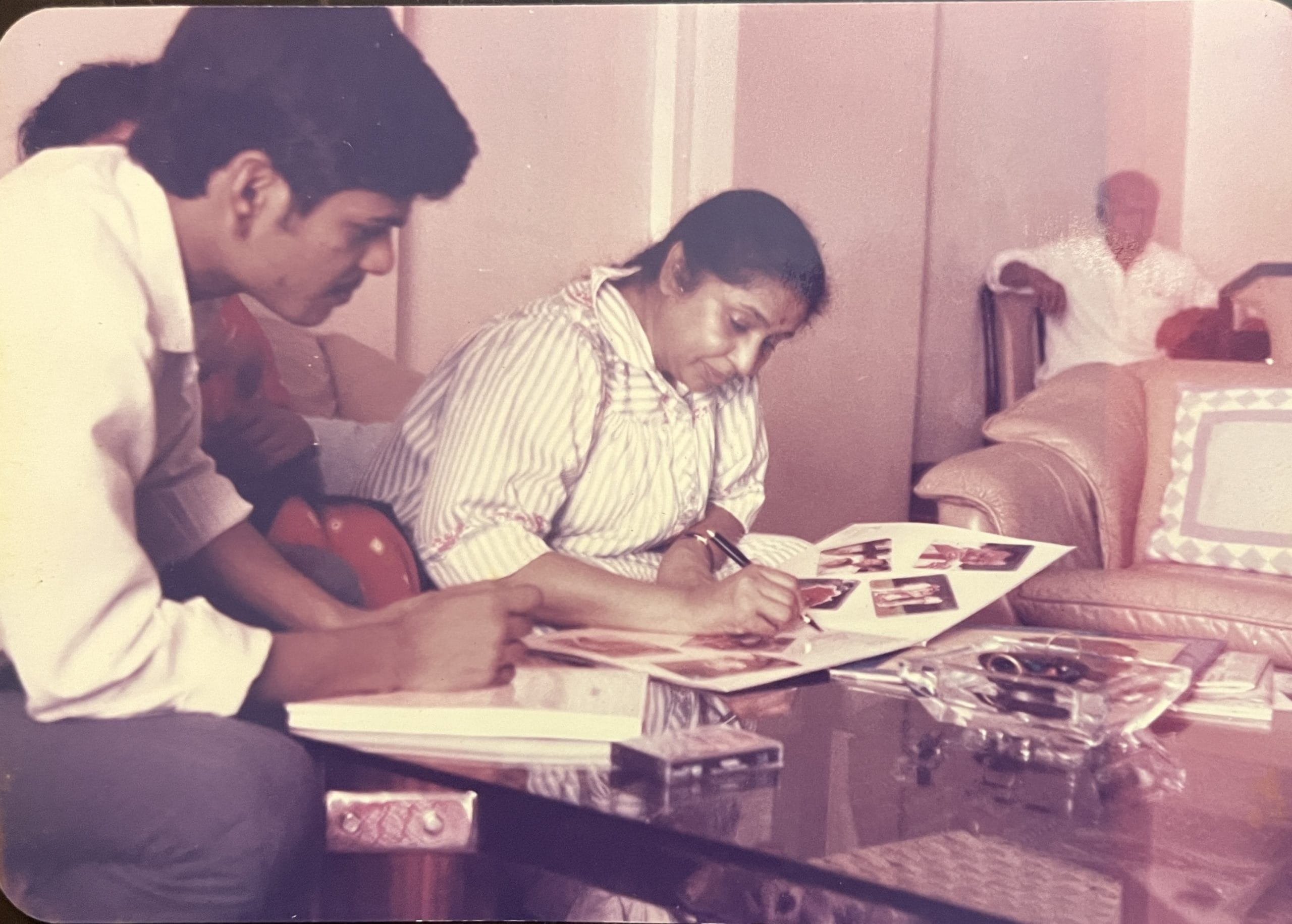
After a while, Ashaji went into her room and returned with a few treasures: Two double LP albums and an audio cassette. One was Dil Padosi Hai, a collection of non-film songs written by Gulzar and composed by RD Burman. The other was Meraj-e-Ghazal with Ghulam Ali. The cassette was Kasheesh, a compilation of her non-film Urdu ghazals. She picked up our pen to sign the LP covers, but the glossy surface resisted the ink. Laughing, she recalled how she had once pasted paper onto an LP cover when gifting one to Indira Gandhi.
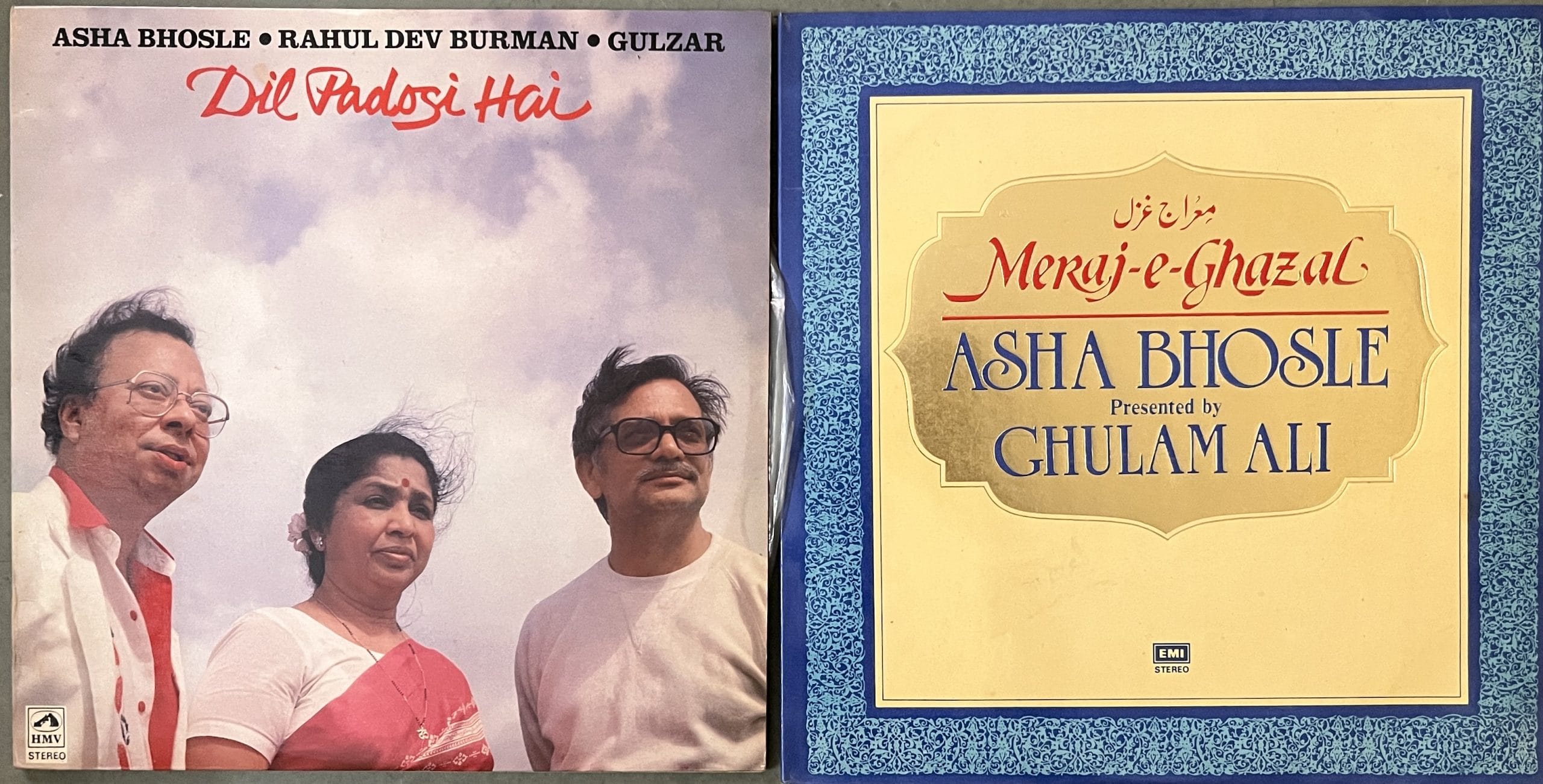
Paula whispered to me in disbelief, “Are we really supposed to take all these?” We too were astonished by Ashaji’s generosity toward complete strangers, random fans who had simply turned up at her door. She signed our autograph book, carefully wrote down our names, and even asked about the meaning of each one. After 20–25 minutes of what felt like an unbelievable dream, we finally took our leave. Yet her warm smile throughout that meeting has stayed with us ever since.
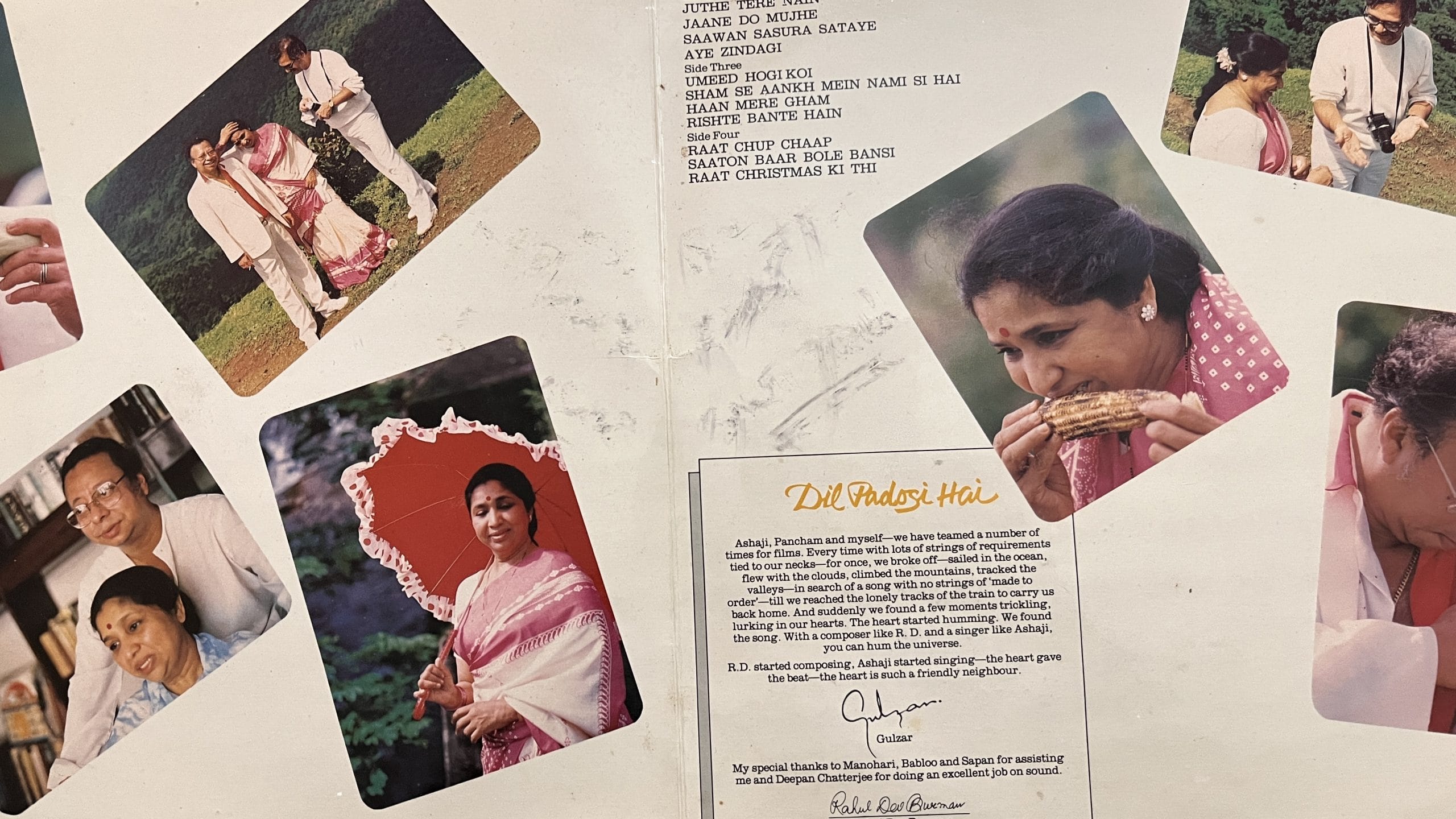
A couple of weeks ago, I wrote her a letter recalling that encounter from 36 years ago, enclosing photographs and requesting a brief meeting to relive the old one. Given her age, I knew it was a long shot—but then, that’s how we had met her in the first place. No reply came, and I understood why. Still, I had to try.
Now, with the news of her hospitalisation and passing, the words she once wrote in our autograph book echo in my mind: “Mar kar bhi jo jeete hain, wohi jeete hain.” — The only lives worth living are those remembered long after death.
 Urvish Kothari is a columnist and writer based in Ahmedabad. He tweets @urvish2020. Views are personal.
(Edited by Theres Sudeep)