









A verse attributed to Vidur is part of the moral advice given in the Mahabharata regarding the difficult decisions leaders and individuals must make:
त्यजेत् कुलार्थे पुरुषं ग्रामस्यार्थे कुलं त्यजेत् ।
ग्रामं जनपदस्यार्थे आत्मार्थे पृथिवीं त्यजेत् ॥
(For the sake of the clan, an individual may be sacrificed; for the sake of the village, the clan may be sacrificed;
For the sake of the Janapada/nation, the village may be sacrificed; for the sake of the soul, the earth may be sacrificed.)
In today’s geopolitical scenario, it is time to give a thought to the importance of the individual versus the importance of others.
The verse above speaks of sacrifice for progressively larger causes. But in the Iran War, which has engulfed and affected the entire world, does this verse from the Mahabharata suggest that it’s time to rethink? Should we not ask who decides what must be sacrificed and at what cost?
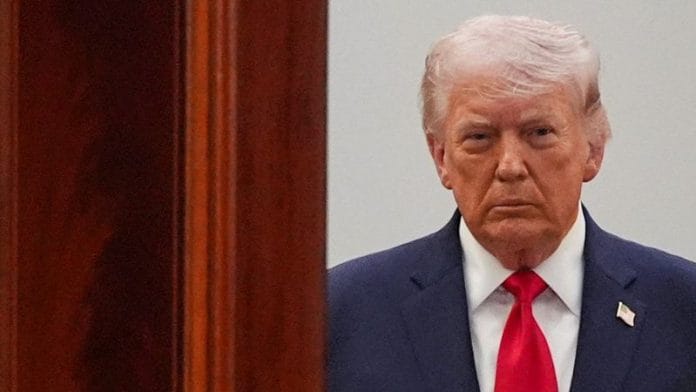
While we ponder this, American pilots were rescued from “enemy territory” and are waiting to be expatriated. United States President Donald Trump, in a statement, claimed that this was the first time that US pilots were rescued from deep within the enemy territory.
“WE WILL NEVER LEAVE AN AMERICAN WARFIGHTER BEHIND! The fact that we were able to pull off both of these operations, without a SINGLE American killed, or even wounded, just proves once again, that we have achieved overwhelming Air Dominance and Superiority over the Iranian skies,” Trump said.
Meanwhile, Iran on Sunday claimed to have destroyed several enemy aircraft, including US C-130 aircraft and two Black Hawk helicopters. As the war reaches its 35th day, neither side shows any inclination to back down.
Nations are justifying the loss of individual lives for national security and even entire communities for strategic dominance. Cities are reduced to collateral damage in the name of protecting borders (as in the case of the Russia-Ukraine War), ideologies (such as those used to justify the Venezuelan strike) or global influence (used in the Iran War). This echoes Vidur’s line, “For the sake of the nation, the village may be sacrificed.”
But the verse also demands a moral introspection. If the “self” is understood not as ego, but as conscience or humanity, then the verse challenges leaders to rise above individual interests and power politics, be it the ego of a leader, or the powers defining a particular nation.
When ‘greater good’ becomes endless war
Some individuals begin wars with the belief that it is for the “greater good”. History is littered with such examples. The Iraq War (2003-2011) was fought ostensibly to unearth WMDs (weapons of mass destruction) stashed away by a “dictator”. These claims were later proved false. The allegations against Iraq also included the claim that Saddam Hussein nurtured ties with Al-Qaeda and helped facilitate the terrorists involved in the 9/11 attacks. No credible claim of this link was ever found. Does one wonder whose interests were served in this war for “greater good”, which caused significant instability, insurgency, and high casualties in the region?
Meanwhile, the perpetrators of 9/11 and the super boss of Al-Qaeda, Osama bin Laden, were hiding away in Pakistan, a breeding ground for terrorism. And this is where the US Navy Seals eventually discovered him and took him out from the hideout.
Even the ongoing Russia-Ukraine conflict has turned into a devastating long-term war of attrition, with massive casualties on both sides. It has caused global economic disruption and severe energy and food shortages. It makes one wonder how many inches of explosive debris have covered the most fertile lands in Europe due to the detonation of warheads and have caused severe environmental issues across the region.
Interestingly enough, while Ukraine has been pouring all of its able-bodied men into the war of attrition with Russia, some young able-bodied Ukrainian men were on tourist visas in India. Rather than serving the “greater good”, the conflict has resulted in widespread suffering and geopolitical instability with no clear winners on either side.
The US-Israel-Iran conflict is the best example of the widespread instability, even as the rest of the world wonders about the reasons behind the war in the first place. Characterised as a campaign to destroy Iranian nuclear missile capabilities and proxy networks by the US, the conflict has brought unprecedented volatility to the Middle East. And the repercussions are felt as far away as Australasia: soaring energy prices (40 per cent increase as per Brent Crude), critical risks to regional security, and disruption of world trade are only the short-term ramifications. Economic hubs such as Dubai, Kuwait, and Abu Dhabi, once considered safe havens, are facing acute hardships. The actions against Iran ostensibly aim to counter nuclear proliferation and weaken a hub of terror, but was Iran actually a greater threat than, say, Pakistan?
Even the US allies in Europe are not in support of this war, further weakening the “greater good” argument. The Sanskrit verse assumes moral clarity in deciding what must be sacrificed for “greater good”. Today, that moral clarity is absent.
Also Read: India can welcome Lakshmi and build a Dubai-style tax haven
Whose narrative is it anyway?
In the years since the Second World War, conflict-ridden cacophony has been largely subdued. Armed conflict was deflected even at the height of the Cold War, which was more symbolic than based on any real action. Nations largely kept their peace, and the North Atlantic Treaty Organisation (NATO) and the Warsaw Pact (1955-1991) indulged national theatrics rather than actual warfare.
The early 2000s saw discussions turning toward technology, global warming, sustainable development goals, and GDPs started rising. As nations developed, so did our thinking. More and more people started speaking up, taking part in governance, and with the birth of social media, views were exchanged freely and loudly. Today, few people are in favour of war. War on its own volition is not an option for the world unless it is imposed on you.
The idea of the “agent provocateur” takes on unsettling significance in the context of the above Sanskrit verse. Traditionally, the verse assumes that sacrifice is made consciously for a larger, legitimate purpose. But the presence of provocateurs, state or non-state actors who deliberately incite violence, manipulate narratives or trigger disparate responses, disrupts the moral chain. Crises are manufactured where sacrifices seem necessary, pushing nations to abandon individuals, communities and ethical restraint under the guise of defending a greater cause.
Unless there is an agent provocateur, nations don’t fight each other. By and large, human history is more placid unless provoked. However, in instances such as in Syria, Pahalgam, and Venezuela, certain minority narratives have been invoked. Pakistan has maintained a narrative of oppression of Muslims, forgetting its own atrocities and ill-treatment of residents in Pakistan-occupied Kashmir and Balochistan and not least its own Hindus, Sikhs, and Christians. If the provocation of Pahalgam hadn’t occurred, Operation Sindoor wouldn’t have happened.
Similarly, Israel and Palestine had their own equilibrium until the 7 October 2023 attacks. Hamas provided the provocation. Differences are exploited by those who want to serve their own interests. In such a scenario, the hierarchy of sacrifice is no longer guided by dharma but by deception.
The ultimate warning of the shloka then becomes relevant, and moral consciousness demands vigilance against engineered conflict itself. Otherwise, there is a risk of humanity sacrificing the world for provocations carefully designed to make destruction seem justified.
No one’s war
NATO has become a “Non-American Treaty” as Trump consistently offers to exit. This has triggered French President Emmanuel Macron to say, “We all need stability, calm, a return to peace – this isn’t a show”, signalling his discomfort with the expansion of the current conflict. Macron’s recent insistence on restraint and seriousness in the Iran War reflects a broader concern – Whose war is it?
His implicit framing of modern conflict as “nobody’s war” is significant as it challenges the very premise of the Sanskrit verse when misused. If no one truly owns the war, then who has the moral authority to demand sacrifice?
Canadian Prime Minister Mark Carney first said that Canada “with regret” supported the war, even though international law was broken. But on 10 March, he told the House of Commons that Canada would “never participate” in the conflict. However, Canada would be willing to participate in talks to open the Strait of Hormuz, the closure of which has the world reverberating with economic repercussions.
This is the most populous this planet has ever been. We have a more inclusive and developed world. Nobody wants war, and this is a war that has been imposed upon us.
In light of the verse from the Mahabarata, is restraint a high moral ground, or does it enable further aggression?
Also Read: Pakistan is fence-sitting on Iran War. Tehran prefers it there
Cost of No One’s War
The cost of the ongoing war in the Middle East is already staggering across human, military, economic and trade dimensions. Thousands of lives have been lost, with widespread destruction of civilian and strategic infrastructure. Military expenditure has surged rapidly, with the US spending billions of dollars on a war that was supposed to end within a week but has been on for more than a month. Advanced weaponry and defence systems are being destroyed at rates that strain long-term readiness. Oil supply disruptions due to the blockage of the Strait of Hormuz have removed millions of barrels from the supply chain, driving up crude oil prices. I wrote about the tangible economic costs of the Iran war in my column dated 23 March.
The intangible costs are also surmounting. Investor confidence in the Middle East market, cost of airline shutdowns, cost to travel, damage to cities such as Dubai and Abu Dhabi, and the aftershocks of which are being felt all over the world. Shortage of helium, which is primarily sourced from Qatar, will make a significant dent in the semiconductor and automobile industries. The damage to desalination plants, energy plants and oil reservoirs in the Middle East will also have long-term environmental impacts.
Attacks on oil facilities are releasing toxic fumes, metals and pollutants into soil, water and air. Fires, oil spills and emissions are also exacerbating and accelerating environmental damage in the area.
“The repeated attacks by the aggressors in the vicinity of the active Bushehr nuclear power plant are of great concern. They expose the entire region to a serious risk of radioactive contamination with grave human and environmental consequences,” said Iranian Finance Minister Abbas Araghchi in his letter to the UN.
I shudder to think of the long-term consequences of the attacks on the nuclear facilities in the region.
Ultimately, “Nobody’s War” is the world’s burden, and is going to affect the global economy and all the countries. It will leave no one behind.
Geopolitical implications for India
When the world’s “great powers” act unilaterally, with complete disregard for rules, the UN is completely sidelined, and even advice from allies is disregarded. Is there a need for a new world order? And paradoxically, is there an opportunity for India, or does such a world order increase India’s vulnerability?
This disorder, driven by collapsing global norms, could push India economically backward, even toward energy and resource insecurity. Yet, read alongside the Sanskrit verse, this moment also offers India a geostrategic opening.
If the world is fragmenting into competing blocs, India need not sacrifice itself for any one power centre, but can instead preserve strategic autonomy by balancing relationships across the US, Russia, Iran, Israel and the emerging economies.
India needs a Non-Alignment Movement or engaging with all or any state for the greater good of the nation, in the modern neo-Cold War era. If we interpret “self” to mean sovereign national interest rooted in civilisational ethics, then India’s true opportunity lies not in choosing sides in a chaotic order, but in redefining the order itself by positioning itself as a stabilising force in a world where others are consumed by power. And where restraint, not alignment, may become the highest form of strategy.
Meenakashi Lekhi is a BJP leader, lawyer and social activist. Her X handle is @M_Lekhi. Views are personal.
(Edited by Insha Jalil Waziri)