









India’s social policy has long treated old age as a family matter and pensions as a token line item. This may be becoming an electoral misread. With Assembly elections due in 2026 in Assam, Kerala, Tamil Nadu, West Bengal, and Puducherry, parties will be forced to test their welfare pitch in states where ageing is already reshaping public-service expectations. Indians aged 60 and above increased from 7.6 crore in 2001 to 10.3 crore in 2011, a rise of 35.5 percent. Senior citizens constituted nearly 8.6 percent of the population in 2011; by 2026, their share would be around 11.4 percent. In absolute terms, that is roughly 13-14 crore older Indians today. The pipeline keeps widening as United Nations projections suggest the 60+ population will reach 20.8 percent by 2050, and exceed one-third by 2100.
The Election Commission of India’s (ECI) ‘Atlas’, released in February 2025, makes the age structure of India’s electoral roll hard to generalise. Nationally, the electorate is still anchored in the working ages, with 30-59-year-olds forming 60.63 percent of electors. The 18-29 cohort is 22.78 percent at the all-India level, although this varies significantly , from 38.80 percent in Dadra and Nagar Haveli and Daman and Diu to 18.04 percent in Kerala. Thus, revealing that electorates are, in effect, operating on different demographic clocks.
On the other end, older voters are already a decisive presence: 60-79-year-olds constitute 14.72 percent of electors nationally, and 80+, another 1.87 percent, implying that roughly 16.59 percent of India’s electors are 60+. In several states this is no longer a marginal share but a structural feature of electoral arithmetic, with Kerala at 20.46 percent (60-79) and 2.26 percent (80+), Goa at 19.19 and 2.57, and Tamil Nadu at 17.70 and 2.32. In these electorates, the senior share is at or above the youth share, making elder-facing service delivery a mainstream political test. These statistics underscore why ageing politics cannot be copy-pasted across states. India has not suddenly become an old country, but certain parts of India are already running older electorates— electorates that reward a different kind of competence.
Do Older Indians Vote More?
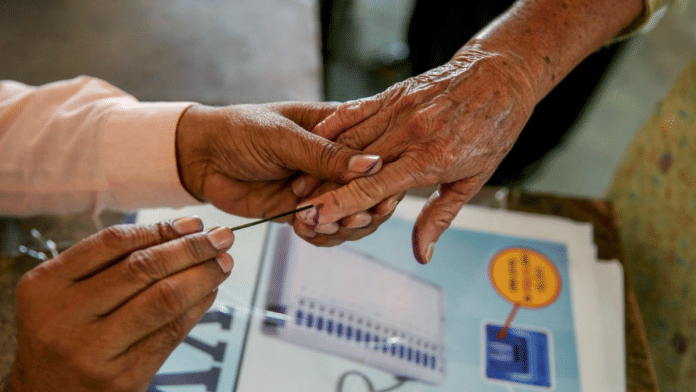
Political strategists should prioritise older voters for a simple reason since they tend to turn up for polls. In most democracies, turnout rises with age, and India has broadly followed that pattern. Among senior citizens, participation remains steady through the age of 60s and into the early 70s. The drop in numbers thereafter is attributed to physical barriers, which become more binding at advanced ages. Thus, ECI’s recent push on assisted voting matters. In the 2024 general election, the ECI extended an optional home voting facility for voters aged 85+ and for persons with disabilities (PwD) meeting the benchmark threshold, with polling teams visiting eligible voters at home. The Commission estimated that over 1.7 crore voters could potentially use this option, including roughly 81 lakh electors aged 85+ and 90 lakh PwD electors on the rolls. It is a signal that the state recognises the last-mile problem in democratic participation and is willing to invest administrative effort. This is distinct from the Atlas’s 80+ cohort: home voting applies to 85+, not all voters above 80.
Turnout patterns also reflect gender dynamics. India’s male-female turnout gap has narrowed sharply and, in recent elections, women’s participation has matched or slightly exceeded men’s. This is important in politics because women form a larger share of the oldest cohorts (due to their longer life expectancy). A rural-urban and household-structure shift is also underway: a large majority of older Indians still live in rural areas, while analyses show a growing minority living either only with a spouse (20 per cent) or alone (6 per cent), diverging from traditional co-residence arrangements.
Unlike some Western countries, India’s senior vote has not yet crystallised purely along ideological lines; factors like caste, community, and local candidate may often matter as much as age cohort. What is consistent is that senior citizens represent a reliable voting bloc that parties ignore. Their high turnout magnifies their influence, and policies that affect the elderly can therefore sway a share of actual voters, especially in close contests.
Policies and Promises Aimed at the Elderly
Health policy has become the most visible arena for this shift. Ayushman Bharat Pradhan Mantri-Jan Arogya Yojana (AB-PMJAY) began as a scheme focused on low-income households, but political messaging has increasingly acknowledged that age itself is a risk factor that overwhelms household coping. Alongside insurance, the state has also experimented with non-clinical support systems that recognise neglect and abuse as governance issues. The launch of ELDERLINE (14567) in 2021, which offers information, counselling, and field-level intervention, is also a step in this direction.
Parties have also learnt that older voters are most responsive to benefits that show up as predictable monthly relief, and not abstract announcements. This is best reflected in state politics, where social security pensions have turned into a competitive arena during elections. In Andhra Pradesh, the 2019 campaign quickly became a contest over pension amounts: the incumbent had already raised old-age pensions beyond the earlier baseline, while the opposition candidate promised a steep increase to INR3,000 per month. After the opponent won, the promise was implemented in phases, with an early jump to around INR2,250 and a slated one to INR3,000 within the term. Eligibility was also widened by lowering the age threshold from 65 to 60, bringing more households under the pension net. After a 2024 change of government, the earlier party returned to office, and the pension benchmark moved again, with an official order further enhancing the old-age pension to INR 4,000 per month. Irrespective of the fiscal logic, the political logic is transparent: a predictable monthly transfer creates a durable relationship with the voter.
Similarly, Telangana’s Aasara pension scheme, covering senior citizens and other vulnerable groups, was expanded in line with campaign commitments. Following an election promise made in 2018, the pension amount for senior citizens was raised to INR 2,016, and the eligibility age was reduced to 57. The beneficiary base ran into millions, turning the scheme into a large-scale interface between the state and older households.
Beyond cash and healthcare, governments have also used “quality-of-life” benefits to signal visibility. Several states have offered free or concessional travel for senior citizens. Delhi’s Mukhyamantri Tirth Yatra Yojana, launched in 2018-19, funded organised pilgrimages for senior citizens, covering travel and logistics for visits to major religious destinations. Madhya Pradesh has run comparable initiatives, including subsidised pilgrimage trains. Even smaller design choices matter in this signalling economy, such as priority arrangements and accessibility aids at public counters, and ramps and wheelchairs at polling stations. They do not substitute for long-term care systems, but they can shape how older citizens experience the state: either as friction, or as a service that is trying to become age-literate.
Embracing the ‘Grey Vote’
Eldercare needs local infrastructure. A practical manifesto plank would be to use the existing self-help group (SHG) ecosystem as a last-mile care and navigation layer. Trained SHG members can act as care navigators for older households: assisting with enrolment, appointment scheduling, documentation for disability and pensions, medicine refills, and referral follow-up, while also running caregiver support circles that reduce isolation and burnout. This approach could be administratively modest but politically meaningful since it would help reduce everyday friction. States can also contract credible Public-Private-Partnership (PPP) models for last-mile eldercare, such as home-based care teams, telemedicine-enabled follow-ups, and assistive-device delivery, with standard rates, quality audits, and grievance timelines so that the service does not collapse into app-only access.
Second, health coverage for seniors should be made legible as an entitlement. The recent expansion of AB PM-JAY in 2024 for the oldest seniors has already signalled that age is being treated as a policy criterion. The next credible step for parties to offer is a phased age-threshold expansion to 65+ or 60+, with a clear sequencing plan and financing logic. The promise has to be specific and include portable hospitalisation cover with defined empanelment targets, standardised grievance timelines, and a published utilisation dashboard by district.
Third, the ageing policy should shift from hospital cover to the “between-hospital” years. A senior package through primary care is the simplest place to show competence. This should include assured availability of essential non-communicable disease (NCD) medicines, routine follow-ups for hypertension and diabetes, basic diagnostics, fall-risk screening, and rehabilitation referrals. Preventive services need an explicit place in the political offer.
Fourth, disability and dependency should be treated as mainstream governance issues. A credible electoral commitment could be a time-bound service standard for disability certification, assistive devices, and home modifications, delivered through assisted facilitation and simplified documentation.
Fifth, age-friendly design should become a test of local government performance. Footpaths, crossings, seating, toilets, last-mile transport to clinics, and accessible public counters can shape the practical freedom of older citizens. A manifesto that commits to minimum age-friendly standards for urban local bodies and panchayats is, in effect, making a governance promise that older households can audit themselves.
Parties will keep courting the young, but the next electoral advantage will increasingly come from delivering ageing-friendly care that is local, predictable, and easy to access. Where seniors already rival youth on the rolls, the state that reduces daily friction might not need loud slogans to win their vote.
K.S. Uplabdh Gopal is an Associate Fellow with the Health Initiative at the Observer Research Foundation.
This article was originally published on the Observer Research Foundation website.
This is bad news from the fiscal point of view.