








Every year, the Economic Survey provides an assessment of the nation’s economic performance. This year, it extends its scope, offering insights into global transformations and the implications for India’s future trajectory.
At first glance, the Economic Survey 2025-26 appears reassuring. Economic growth remains robust at 7.4 per cent in FY26, inflation has reached a historic low, and the banking sector is in its healthiest state in decades. Public investment is thriving and, as stated by the Chief Economic Advisor, India stands as an “oasis of economic performance” amidst a fragile global environment.
However, a more thorough examination reveals a cautionary message. This Survey is not a celebration of success, but a measured warning that the traditional paradigms of global economic growth are no longer applicable.
The most notable shift in the Survey is philosophical. Historically, economic success was predicated on integration: increased trade, capital flows, and deeper global connections. The 2025-26 Survey acknowledges the fact that this era is ending. Trade is no longer reciprocal, markets are no longer neutral, and technology is increasingly weaponised. Export controls, carbon taxes, and geopolitical blocs are now permanent fixtures.
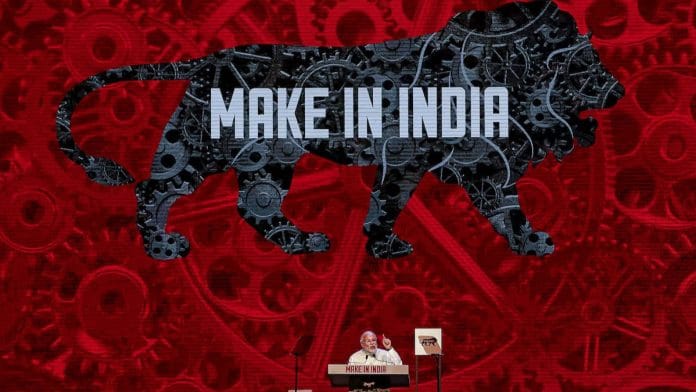
In this evolving global context, the Survey argues that ‘Swadeshi’ is no longer merely ideological nostalgia but a valid policy instrument. This term may evoke discomfort, which is precisely the intention. The Survey is careful not to confuse Swadeshi with isolationism. It does not advocate for closing borders; rather, it asserts a sharper claim: India must develop the capability to produce essential goods domestically in a competitive manner, not out of sentimentality. Strength in manufacturing, land reform, and domestic capability are not acts of protectionism; they are strategic safeguards.
Why self-reliance is no longer a dirty word
The Survey introduces a compelling metaphor, suggesting that India must concurrently “run a marathon and a sprint”. This implies that the nation must sustain steady growth while also preparing for potential disruptions by incorporating buffers, redundancy, and resilience into its systems. In an era when crises are frequent rather than exceptional, mere efficiency is insufficient; reliability has become paramount.
The macroeconomic indicators bolster this optimism. Inflation has been effectively “tamed and anchored”, averaging a mere 1.7 per cent between April and December 2025, marking the lowest level since the inception of the Consumer Price Index (CPI) series. This achievement is significant as it has been accomplished without suppressing demand. Consumption is on the rise, with private final consumption expenditure now constituting over 61 per cent of the Gross Domestic Product (GDP).
The banking sector is experiencing a resurgence in lending activities, with credit growth at 14.5 per cent, while non-performing loans have decreased to historically low levels. This rare combination of clean balance sheets and strong credit growth is crucial, as weak banks often hinder economic recoveries before they fully develop.
Public investment has clearly done the heavy lifting, with capital expenditure increasing more than fourfold since FY18. Infrastructure projects such as highways, railways, airports, and power systems have transitioned from abstract concepts to tangible outcomes. This is not merely a counter-cyclical stimulus; it represents long-term capacity building.
Also read: Budget 2026 numbers will be outdated within a month. This was avoidable
The real constraint is no longer growth — it’s state capacity
The Survey refrains from complacency, projecting growth for FY27 at 6.8-7.2 per cent, highlighting that the economic momentum must be actively cultivated rather than presumed. The global economic outlook is candidly characterised: even the most optimistic scenario is akin to “business as in 2025”, although more fragile. Adverse outcomes are not merely tail risks but plausible futures.
The Survey’s focus transitions from quantitative metrics to institutional frameworks. Policy credibility, predictability, and administrative discipline are no longer mere virtues, they are also strategic assets. Deregulation, particularly at the state level, is not portrayed as a cutback of state authority, but as a strengthening component through enhanced coordination, learning, and execution.
The message is unmistakable: India’s primary constraint is no longer macroeconomic instability but state capacity.
This is most evident in the domains of employment and skills. The Survey acknowledges the rapid evolution of job markets outpacing policy responses. Labour codes have been enacted, and gig and platform workers are now formally recognised. However, legislation alone is insufficient to ensure security; effective implementation is crucial. The true measure of success lies in whether formalisation tangibly improves livelihoods, particularly for women and young workers.
Climate policy is similarly devoid of platitudes. Climate action is positioned as integral to India’s development strategy, rather than a peripheral environmental concern. At the same time, the Survey explicitly identifies climate finance as the critical constraint. Domestic resources are not enough; without international capital and technology transfers, heightened ambitions are neither feasible nor equitable.
This honesty is commendable as it avoids moral posturing in favour of pragmatic feasibility.
Perhaps the Survey’s most underappreciated insight is that India’s delayed entry into fields such as artificial intelligence may be an advantage. Rather than pursuing energy-intensive, capital-heavy models, India can focus on smaller, task-specific technologies that address real issues. This is not technological pessimism but strategic pragmatism.
Taken together, the Economic Survey 2025-26 does not assert that India has reached its destination. Instead, it says that India is better prepared than most, yet preparation alone does not determine destiny. The era of easy globalisation has concluded, giving way to an era of resilience. In this context, growth will favour not the most open economies, but the most capable ones.
India’s current challenge is straightforward to articulate yet challenging to achieve: transform robust metrics into robust institutions, convert investment into productivity, and translate ambition into execution. The marathon continues, but the sprint has already begun.
Bidisha Bhattacharya is an Associate Fellow, Chintan Research Foundation. She tweets @Bidishabh. Views are personal.
(Edited by Aamaan Alam Khan)