






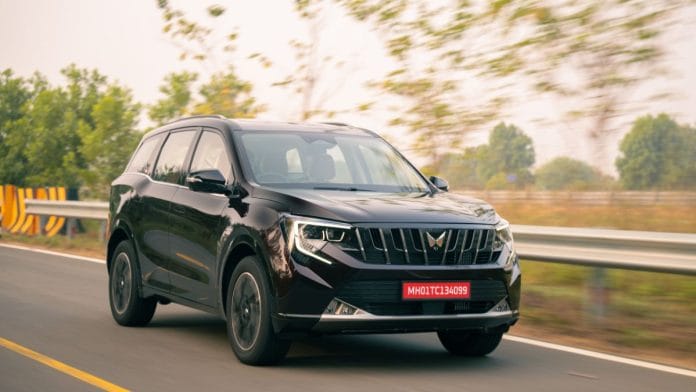



The two-lane road between Longewala and Jaisalmer is a beautiful piece of black top built by the Border Roads Organisation. The dips, crests, and sharp turns, along with the smooth surface, make it ideal to really try out high-speed handling on a car.
My drive began with views of endless sand, which gradually transformed into fields of crops. I saw acres of flowering mustard plants. It seemed surreal—things can change so dramatically. What is the metaphor I’m going for? That small, incremental changes can transform something, as is the case with the new Mahindra XUV 7XO.
On paper, the vehicle is a midlife facelift of the extremely popular XUV 700, but it feels quite different. During my chat with Velusamy R (Velu) at the launch event, the president of Mahindra’s automotive business and the man behind its recent engineering prowess, Velu spent 30 minutes explaining suspensions, shock absorbers, and body stiffness as he talked about the new ‘DAVINCI’ suspension on the vehicle. But talk is one thing, action is another.
Also read: More automation, more screens—what Indian cars will look like in 2026
Chalk and cheese difference
The new 7XO feels utterly brilliant to drive on the roads beside India’s western border. These roads were not flat; there were significant dips and crests, where many other vehicles would either bottom out or ‘float’ over. But the 7XO was planted, and even on the sharp corners where I went in a bit fast, the vehicle was steady. If you compare the 7XO with the old XUV 700, let alone the older XUV 500, it is chalk and cheese in terms of driving refinement. I drove for over 200 kilometres at high speeds, and I could do so with confidence in the vehicle.
Not that the XUV 700 was bad. It was a great highway cruiser and an indication that the Indian manufacturer had begun to up their game. But this SUV felt world-class, and in terms of fit, finish, and equipment, it really is. Sure, not everyone will love the interiors. Mahindra’s head of design Pratap Bose loves his piano black touches on the interior and exterior, which I’m certainly not a fan of. Mahindra should work on its steering layout and design.
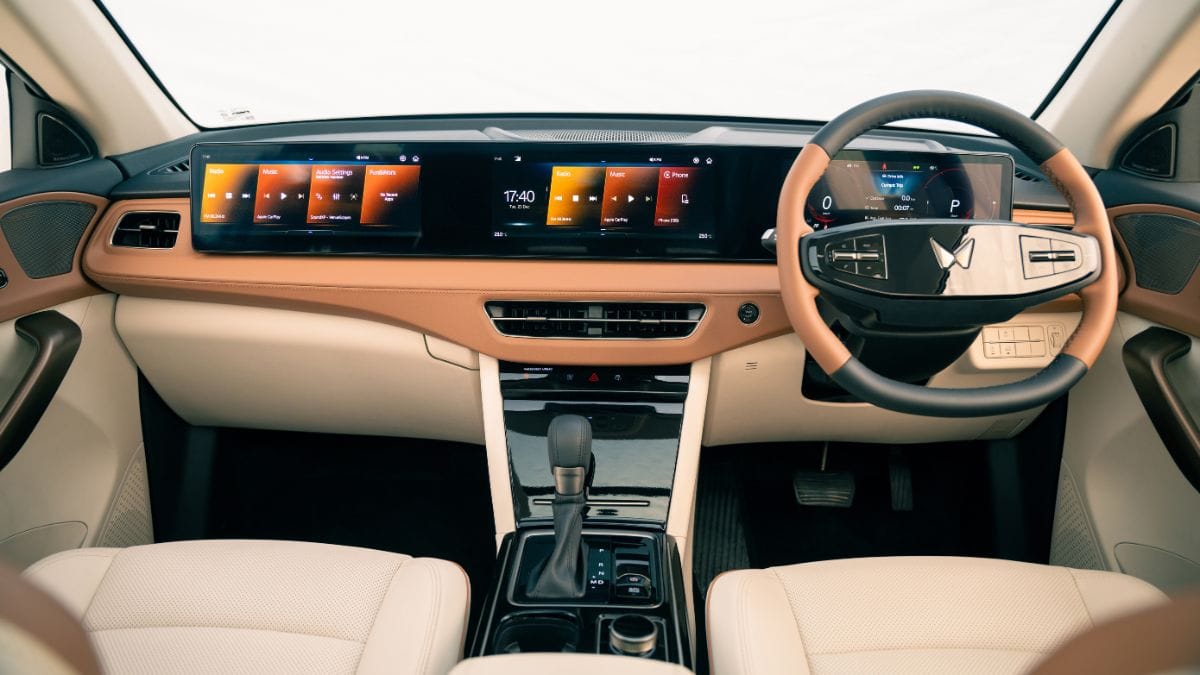
In terms of sheer equipment, however, Mahindra has really upped the game while not forcing its customers to break the bank. The top-specification vehicles have built-in ChatGPT integrated with Alexa—though I must admit I didn’t try that out. And this is all integrated with a Snapdragon 8155 processor that also has ‘Vehicle To Everything’ (V2X) mode.
What I did try out was the excellent audio system, a 16-speaker Harmon/Kardon system with Dolby Atmos built in, as well as ‘Sound Experiences’. To enjoy Dolby Atmos sound, you have to use the vehicle’s built-in Gaana application. But even without Dolby Atmos enabled, you really think you are driving in your own personal concert hall. Apple Music does support Dolby Atmos through Apple CarPlay, and Velu mentioned that Mahindra is working on getting the licenses for that. “Apple really wants everything perfect,” he joked.
As for not breaking the bank? The top-spec AX7L diesel automatic that I was driving has an ex-showroom price of Rs 24.11 lakh. The entry-level petrol manual AX starts at just Rs 13.66 lakh. And even the base version has the ‘coast-to-coat’ triple-screen set-up and Mahindra’s Adrenox system. While these prices are only for the first 40,000 customers, for all it offers, this is an incredibly good value from Mahindra.
Kushan Mitra is an automotive journalist based in New Delhi. He tweets @kushanmitra. Views are personal.
(Edited by Prasanna Bachchhav)