






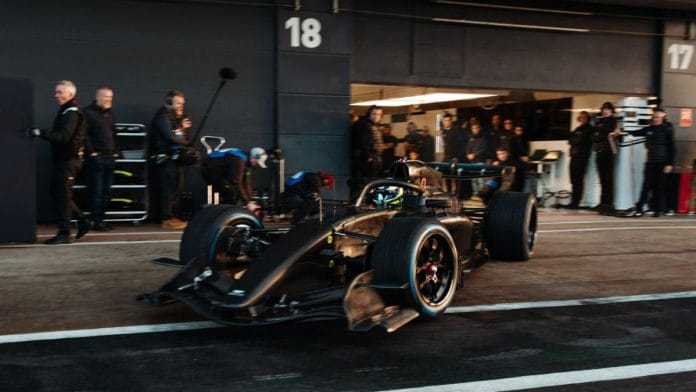



The wraps are off most of the contenders for the 2026 season of Formula 1. The first race in Melbourne is just five weeks away. Some are also excited for the next season of Drive To Survive, which comes to Netflix on 27 February with the inside story of the drama within the Red Bull team.
But more importantly for Formula 1 fans such as myself, the 2026 season brings some massive changes. These changes won’t just impact F1 and motorsports in general, but will also play a pivotal role in future drivetrain technologies and fuels. It has attracted new global manufacturers to the sport. Audi has bought the Sauber team, Ford has tied up with Red Bull to collaborate on powertrains, and General Motors is entering a new team in F1 through its Cadillac brand (although some hardcore fans will tell you that it is just a ‘Black Ferrari’).
But what are these changes and why are they so important?
F1 2026 overhaul
F1 goes through regulation changes every decade or so, sometimes with a mid-course adjustment. The last major change was the introduction of hybrid systems coupled to a small 1.6 litre V6 internal combustion engine. It led to an era of dominance for Mercedes-AMG and Red Bull, while the latter also benefited from aerodynamic changes over the past five years.
The changes for 2026 are huge. The governing body of F1, Fédération Internationale de l’Automobile (FIA), hasn’t just doubled down on hybrid technology, it has made the technology more important to the vehicle. Essentially, there will be a 50:50 energy split between the internal combustion engine and the battery. Drivers will be able to use an energy boost in parts of the lap, but will have to ‘harvest’ electrical power from regeneration in other parts. They won’t just be driving but also managing energy.
One could argue that this is not ‘pure’ racing. It is definitely not the era of high-revving V12 engines from Michael Schumacher’s domineering run of the early 2000s. The new version will involve a lot of management, bringing up a whole different skillset in drivers. I may not be as sceptical as other fans about this, but I am surprised that F1 is conducting its first track tests with these new vehicles behind closed doors. But I’ll reserve my judgment until I see the final product.
Also read: BMW’s record 2025 sales show India’s young professionals are moving into luxury cars
Changes in fuel technology
F1 is unique because it has to keep evolving in pace with the industry it represents. The sport has always been at the forefront of automotive technology. Many of the modern aspects we see on cars today have been forged in the crucible of high-speed motorsports. Modern materials such as alloys on engines, suspension elements, and technologies such as variable valve timing, which are standard even on entry-level small hatchbacks today, developed thanks to F1.
This is why F1 doubling down on hybrid technology for their powertrain is interesting, despite many calling hybrids ‘yesterday’s technology’. The fact remains that the all-electric racing series Formula E, where Mahindra participates, has been a damp squib as the top drivers in the world still race in F1.
The intense focus on hybrids in F1 might mean that major improvements will be seen on hybrid vehicles that you and I can drive very soon. But there is another development this year that has gone slightly under the radar with changes to the powertrain and aerodynamics: modifications in fuel technology.
This year onward, F1 cars will be fuelled by what is being described as ‘100 per cent sustainable fuel’. It seems to be a case of greenwashing, as F1 is anything but sustainable. However, this is interesting, especially in the Indian context, as the government’s move toward biomass-derived fuels including Ethanol blending in petrol has faced a degree of derision.
I’m still a bit unclear on what this sustainable fuel will actually be, but I do know that it will be derived from sources such as non-edible biomass and municipal solid waste. To me, it reads as Ethanol but from non-food sources.
So are F1 cars in 2026 and the foreseeable future going to be ‘flex fuel strong hybrid’ vehicles, like the ones Maruti intends to bring onto the Indian market this year? It certainly looks like it. And I don’t know if that will make for great racing.
Kushan Mitra is an automotive journalist based in New Delhi. He tweets @kushanmitra. Views are personal.
(Edited by Prasanna Bachchhav)