









During a rather animated debate with an automotive industry executive over drinks, he postulated a theory. Like many others, he too spent his summer holidays in Kolkata in the 1980s, when one constant feature of a rapidly deindustrialising West Bengal was routine loadshedding. For hours, there was no electricity.
The scenario was not particular to Kolkata, but to the entire India. And, anyone who could afford it had inverters at their homes. By the 1990s, many homes in Delhi’s posher localities had huge banks of lead-acid batteries in their stairwells.
And while the two of us agreed that this vestige of our shared past seems like a century ago, he argued that this had led to ‘generational’ trauma. How? Well, he argued that it had led to the reduced offtake of electric vehicles. “There is no reason electric vehicles should not sell, not just because they’re cleaner, but they’re just so cheap to run”, he said, maybe I’m paraphrasing, but this was the gist.
And this was well before the new electric vehicles that we have seen in the past 12-odd months, yet EVs remain just about 4 per cent of the overall market. And one reason, if I believe this gentleman, is that many car buyers in India still do not trust the electricity grid. And, when younger car buyers ask their parents for their opinions on a car purchase, EVs tend to get shot down as an option.
Historical reasons, coupled with a horror story circulated on WhatsApp (true or not) of someone running out of charge in the middle of nowhere, stymied EV sales. And to be fair, he had a point.
Vehicle To Load feature
This is changing, with large, long-range, efficient batteries and better cars. A Mahindra XEV 9e owner had told me it just happens to be an electric vehicle. I found it peculiar because those are exactly the words that Rajesh Jejurikar, the overall boss of Mahindra’s automotive business, had mentioned once.
And, I will admit that my apartment in South Delhi does not have any backup power. In fact, I’ve not had backup for the longest time, and unscheduled power cuts are incredibly rare in Delhi at least. In fact, many of the latest electric vehicles boast a feature called ‘Vehicle To Load’ (V2L), which allows you to use the car’s battery as a backup for your house.
And this brings me to what is happening a thousand or so kilometres west of the Kutch coast right now, which has led to an unprecedented energy crisis across the world. The rush on LPG cylinders is at the top of every news bulletin right now. And while Auto LPG is relatively limited in India, ask commuters in Chennai and Kolkata about the situation, and you will see them grumbling because auto-rickshaws run on Auto LPG in these cities.
But, as a petrolhead and knowing a bit about how petrol ‘is made’ and thus the refining process, the LPG situation will get under control soon enough.
Also read: Mercedes CLA 250+ is how future EVs should be. Here is why
Shortage of CNG
My worry is CNG supplies. And I don’t want to cause a panic, but India, like many other parts of the world, has rapidly ‘gasified’ its economy in the past couple of decades. Natural Gas, much of which is brought over from Qatar in cryogenically liquified form, is used to generate power, run kitchens, make fertiliser and well, run every CNG vehicle out there. And the rapid expansion of the CNG pipeline network across Northern and Western India has meant that almost one in every five passenger cars sold in India runs on CNG.
Now, CNG vehicles are ‘bi-fuel’, which means that they can also run on petrol, but why run on petrol when running on CNG costs almost half? Unless, of course, there is a shortage of CNG. And frankly, right now, nobody knows how long this brouhaha will continue, and while the occasional crude or gas tanker will escape through the Straits of Hormuz, given that India imports half their natural gas needs, this is going to be a problem because, unlike LPG, you can’t create natural gas from Crude.
There are some technologies, like coal gasification, among others, but if global gas supplies do not stabilise soon, the Indian automotive industry will feel the pain, because it is suspected that the government will prioritise gas supplies from domestic production to fertiliser plants and kitchens.
Of course, I could be wrong, and this could all be over by the time you read this, or we could be back in the 1980s, when Iran and Iraq fought an eight-year stalemate and bombed tankers down the Persian Gulf. But if there is a hiccup, and I suspect there will be, it could lead to a fundamental reshaping of the automotive industry yet again.
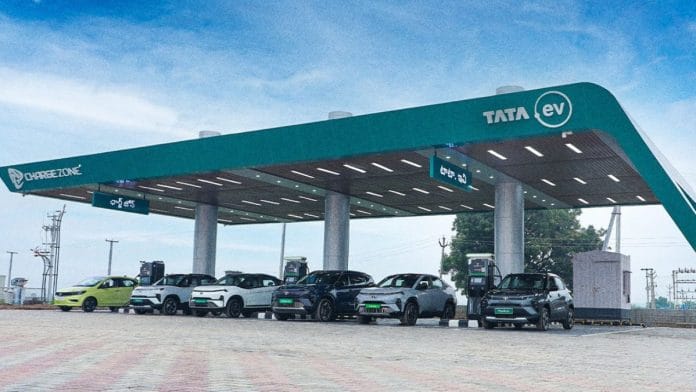
The trauma of long wait times at CNG filling stations could ironically be a push for electrification like no other.
Strange how these things turn out.
Kushan Mitra is an automotive journalist based in New Delhi. He tweets @kushanmitra. Views are personal.
(Edited by Saptak Datta)