









As the year comes to an end, it’s the perfect time to look back—not to count how much I wrote, but to sit with what it all meant. Writing week after week, I moved through conflicts, controversies, injustices, silences, and moments of uneasy hope. Each article felt urgent in the moment; in hindsight, that urgency shifts into reflection. What did we speak about repeatedly? What remained unresolved? What truths were too uncomfortable to stay in headlines for long? Before writing the final piece of the year, it feels necessary to look back at what stood out, what lingered, and what we collectively chose not to see.
Amid all the headlines, the shouting debates, and the endless political distractions, one reality stands out to me most sharply—and ironically, it is the one I barely wrote about. The climate crisis. Global warming. The slow, relentless unravelling of the world we live in.
It is not absent because it is insignificant; it has become normal. Heatwaves that kill, floods that erase livelihoods, winters that arrive late or not at all—these are no longer treated as emergencies but as seasonal inconveniences. In India, especially, where millions live at the mercy of monsoons, heat, and agriculture, climate change should have been at the centre of every conversation. Instead, it has been pushed to the margins, mentioned only when disaster strikes and forgotten the moment the news cycle moves on.
The new normal
Think about it: rising heat is now claiming one life every single minute across the globe. In India alone, 4,064 people have perished in just nine months. India also faces 4.2 per cent of global economic loss due to extreme weather events. And yet, does this stir the headlines, the debates, the sense of urgency it deserves? These aren’t isolated disasters; this is the slow, creeping toll of extreme weather, already showing its bite. And it’s only the beginning. But instead of waking upto a crisis, somehow, for us, it feels like it’s becoming the “new normal.”
What worries me most is the acceptance that this is just how things are now. That temperatures will rise, water will run out, air will choke us—and we will simply adjust. When a crisis stops shocking us, it stops mobilising us. And that, perhaps, is the most dangerous phase of all.
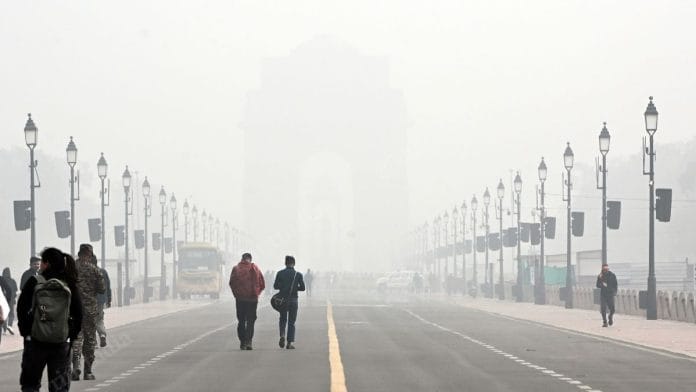
Cities crossing 45–50°C. Workers are collapsing on roads and construction sites. Elections held in searing heat. Schools shutting down, water tankers becoming lifelines. What this heatwave revealed is that global warming in India is no longer a future threat or an environmental issue. It is a governance crisis. A labour issue. A public health emergency. A gendered burden. A quiet culling of those least equipped to escape it.
Climate experts have been warning us for years that by 2050, India will be among the first places where temperatures will cross the limits of human survivability. Yet what we rarely discuss is the nature of the heat India faces. It is not just heatwaves—it is heat trapped inside humidity. The kind of heat where sweat no longer cools the body, where even a healthy person cannot survive outdoors for long. This is what wet-bulb temperature measures, and it is far more dangerous than dry heat alone. Surveys already show that over 70 per cent of Indians have experienced severe heatwaves, drought, water shortages, and suffocating air pollution in recent years. This is a lived reality now.
Also read: Indian-Americans are hating on Indians. They think it will save them from MAGA
Climate inequality
If we zoom in, the climate crisis in India is also a class crisis, and nowhere is this clearer than in the lives of workers. Heat does not fall equally. For those who can afford air-conditioned rooms, flexible work hours, and healthcare, rising temperatures are an inconvenience. For daily-wage labourers, construction workers, sanitation workers, farmers, street vendors, and gig workers, heat is a direct threat to survival. Missing a day of work because the body cannot endure 45 degrees means missing a day’s food. There is no paid leave from climate collapse.
Climate change, in this sense, is not just melting glaciers or rising seas—it is extracting labour from bodies already pushed to their limits, quietly deciding whose lives are expendable and whose comfort will be preserved.
At the same time, India’s position in this crisis is deeply paradoxical. We are not among the historical giants of carbon pollution, yet we stand on the frontlines of its consequences. This gives a responsibility—to play a firm diplomatic role and push the world’s biggest emitters out of their comfort zone. Climate action can no longer be treated as charity or goodwill; it is a legal, moral, and survival obligation. For countries like India, it strengthens the case we have long made: that development and climate justice cannot be separated, and that those who profited most from industrialisation must carry a proportionate share of the burden.
There were many notable events in 2025, but sometimes it is what slips through the gaps that is the most important. In a media cycle driven by the latest outrage, we must pay attention to the threats of the future and demand they be solved before it’s too late. The vulnerable in India are already paying the price of climate change. If not addressed, it will lead to a cascade of even more devastating and unpredictable consequences—social, economic, and political. Let’s make sure this is addressed—before it’s the only headline.
Amana Begam Ansari is a columnist and writer. She runs a weekly YouTube show called ‘India This Week by Amana and Khalid’. She tweets @Amana_Ansari. Views are personal.
(Edited by Ratan Priya)