






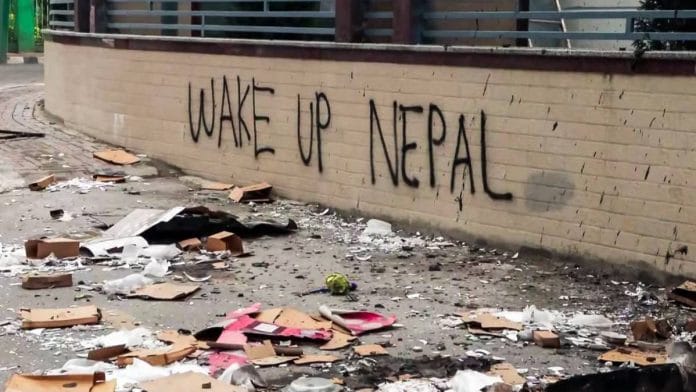



Nepal enters a crucial phase of electoral politics with the general elections scheduled on Thursday. Prompted by Gen Z-led protests in September last year, the snap elections would be a key step towards bringing political stability to the country. It would also ensure a government that reforms its institutions, creates jobs, ensures transparency in administration, and fights corruption.
Whether this would be another election bringing transformation—ending the cycle of instability—or another missed opportunity where power contests among the political leaders and parties would keep democracy and instability hyphenated—would be determined by the election results.
However, while the domestic populace is expecting transformative results from the elections, Nepal’s northern neighbour, China, is also closely monitoring the situation. If the old guard has to go and the new aspiring youth takes up the reins of the country, would Beijing find the same strategic convergence based on Panchsheela—five principles of co-existence—defining seven decades of Nepal-China relations, or would Nepal’s China policy undergo a shift?
Beijing’s engagement post Gen-Z movement
China has been quieter since the Gen-Z Movement in Nepal. The only immediate response from the Chinese Foreign Ministry to the events concerned the safety and security of Chinese nationals in Nepal, asking them to remain vigilant. Without naming the Gen-Z movement, China also hoped that “the various sectors in Nepal will approach the domestic issues properly and restore social order and national stability soon”.
This was a very measured and cautious response from China, considering Beijing has its own red lines, especially after the Tiananmen Square Protests of 1989—a pro-democracy uprising. Additionally, acknowledging a Gen Z-youth-led movement in its official responses or media reporting could likely see a buzz among the Chinese youth. After all, what happened in Nepal was not a Nepal-specific event, but a phenomenon seen largely in Asia—Indonesia, Philippines, etc.
At the same time, China’s Nepal policy has also been to capture public sentiment towards India, which sees New Delhi in a ‘hegemonic’ or ‘big-brotherly’ avatar. Hence, advocating a neutral stance on Nepal’s political affairs benefits China in fostering goodwill, projecting it as a development partner and a friendly country, and thereby solidifying its presence in Nepal. As a result, China, while avoiding the ‘Gen-Z’ word from its responses, has reportedly offered monetary support worth $4 million in cash as grants towards forthcoming elections.
The grant is reported to be used solely for four purposes: “mobilisation of election temporary police, uniform of election temporary police, logistical support for election temporary police, and election monitoring and oversight activities by the armed police force.” The funds are accompanied by a note stating, “Please ensure the funds are used exclusively for the aforementioned purposes,” indirectly cautioning against their use for political campaigning.
Also read: BBC documentary on Nepal Gen Z protest can flip upcoming elections. ‘Shot like enemies’
What would China expect?
Since the establishment of formal diplomatic ties with Nepal, China’s policy towards the country has largely been Tibet-centric, with security as the primary concern. For a country that borders Tibet and hosts a large population of Tibetan Exiles on its soil, Beijing has sought Kathmandu’s affirmation not to allow non-state actors using the Nepalese soil to cause instability in Tibet. Across the political set-ups and transitions in Nepal—absolute monarchy, panchayat system, constitutional monarchy or democracy—Tibet has found primacy in China’s Nepal policy since 1955.
Chinese concerns have also found all Nepalese governments responsive across different time frames, reflecting a policy coherence in their foreign policy towards China. Beijing, too, ensures that Nepal reiterates such a commitment in all official communiques.
For instance, during the 2008 Tibet uprising in the backdrop of the Beijing Olympics, China succeeded in persuading the first democratically elected government-led Prime Minister, Pushpa Kamal Dahal alias Prachanda, to quash the ‘Free Tibet’ demonstration by Tibetan Exiles in Nepal. These protests were held in solidarity with Tibetans raising similar demands in Tibet.
The police actions against Tibetans in Nepal were criticised by leading global human rights organisations, including Human Rights Watch. Interestingly, since 2008, public pro-Tibet demonstrations have sharply decreased, reflecting the Nepalese government’s cautious approach.
The second is China’s aspiration to gain an influential foothold in Nepal that challenges India’s traditional presence, and its desire to make Nepal a gateway to the broader South Asian region by building connectivity infrastructure in Nepal. The signing of the Belt and Road Initiative (BRI) with Nepal in 2017 was seen as a diplomatic success for Beijing, through which China envisions railway and road connectivity between Tibet and Nepal. Overall, be it the monarchy or the political parties, almost all have been receptive to China’s security concerns.
But this election comes with a warning: if the youth make it big in the forthcoming elections, will they be accommodating to China’s red lines on Tibet?
While elected governments tend not to go against established norms of foreign policy, new leaderships do bring changes, and shifts do occur. However, in China, youth may still not be a reliable agency for finding stability in the partnership. This could be because the youth have often been vocal about the Tibetan cause and have taken to the streets to join pro-Tibetan demonstrations.
Over the past two decades, Beijing has engaged with Nepalese youth by offering educational fellowships to study in China, thereby generating goodwill. Beijing also conveys its intentions for cooperation with Nepal through development and assistance, and that it does not meddle in Kathmandu’s political affairs. No doubt China needs assurances and reciprocation from Nepal without compromise.
Therefore, Beijing’s red lines have even found some place in the elections. One of the key youth leaders at the forefront of the Gen-Z Movement, who was reportedly initially offered a nomination under the Proportional Representation in the women’s quota by the Rashtriya Swatantra Party (RSP), was allegedly removed from the final list for her alleged link to the Free Tibet movement. In an Instagram post, she expressed her anguish over such a unilateral move by the RSP and denied having any connection with Tibet or the “Free Tibet” movement in her defence.
She wrote, “Hello everyone, I have not withdrawn my name from the Proportional Representation list, nor was I involved in my elimination, considering if the news is true. I have reaffirmed it again and again that I am not a Tibetan. I am not connected with “Free Tibet” activism in any manner. I do not have a Tibetan boyfriend. Anyone saying that they have found proof of me or my involvement in any of the above, PLEASE SHOW YOUR PROOF and EVIDENCE!! I challenge the accusers to PUBLICISE YOUR EVIDENCE.”
RSP’s official response to dropping a Gen-Z candidate is absent. But a candidate whose name was reportedly dropped from the list for forthcoming elections reflects the role of geopolitical sensitivities in Nepal’s electoral process. However, RSP may have opted for a more cautious approach and handled Chinese sensitivities, but this may not be a good sign for Nepal’s democracy because, in the best of democracies, differences and causes are given space.
But again, for a landlocked country, and a party seeking to make it big in the electoral fight against the traditional parties like Nepali Congress, Communist Party of Nepal-UML (CPN-UML) and Nepali Communist Party, playing safe could be the best available option to avoid headlines for unwanted reasons.
Also read: After being toppled by Gen Z, Nepal’s old guard is now chasing the youth vote
Beijing’s hope
With the elections knocking at the door, Beijing would expect Nepal’s China policy to continue and look forward to further improving it by infusing life into projects like BRI that, to date, have not seen the light of day. China has just sent a new envoy to Kathmandu, who was until recently the Deputy Director at the Department of Asian Affairs at the Chinese Foreign Ministry in Beijing, and he will have a major task engaging with the new government and providing a fresh start.
Meanwhile, if media reports are to be taken into account, the electoral verdict is in RSP’s favour. RSP’s Prime Ministerial candidate, Balendra Shah, popularly known as Balen, is also said to be leading the race against former Prime Minister and Chairman of CPN-UML KP Sharma Oli in the Jhapa 5 constituency. Reports also suggest that RSP’s overall campaign across Nepal is not without substance, and it has been able to build on the ground the Gen-Z movement opened for promising reforms and youth-centric development offerings.
If RSP comes to power, China would have to start from scratch to engage with Nepal, especially to ensure its security red lines find echo in the RSP’s establishment. Balen is often debated as a populist leader who lacks the experience at the national level, and his past role as the Mayor of Kathmandu may not be sufficient to meet the required experience. But if that is the case and Balen is elected to the top office, his opinions on foreign policy should be taken seriously in shaping a new foreign policy. Here is one case:
In November last year, Balen’s alleged ‘offensive’ tweet on his X handle, which was later deleted, made headlines. Stating Nepal’s neighbours as a distant country, Balen had allegedly posted, “Go to hell, you guys all combined can do nothing.” The post drew criticism and sparked media buzz questioning his leadership.
At the same time, Balen’s populist approach to domestic and external affairs could face an immediate uphill battle, as his nationalist posturing and a slight anti-establishment rhetoric risk unsettling China’s entrenched economic and political influence, potentially turning Kathmandu into an unexpected friction point for Beijing’s regional ambitions, or in that case, other countries, including India.
Moving forward, the forthcoming elections are not driven by anti-monarchy sentiments but by a call for change within the democratic set-up, where delivery of aspirations would determine the government’s administrative success. And a forward-looking foreign policy would further enhance the country’s development. However, now all hinges on the forthcoming leadership.
Rishi Gupta is a Commentator on Global Affairs. Views Personal.
(Edited by Saptak Datta)