







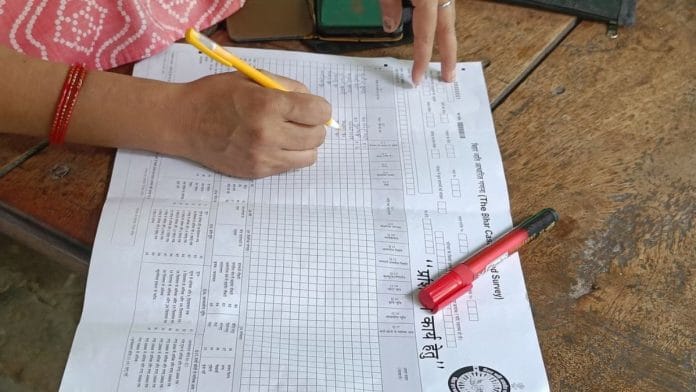


The 16th decennial Census of India—originally due in 2021—has been delayed by six years, the first such disruption since synchronous censuses began in 1881. With the last census conducted in 2011, India has been operating with data that is over a decade old, creating a serious deficit in a rapidly changing society. This gap has affected welfare allocation, poverty estimates, administrative planning, and our understanding of migration and urbanization, while also weakening the reliability of surveys built on outdated population frames. There is now reason for cautious optimism: from Apr 1, 2026 India has begun the monumental exercise of enumerating over 1.4 billion people. This is the world’s largest peace time administrative exercise involving nearly 3 million people.
The census is not merely a headcount; it offers a comprehensive snapshot of society at a given moment. It captures population composition across dimensions such as age, sex, religion, caste, language, literacy, occupation, and living conditions, at highly granular levels down to villages and urban wards. This allows the state to map social structure, spatial distribution, and inequalities with considerable precision.

Census data shape democratic representation through delimitation, influence the balance of federal power, guide resource allocation, and underpin welfare targeting. They also inform long-term planning in sectors such as health, education, and infrastructure. In this sense, the census functions as a foundational tool of governance, structuring policy and state action for the decade that follows.
District administrators await updated District Census Handbooks for planning service delivery. In the past fifteen years, districts have proliferated rapidly; many newly created districts still operate with outdated population baselines. Local governments—Panchayats, Municipalities, and Municipal Corporations—have continued to rely on 2011 data, even as population growth, migration has been uneven and spatially concentrated.
India’s statistical system depends on the Census as a denominator: fertility rates, literacy rates, workforce participation, poverty estimates, and sampling frames all require accurate population counts. Policymakers need updated population structures to design welfare and infrastructure investments. Economists, demographers, policy researchers, and social scientists in general await fresh data to understand migration, urbanisation, language shifts, and the changing social fabric. The media anticipates political implications—especially regarding caste and delimitation.
Census 2027

The first phase of Census 2027 Houselisting operations (April 1 to Sept 30), in all states and union territories. This new census introduces for the first time digital enumeration, option for self-enumeration, and has expanded socio-economic questions. With 33 questions, the houselisting phase captures housing quality, family composition, and social category, and measures economic status through ownership , basic amenities (water, sanitation, electricity, and cooking fuel), along with household assets and digital access like phones and internet. Rather than direct income, it relies on these proxies to assess living standards, underscoring the census as a tool for mapping everyday conditions and supporting welfare delivery.
The second phase , population enumeration (Feb 2027, barring snow clad regions in J&K , Himachal Pradesh, and Uttarakhand), will focus on population, age composition, education, mother tongue, caste, migration and fertility. It will highlight the differential growth rate across the states, reigniting debates on population change and development and fiscal devolution across the states. For the first time since 1931, detailed Caste enumeration will take place, likely shuffling the equations of caste and reservation and caste and political representation.
The Census captures the demographic transition – impact of fertility and mortality decline, urbanization and urban growth, Urban agglomerations. India’s fertility rates across all states have declined rapidly to below replacement rate, at a rate far beyond what demographers expected. The Census will show its impact on the declining child population decline and bulging youth population at a granular level which no survey can accomplish. Census provides spatial distribution of population, across the administrative boundaries from the state and district to the lowest admin level of village and wards. This will provide an accurate sampling frame for the future surveys providing a robust spatial and statistical foundation for governance and research in the decade ahead.
The history of the Indian Census is inseparable from the history of the Indian state itself. The conquest of India by the East India Company was not only a political and economic project but also an epistemic one—an attempt to systematically map, classify, and understand a vast and diverse subcontinent. This impulse found expression in a series of ambitious surveys: the route surveys led by James Rennell, the topographical surveys of Mysore and southern India under Colin Mackenzie, and the monumental Great Trigonometric Survey of India initiated by William Lambton and later continued by George Everest (Clements R Markham, 1878). Alongside these geographical projects, early educational surveys in Madras (under Thomas Munro), Bengal (William Adam), and Bombay (Mountstuart Elphinstone) began documenting indigenous institutions, including schools and patterns of enrolment (Rao, 2025/2025). Enumeration, in other words, emerged as a central tool of governance.
The evolution of census-taking in the early nineteenth century offers a revealing lens into how colonial administrators sought to comprehend Indian society. Early efforts were fragmented and experimental, focusing on estimating populations of cities and districts while attempting to classify people by varna, caste, religion, language (“tongues”), and tribal identity (“aboriginals”)(Natarajan, 1971; Waterfield, 1875, Dyson, 2018). These exercises were often shaped by limited understanding, leading to crude and sometimes deeply biased classifications. Yet, they marked the beginning of a systematic effort to render Indian society legible to the state.
The first asynchronous, all-India census in 1872 represented a major turning point. Covering British Indian provinces and select princely states such as Mysore, it provided unprecedented detail on population size, sex ratios, religious composition, and the complex problem of caste classification across regions (Natarajan, 1971b, 1971b; Waterfield, 1875). Over time, the census became more methodologically rigorous and administratively comprehensive. Improvements in enumeration techniques, better geographic coverage, and more refined categories—age groups, caste and tribe classifications, language, literacy, and occupation—reflected a maturing system. Importantly, successive censuses also began recording inter-censal changes, documenting the demographic impact of famines, epidemics, and other shocks, thereby creating a longitudinal archive of India’s social and demographic transformation.

Equally significant is the evolution of classification itself. Early colonial categories were often shaped by racial, ethnographic, and even eugenic assumptions. However, by the early twentieth century, these classifications became more standardized and empirically grounded. Caste and tribe enumeration, for instance, was progressively refined, eventually forming the basis for the identification of “Depressed Classes” and “Tribes,” which later informed the constitutional categories of Scheduled Castes and Scheduled Tribes (J. H. Hutton, 1933; Simhadri & Ramagoud, 2022).
These classifications would go on to shape postcolonial policies of affirmative action, including later exercises such as the Mandal Commission’s identification of Other Backward Classes (Chandrachud, 2025). Similarly, linguistic classification matured through the monumental Linguistic Survey of India led by George Abraham Grierson, with the 1901 Census offering one of the earliest systematic accounts of India’s language families and diversity (Grierson, 1903).
Beyond social classification, the census also serves as a continuous record of India’s political and administrative evolution. It documents boundary changes across districts, provinces, and princely states, offering a longitudinal view of territorial transformation—from the partition of Bengal and the separation of Burma to provincial reorganizations under colonial rule. In the post-Independence period, census records capture the integration of princely states, the consolidation of administrative units, the exchange of enclaves, linguistic reorganization, and the creation of new states driven by ethnic, tribal, and developmental aspirations (Natarajan, 1971b). It has also, at times, reflected moments of internal conflict and upheaval, including disturbances in regions such as Assam, Punjab, and Kashmir (Narayan, 2023).
Finally, the census chronicles the changing socio-economic landscape of India. It tracks processes such as urbanization, the rise and decline of cities, shifts in occupational structures, and transformations in living standards. From the growth of colonial port cities to the expansion of postcolonial metropolitan regions, the census provides a continuous empirical account of India’s transition from a predominantly agrarian society to an increasingly urban and diversified economy.
Thus the Indian census is far more than a statistical exercise. It is a historical archive of India’s evolution—of its society, state, and economy. To read the census carefully is to trace the making of modern India itself.
Also Read: Census 2027 is special. It could undo the 1971 freeze on constituencies
Why Censusnama?
Censusnama is a long-form series that traces the evolution of the Indian Census—from its early origins in the colonial era to present. Censusnama will give an overview of the complex administrative and technical exercise of making the Census and the core results of the Census every decade. The series will place the Census process and its findings within a broader political and social context of the era.
Each decennial Census has been a mirror to its time: famine, plague, migration and urbanization, world wars, Partition, linguistic reorganisation, Green Revolution, liberalisation, demographic transitions, decentralisation, insurgency —all leave their imprint on enumeration. Tracing the evolution of the Indian Census helps us understand how understanding of India has evolved and the lens through which the British administrators and the Indian authorities saw and documented the Indian population.
Dr. Shivakumar Jolad works as Associate Professor (Public Policy), and is the Chair of Center for Legislative Education and Research and Director India State Stories, FLAME University, Pune.
Gaurav Kalyani works as Research Associate for the India State Stories Project at the Center for Legislative Education and Research, FLAME University, Pune.
Nishitha Mandava, is an independent researcher and research consultant for Center for Legislative Education and Research, FLAME University, Pune.
This article is part one of a six part series on Census 2027.
This article has been published with permission from India State Stories. Read the original article here.
Some numbers have been scrawled on the wall outside our flat, in preparation for the Census. Will have to check how Ananya and her parents, living in Singapore, will be enumerated.