






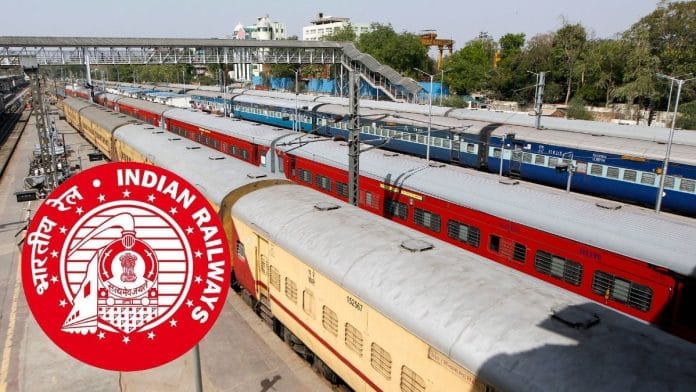



As the Union Budget approaches, Indian Railways is once again at the centre of India’s infrastructure narrative. Few public institutions are as consequential. Railways underpin mass mobility, freight movement, and regional integration. It’s also central to India’s logistics efficiency, climate commitments, and urban future.
Yet, despite record capital allocations in recent years, outcomes remain mixed. Operating ratios remain uncomfortably high, project delays and cost overruns persist, freight continues to lose share to roads, and private investment in the sector remains limited. These challenges are not primarily a function of inadequate funding. They are the result of an institutional model that has outlived its economic context.
The forthcoming Budget offers an opportunity not just to allocate more resources, but to rethink how Indian Railways is structured, governed, and financed.
Sequential, partial privatisation
Indian Railways today combines too many roles within a single organisation. It is simultaneously the policymaker, infrastructure owner, operator, service provider, and regulator. This concentration of functions weakens accountability, blurs incentives, and discourages competition.
The financial consequences are well known. Passenger fares are politically constrained, causing massive losses, and freight tariffs carry the burden of subsidising passenger losses, which erodes the rail’s competitiveness vis-à-vis road transport. While headline capex numbers have risen sharply, internal resource generation remains weak, leaving Railways dependent on budgetary support and extra-budgetary borrowing. The institution’s execution capacity has not kept pace with its ambition, resulting in delayed deliveries and escalating project costs.
Crucially, despite repeated policy intent, private participation has remained cautious. Investors face opaque access pricing, policy risk, and the absence of a neutral regulatory framework. In effect, Railways is attempting to attract private capital without first reforming the institutional conditions required to sustain it.
Debates around rail reform in India often stall on the word “privatisation”. Framed narrowly, it raises concerns about affordability, equity, and loss of public control. But this framing misses the larger point. The real policy question is not whether the state should withdraw from Railways, but how it should redefine the organisation’s role.
The most effective rail systems worldwide separate infrastructure ownership from service provision, retain strong public oversight, and introduce competition in operations. Japan’s rail transformation, for instance, was not about asset sales alone, but unbundling functions, professionalising management, and allowing private operators to drive efficiency within a regulated framework.
India does not need a big-bang privatisation. What it needs is sequential, partial privatisation, focused on services rather than sovereign assets.
Also read: US invasion of Venezuela is end of international order. India must focus on cold calculations
What the Budget can signal
The Budget is uniquely placed to provide credibility and direction to such a transition. Rail privatisation could unfold in three steps.
First, the government should clearly signal the separation of roles within the rail ecosystem. An independent Rail Regulatory Authority—long proposed but never operationalised—should finally be established to monitor track access charges, safety standards, and dispute resolution. Without regulatory neutrality, meaningful private participation will remain limited.
Second, privatisation should focus on operations and services. Passenger train operations on high-density and premium routes, freight services on dedicated freight corridors, station management, logistics, and maintenance are natural candidates for competitive provision. Core infrastructure—tracks, signalling, and land—should remain in public ownership, reinforcing the state’s strategic role.
This approach preserves public control while allowing efficiency gains where they matter most: reliability, punctuality, asset utilisation, and customer experience.
Third, Railways must be made genuinely investible. Despite large allocations, most capex continues to be funded directly from the Budget. A shift toward a rolling multi-year rail investment plan, standardised PPP contracts, viability gap funding for socially necessary routes, and long-tenor infrastructure bonds could crowd in private capital without increasing fiscal stress.
Also read: When did the 1965 India-Pakistan War start? A key point of contention at the Tashkent summit
Next stage of rail reforms
Chronic cost overruns remain one of the least addressed structural problems in Railways. Projects are often tendered before land acquisition and clearances are complete, while procurement norms prioritise the lowest cost over execution capability.
Here, institutional reform matters as much as money. The Budget should mandate pre-tender completion of land and statutory approvals for large projects, encourage quality and cost-based procurement for complex works, and strengthen centralised project management capacity—drawing selectively on private-sector expertise.
Private participation in construction, operations, and maintenance also introduces contractual discipline and accountability that departmental execution often struggles to enforce.
Rail reform must be politically and socially sustainable. This requires clear safeguards. Infrastructure ownership should remain sovereign. Existing employees’ rights must be protected, with privatisation limited to new services and assets. Passenger subsidies, where necessary, should be made explicit through budgetary support rather than hidden cross-subsidies that distort pricing and investment decisions.
In fact, by improving efficiency and reducing fiscal leakages, reform enhances the state’s capacity to meet social obligations. As India urbanises and integrates into global value chains, Railways must evolve from a monolithic operator into a national rail platform—one that enables multiple service providers, attracts private investment, and delivers reliable, affordable, and sustainable transport.
The upcoming Budget need not announce dramatic departures. But it must send a clear signal: incrementalism has reached its limits, and institutional reform—anchored in sequential, partial privatisation—is now essential for Indian Railways to support India’s next phase of growth.
Shishir Priyadarshi is president, Chintan Research Foundation. He tweets @priyadarshi_crf. Views are personal.
(Edited by Prasanna Bachchhav)
Before embarking on complicated process of railway privatization, please go through the British experience of railway privatization….rather a good railway minister can turn around railway into great asset for government and citizen alike.
Privatization does have benefits but world wide privatization of railways has only yielded mixed results.
Socialist India doesn’t have the guts to end cross subsidies, privatise operations and services. India is addicted to socialism and will suffer with it for eternity.