






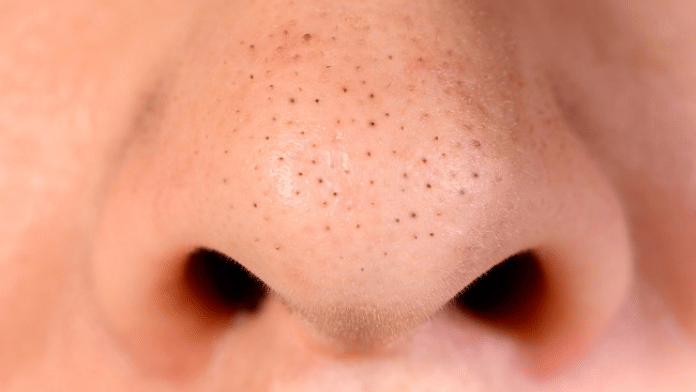



Almost every week in my clinic, I meet someone who shows me their nose and says, “Doctor, see these black dots? I’ve been using nose strips for years, but they just keep coming back.”
Blackheads are one of the most common — and most misunderstood — skin issues in both teenagers and adults. Nose strips and blackhead peel-off masks (the charcoal ones that promise to “pull out impurities”) are extremely popular because they give instant visible results. But do they actually solve the problem. And more importantly, are they good or bad for your skin in the long run.
Let’s break it down.
What blackheads really are
Blackheads, also called open comedones, happen when a pore gets clogged with excess oil (sebum), dead skin cells and natural skin debris. When this mixture is exposed to air, it oxidises and turns dark — that’s why it looks black.
It’s important to remember that the black colour is not dirt and has nothing to do with how clean your face is.
Blackheads appear most often on the nose, chin, and forehead — the oilier T-zone areas.
Also Read: How to treat melasma—strict sun protection, oral therapies and targeted lasers
Why do blackheads form?
The main triggers are overactive oil glands, dead skin cells that don’t shed properly, hormonal fluctuations (puberty, periods, stress, PCOD) and heavy or pore-clogging makeup and skincare products. Oily and combination skin types are naturally more prone.
How do nose strips and peel-off masks work?
Nose strips and peel-off masks work by drying and hardening the skin, then gripping whatever is at the surface when you take them off.
Removing surface oil & loose debris, dead skin cells, tiny superficial sebum plugs and small vellus (fine baby) hairs in the process.
That dramatic “after” photo with dozens of little plugs looks very satisfying — but most of what comes out is not deep blackheads.
These products don’t remove the truly deep, stubborn blackheads sitting lower in the pore, the excess oil or poor cell turnover, or any hormonal or genetic tendency to clog.
The result is a temporary cosmetic improvement — the nose looks cleaner for a day or two, before the pores start refilling.
Sebaceous filaments vs blackheads
Many patients are convinced they have terrible blackheads when what they actually see are normal skin structures — mainly sebaceous filaments.
Sebaceous filaments are natural, tube-like structures inside every pore that help channel oil to the skin surface. They look like tiny, evenly spaced greyish or beige dots. They refill quickly after being removed and almost everyone has them (they’re more visible on oily skin and larger pores). They are not acne and do not need to be aggressively extracted.
In many Indian skin types with naturally visible pores, these filaments are especially noticeable, and nose strips keep pulling them out again and again, giving the illusion of endless blackheads.
I clearly remember 28-year-old Priya, who came to me after using nose strips and black peel-off masks almost every weekend for nearly eight years. She was frustrated because “the blackheads always came back stronger.”
On close examination with good lighting and magnification, almost all the tiny dark dots on her nose were actually sebaceous filaments and visible hair follicle openings — not true open comedones.
But because of years of repeated mechanical peeling, she had developed persistent redness around the nostrils with very thin, fragile skin on the nose and tiny broken capillaries. As a result, she had increased sensitivity and stinging with even mild products.
Once we stopped the strips, focused on gentle salicylic acid and niacinamide, and improved her barrier with a ceramide moisturiser, the redness calmed dramatically within six to eight weeks. Her pores didn’t disappear (they never will completely), but they looked much cleaner, and her skin felt far healthier.
Also Read: That one skincare science rule most people get wrong—pH
Are sticky masks good or bad?
Occasional use (once every three to four weeks) on resilient, non-sensitive skin is unlikely to cause major harm and can give a quick result.
However, regular or frequent use (weekly or more) is usually not good for most people in the long run because it can cause repeated pulling
damages the delicate skin barrier, micro-tears, redness and inflammation. It may also weaken tiny blood vessels around the nose and can often lead to rebound oiliness. At times, it also worsens sensitivity, especially in rosacea-prone or thin-skinned individuals.
Why do blackheads return so quickly?
Blackheads are frequent visitors because of the underlying oil production, cell turnover rate and pore environment of the face doesn’t change entire. Surface removal is not a treatment.
Better, long treatments in managing blackheads include:
1. Salicylic acid (BHA) – 0.5–2% — penetrates inside pores and dissolves oil buildup
2. Retinoids (or gentle retinoid alternatives like adapalene or bakuchiol) – prevent clogging and improve turnover
3. Niacinamide – regulates oil and calms inflammation
4. Gentle exfoliation – chemical (not physical scrubs)
5. Non-comedogenic skincare and makeup
6. Professional extractions – when needed, done hygienically by a dermatologist
Consistency beats intensity every single time. Blackhead nose strips and black peel-off masks are not evil — but they are not a solution either.
They give a temporary illusion of clean pores and, in many cases, people are trying to strip away normal sebaceous filaments that are supposed to be there.
Repeated use can quietly damage the skin barrier, increase sensitivity and make the nose area look redder over time — exactly what nobody wants.
The smartest approach is one where you can correctly identify whether you really have blackheads (or just visible normal pores), treat the cause gently and consistently, and protect and strengthen your skin barrier.
Your nose doesn’t need to be stripped weekly — it needs to be understood and cared for thoughtfully by your friendly skin storyteller!
Dr Deepali Bhardwaj is a Consultant Dermatologist, Max Hospital, Saket. She is also an anti-allergy specialist, laser surgeon and internationally trained aesthetician. She tweets @dermatdoc. Views are personal.
(Edited by Insha Jalil Waziri)