









In the last few years, there has been one common theme in events unfolding in India. Accountability, a basic tenet of democracy, has gone for a toss.
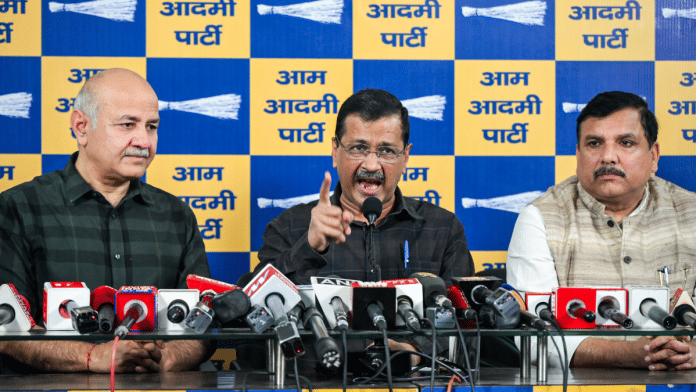
The CBI court order on the alleged liquor scam last week was not merely a discharge of senior Aam Aadmi Party (AAP) leaders. It was an unprecedented and damning order in many ways.
Some of the observations made in the order make one thing clear. The entire case not only lacked evidence, it seemed to have been completely fabricated for political manipulation.
In para 1077 of the 598-page order, the court observed that far from raising “grave suspicion”, the case lacked even the basic evidence needed to create “prima facie suspicion”. In para 1078, the court noted that the entire case was based on a “speculative construct” which the investigative agencies retrospectively tried to prove. The court recorded that “the theory of an overarching conspiracy, so emphatically projected, stands completely dismantled when tested against the evidentiary record.”
Even more startling observations were made with reference to witnesses. In para 800, the court appeared startled by the fact that multiple individuals who were initially made co-conspirators were later examined as witnesses. The court expressed surprise that the agencies treated the statement of a conspirator-turned-approver as the basis for arresting other individuals. In para 1070 as well, the court noted that what appeared to be one of the prime conspirators was granted pardon and turned into an approver. Think of it like this: the person who was earlier shown to be the main culprit was suddenly turned into a witness.
Also Read: Forget Kejriwal. Think of what our institutions are doing to enable authoritarianism
No evidence, no case
The court made strong remarks in the cases of Manish Sisodia and Arvind Kejriwal as well.
In Manish Sisodia’s case, the court noted that “the prosecution has not produced a single recovery, document, or financial trail linking him with the alleged transfer of funds.”
In Arvind Kejriwal’s case, it observed: “A scrutiny of the record further reveals that no contemporaneous document, file noting, electronic communication, financial transaction, or digital evidence has been produced to directly or indirectly connect Kejriwal with any alleged policy manipulation or illegal gratification. There is no material to show his presence at any conspiratorial meeting or to indicate his knowledge of any unlawful arrangement. The attempt to implicate him rests on inference drawn from uncorroborated accomplice-like statement.”
The court also recommended a departmental inquiry into the actions of the investigating officer, questioning whether the investigation had political influence.
Multiple political commentators have termed this one of the rare orders where the case was so weak that the accused were discharged even before the beginning of the trial, let alone acquitted.
Also Read: CBI case against Kejriwal & Sisodia falls flat. What agency alleged in Delhi excise policy case
Why has accountability gone missing in our institutions?
The bigger questions that should be asked are these — who is accountable for this? Who is responsible for the years that Kejriwal, Sisodia, Sanjay Singh, and Vijay Nair lost? Who is responsible for the damage that AAP faced during the last three years, both electorally and politically? Who is responsible for the choked governance that Delhi faced for three years?
In the last few years, most major events, irrespective of the institutions involved, have had one thing in common. There was little or no accountability. Whether it was the case of Brij Bhushan, Ankita Bhandari, Sushant Singh Rajput, Justice Yashwant Verma, Anil Ambani, Tina Dabi in the Jal Jeevan Mission, the Noida techie Yuvraj Mehta who lost his life to an open pit, fake news during the conflict with Pakistan, the school collapse in Jhalawar, or the Odisha rail accident, no one seemed to face consequences. There was simply no accountability.
And that is the one question you should be asking yourself. Why has accountability gone missing within Indian institutions?
The liquor policy case should make Indians realiseone thing. Democracy does not mean just voting once every five years and then letting everyone run the show as per their whims. It also means holding democratic institutions to account. If left unchecked, institutions, whether political parties, investigative agencies, the Election Commission, the judiciary, the police, or the media, can institutionalise ignorance, arrogance, and misuse of power to stay relevant. And that is worrying.
Ashutosh Ranka is a national spokesperson for the Aam Aadmi Party. He is a public health consultant and a graduate from IIT Kanpur and London School of Economics. He posts on X @AshutoshRanka. Views are personal.
(Edited by Asavari Singh)
Everyone knows what has happened. Only the courts doesn’t know. They are not saints.