








New Delhi: After repeated requests from lawyers’ bodies, the Delhi High Court has begun consultations on increasing the pecuniary jurisdiction of district courts, thereby reviewing the monetary limit of cases heard by district court judges.
As per a December 2025 Delhi High Court circular, a committee of five HC judges has been formed to examine the request of the Coordination Committee of the All District Courts Bar Association of Delhi to enhance the pecuniary jurisdiction of district courts from Rs 2 crore to Rs 20 crore.
The committee comprised justices V. Kameswar Rao, Nitin Wasudeo Sambre, Vivek Chaudhary, Prathiba M. Singh and Navin Chawla.
The committee will meet with relevant stakeholders such as Bar bodies and attorney associations starting this week to determine their request of increasing the financial limit up to which a district court judge can hear a case.
A circular issued on 24 January by the Registrar General of the Delhi High Court stated the committee has “directed to call for 3 or 4 representatives of the Intellectual Property Attorneys Association”.
This circular was also sent to the President of the Intellectual Property Attorneys Association based in Gurugram for an interaction with them on 2 February at the High Court.
Besides, such letters have been issued to all Bar Associations and relevant stakeholders like the Coordination Committee of All District Courts Bar Associations of Delhi. They have been called for a discussion starting from 30 January.
Also Read: Delhi Bar Council has rarely had women members before. This time, the mould is ready to break
Pecuniary jurisdiction
Pecuniary jurisdiction refers to a court’s power to hear cases based on the monetary value involved in the suit. The concept is rooted in the Civil Procedural Code (CPC) 1908—it lays down the procedure for how civil courts in India conduct trials. The provision aimed at ensuring efficiency by distributing cases among different levels of courts based on the financial stake involved.
The fundamental statutory basis for pecuniary jurisdiction in India is Section 6 of the CPC, which restricts courts from trying suits exceeding their monetary limits, and Section 15, which requires that suits be instituted in the court of the lowest grade competent to try them.
In Delhi, the pecuniary limit of district court judges currently is up to Rs 2 crore, following a revision in 2015. Any case above that directly has to go before the Delhi’s High Court.
Different bar bodies have been pushing to revise this limit.
Why the revision
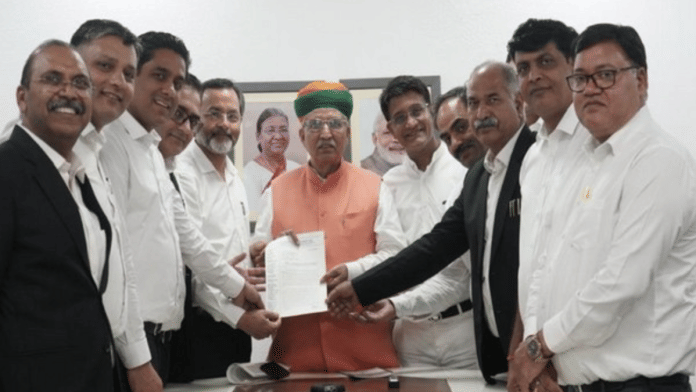
In May 2025, Delhi’s Bar Associations urged an increase in district courts’ pecuniary jurisdiction in line with the increasing inflation. The members of the bar met Union Law Minister Arjun Ram Meghwal and requested him to bring an amendment to the Delhi High Court Act to effect the change.
The committee explained that since 2015, both Delhi district courts and the Delhi High Court have shared the responsibility of hearing civil cases. However, district courts were allowed to hear cases only up to Rs 2 crore in value, while any civil matter above Rs 2 crore went to the Delhi High Court.
The district courts in Delhi should be allowed to hear civil suits involving disputes up to Rs 20 crore, the coordination committee of the District Court Bar Association urged Meghwal.
Even individual Bar associations issued circulars wanting an enhancement in the monetary limit of hearing of cases by the district judges.
‘Justice at the doorstep’
Advocate Nagendra Kumar, the convener of the Coordination Committee of the All District Courts Bar Association of Delhi, explained how this step will be helpful.
“The basic concept which the judiciary came up with while bifurcating district courts into 11 districts was that justice has to be at doorstep. But despite bringing in this concept, the pecuniary jurisdiction for all civil suits is still at a very minimal stage at district courts, effectively meaning that 80-85 percent of the cases are still with the High Court which has merely five judges in the original side,” he told ThePrint.
On the other hand, district courts have more than 200 judges on the civil side who are handling these matters and the pecuniary limit of those judges is only up to 2 crore, he explained.
“The High Court has limited judges and courts dealing with the original side matters,” he said. “Five judges in the HC vis-a-vis 200 judges in the district courts—one can imagine the speed of justice delivery.”
“District court judges are not less effective or capable – our analysis is that district court judges do give time to the case and hear the case in detail. In the district courts, the entire evidence (presentation) takes place before the judge, whereas in the HC, it takes before the Joint Registrar and since their (Joint Registrar) power is only limited to kind of clerical work so they don’t interfere or delve into the evidence recording,” he said.
Effectively, if pecuniary jurisdiction of the district courts is increased, the speed of disposal of cases will increase and the quality of judgements will also improve, he said.
Cost implications
Kumar also pointed out the disparity in lawyers’ fee in district courts versus those HC. “In the district side, you will get a very good advocate in Rs 11,000 while in the HC, I don’t think anyone will charge below Rs 50,000”.
“Really speaking, the advocates sitting in the district courts are the actual trial lawyers. In HC and Supreme Court, you won’t find a trial advocate. They (HC, SC advocates) may be good for the sake of arguments or for the interpretation of law, but they won’t be good for trial,” he said.
“Even in the HC, when the matter reaches the evidence stage, most of the HC lawyers hire district court lawyers for the trial – even before the HC. These factors really need serious consideration and substantial pecuniary jurisdiction needs to be given to district courts,” he further said.
(Edited by Ajeet Tiwari)
Also Read: As bar associations go after courtroom imposters in black & white, concerns about ‘overreach’