





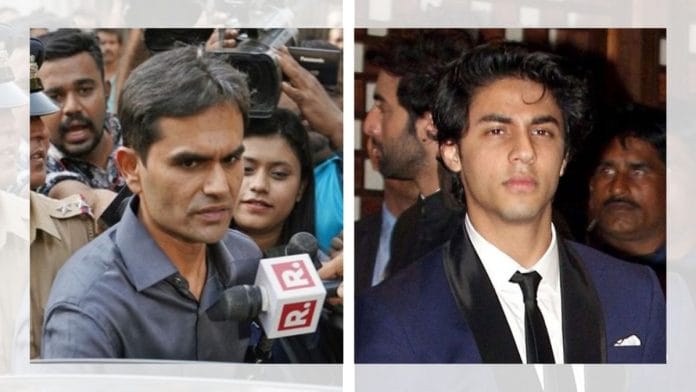



New Delhi: The Delhi High Court, Thursday, while hearing a defamation suit filed by Sameer Wankhede over his alleged portrayal in the Netflix series ‘The Ba***ds of Bollywood’, addressed the “strained relationship between free speech and offensive speech”. It noted that the protection of expression is often “meant to preserve the right to offend”.
However, Justice Purushaindra Kumar Kaurav ultimately declined to rule on the comparative merits of artistic freedom versus the right to reputation, instead rejecting the maintainability of the suit filed by Wankhede on the grounds of a jurisdictional error.
The judgment started by explaining how the strained relationship between free speech and offensive speech is “as old as the idea of speech itself.
“Offensive speech is a form of protected expression under the umbrella of freedom of speech and expression is an oft-quoted proposition…. However, the right to offend, flowing from the freedom of speech and expression, is often scrutinised on the anvil of the laws regulating speech, such as defamation, hate speech, incitement, etc.,” Justice Kaurav said.
However, while rejecting the competence of the Delhi High Court to examine this case, the court said, “The present case, factually speaking, also tests the limits of the purported right to offend, couched in artistic freedom, against the plaintiff’s right to reputation.”
Last week, the Central Administrative Tribunal (CAT) pulled up the Central Board of Indirect Taxes and Customs (CBIC) for acting in a malafide manner while setting aside the disciplinary charges framed against the IRS officer Sameer Wankhede.
Also read: Aryan Khan’s Bads of Bollywood begins with Sameer Wankhede
Wankhede v. Aryan Khan Round 2
Indian Revenue Service (IRS) officer Sameer Wankhede, who spearheaded the Narcotics Control Bureau (NCB) probe against Shah Rukh Khan’s son Aryan Khan in the 2021 drugs-on-cruise case, filed a defamation suit in the Delhi High Court in September 2025 against Red Chillies Entertainment Pvt Ltd, Netflix, X Corp (formerly Twitter), Google, Meta Platforms and RPG Lifestyle Media Pvt. Ltd.
The Episode 1 of the series includes a 1.48-minute scene where a character, in the aftermath of uttering the national motto, ‘Satyamev Jayate‘, a part of India’s national emblem, displays, according to Wankede, an obscene gesture – raising the middle finger. It violates the Prevention of Insults to National Honour Act, 1971, inviting penal consequences, the IRS officer has claimed.
The suit also alleged that the Netflix blockbuster and Aryan Khan’s directorial debut was designed to tarnish his reputation and disseminate negative and misleading portrayals of anti-drug enforcement agencies to cast them in a negative light, thereby eroding public confidence in law enforcement institutions. It contained “false, malicious, and defamatory” content, the suit added.
In his plea, the ex-NCB officer has sought court relief, including a permanent and mandatory injunction on the series, a formal declaration of malicious portrayal, and damages of Rs 2 crore. Moreover, Wankhede proposed donating the entire Rs 2 crore for the treatment of cancer patients at the Tata Memorial Cancer Hospital.
“Right to offend” vs. Reputation
The court began its analysis by acknowledging that offensive speech is a protected form of expression under the umbrella of freedom of speech. Justice Kaurav, in his 39-page judgment, observed that the case factually tests the limits of the “purported right to offend, couched in artistic freedom, against the plaintiff’s right to reputation”.
Wankhede, an officer of the Indian Revenue Service, had sought a permanent injunction and damages against Red Chillies Entertainment and Netflix for their television OTT series titled ‘The Ba***ds of Bollywood’. He alleged the content was false, malicious, and designed to lower his standing following his high-profile investigation into the 2021 Cordelia Cruise case. To justify maintaining the suit in New Delhi rather than Mumbai, Wankhede’s counsel, Senior Advocate J. Sai Deepak, argued that the “wrong done” under Section 19 of the CPC includes the effect and consequences of the wrong.
Advocate Neeraj Kishan Kaul, appearing for Red Chillies Entertainment, opposed the territorial maintainability of the suit in Delhi, arguing the suit should have been filed in Bombay instead.
To prove that the suit should be heard in Delhi’s jurisdiction, Deepak argued that the series was promoted and advertised in Delhi, and the content was consumed by Wankhede’s relatives and senior colleagues in the capital. Wankhede’s career is governed by the Ministry of Finance, headquartered in Delhi, which decides his promotions – actions he claimed could be negatively affected by the defamatory content.
Furthermore, multiple intra-departmental inquiries and litigations involving Wankhede are currently pending before the CAT in New Delhi.
Also, one defendant, RPSG Lifestyle Media Pvt. Ltd., carries on business in Delhi and had uploaded a video calling Wankhede an “idiot”.
Also read: Sameer Wankhede vs Aryan Khan, Round 2: Why IRS officer has taken Ba****ds of Bollywood to court
The “Merger Rule” and the primacy of Mumbai
Despite these arguments, the Court held that it lacked the jurisdiction to “entertain the lis”.
Relying on the established “Merger Rule” from the Escorts Ltd. v. Tejpal Singh Sisodia, 2019 decision, the Court explained that under Section 19 of the CPC, if the place where the wrong is done and the place where the defendant resides are the same, the suit “must be filed at that common place, and at no place else”.
Justice Kaurav noted that both the main contesting defendants (Red Chillies and Netflix) and the plaintiff (Sameer Wankhede) himself are residents of Mumbai.
Furthermore, the plaintiff’s own pleadings admitted that the series was published “throughout the country”, which naturally includes Mumbai. The Court found that the impact on future promotions or legal proceedings was “per se speculative in nature” and did not constitute a “wrong done” – sufficient to override the natural forum of Mumbai.
“Clever drafting” and the “Mirage” of jurisdiction
The Court was particularly critical of the impleadment of RPG Lifestyle Media Pvt. Ltd.—describing it as an “instance of clever drafting aimed at subverting the rigours of jurisdictional principles”.
The judgment suggested that this media company was “hunted to create a mirage” of a cause of action in Delhi solely to bypass the fact that the primary dispute belonged in Mumbai.
Concluding that the “jurisdiction to entertain the present suit lies only with the courts in Mumbai”, Justice Kaurav ordered the plaint to be returned to the plaintiff. However, in the interest of a “smoother transition”, the Court granted Wankhede liberty to avail directions under Order VII Rule 10A of the CPC, which facilitates the transfer of a returned plaint to the proper court (Mumbai in this case) when the initial forum lacks jurisdiction.
(Edited by Sampurna Panigrahi)
Also read: Aryan Khan has turned his camera on us. ‘I won’t be your victim again,’ he is saying