








New Delhi: The Delhi High Court Wednesday said it has ordered an audit of vacancies and workload of employees across the capital’s courts, two weeks after a differently abled staffer died by suicide at Saket District Court premises.
A bench of Chief Justice D.K. Upadhyaya and Justice Tejas Karia said the incident was “unfortunate” and the High Court had taken steps to address the issues.
“We are conscious, we have ordered an audit of the vacancies and workload on court staff after the court staffer committed suicide,” the Chief Justice observed, adding that relief permissible under rules was being extended to the staffer’s family.
The court made these observations while hearing a Public Interest Litigation (PIL) filed by Anand Legal Aid Forum Trust, which had sought directions to fill vacancies in Delhi courts, rationalise workload, and register an FIR into the death.
The bench disposed of the PIL after recording that the audit was underway, and appropriate action would be taken once the report is submitted.
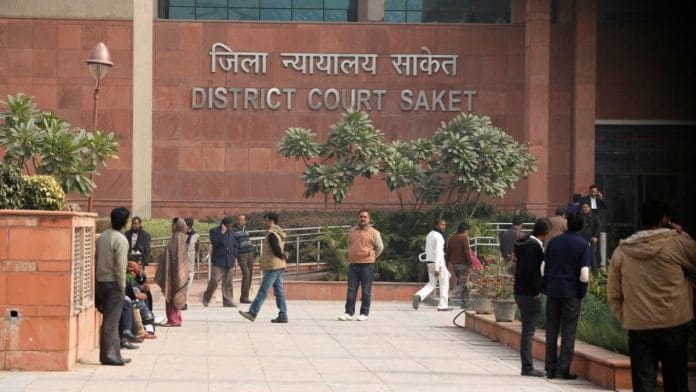
The case arose from the death of a 35-year-old ahlmad (record keeper), who jumped from a building inside the Saket District Court premises on 9 January.
Police recovered a note in which the ahlmad had cited extreme work pressure and mental stress, but said he was taking the step of his own volition and did not hold anyone responsible. The note also mentioned that he had 60 percent disability and found it difficult to cope with the workload, while financial constraints prevented him from opting for early retirement.
The incident triggered protests and concerns over chronic staff shortages and excessive workload in Delhi’s district courts.
According to reports, an hour-long meeting was held on 9 January – the day of the incident — between the District and Sessions Court Employees’ Welfare Association and Delhi High Court Registrar General Arun Bhardwaj in the presence of Chief Justice D.K. Upadhyaya.
During Wednesday’s hearing, the High Court noted that certain claims regarding the staffer’s posting and workload required context. The Bench pointed out that the ahlmad had been promoted to the position only in November and was posted in a fully digitised court. It observed that his previous role involved more strenuous work.
On the PIL’s prayer seeking registration of an FIR, the court declined to issue directions, noting that proceedings under Section 194 of the Bharatiya Nyaya Sanhita, relating to unnatural death, were underway.
The Bench said the postmortem report was awaited and the inquiry was being conducted by an Executive Magistrate. Any further action, it held, would depend on the outcome of those proceedings.
(Edited by Prerna Madan)
Also Read: Delhi Bar Council has rarely had women members before. This time, the mould is ready to break