





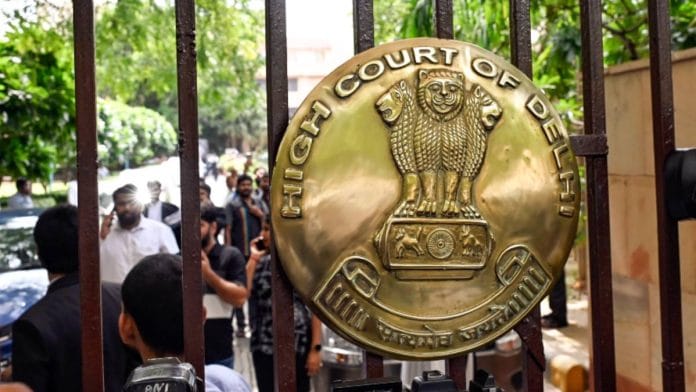



New Delhi: Asserting the supremacy of judicial review under the Constitution, the Delhi High Court this week partially allowed two writ petitions filed by Civil Defence Volunteers (CDVs) Deepak Kumar and Faruk Khan against their dismissal from service.
Civil Defence Volunteers are citizens trained for emergencies and public service.
The court, finding that the petitioners were denied due process, quashed their dismissal orders and directed the Directorate of Civil Defence, Delhi, to conduct fresh inquiries with a full opportunity for the volunteers to be heard.
The petitioners had challenged their dismissal under the Civil Defence Act, 1968, arguing that although the orders appeared neutral, they were in fact punitive, or “stigmatic”, and served to deny them a fair hearing. They also challenged sections of the Act that seemingly barred any recourse to the judiciary.
The fundamental grievance shared by the two CDVs was that they were dismissed summarily under Section 6(2) of the Civil Defence Act, which allows for dismissal simpliciter (simple dismissal) if a member’s “continued presence” is found “undesirable” without assigning any reason.
They contended this power was misused to avoid the mandatory inquiry required for disciplinary action under Section 6(1).
In the case of Deepak Kumar, filed in 2022, who had claimed ill-health, the counsel for the Directorate General of Civil Defence, Delhi government, “admitted… that the dismissal of the petitioner was on account of non-joining of COVID-19 duty; thereby, amounting to a stigmatic dismissal in substance”.
The petition in the second case, Faruk Khan, was filed in 2023. He was dismissed in connection with an inquiry alleging his involvement “in an act of production and selling of illegal face masks in collaboration with (an) NGO named JSM”. Khan argued that he was neither named in the related FIR nor afforded a proper hearing.
Drawing upon judicial precedents, the court emphasised the need “to lift the veil and to see the real circumstances as well as the basis and foundation of the order complained of”.
The bench concluded that, in both petitions, the orders were “stigmatic in essence”. Since the authority failed to afford a hearing as required for punitive dismissals, the “principles of natural justice stand violated”, it said.
Also Read: Hope for Italian Embassy’s Indian staff after 12 yrs as Delhi HC reopens case alleging pay disparity
‘Judicial review cannot be absolutely barred’
A core legal point addressed was the constitutional challenge to Section 14(1) of the Act, which states: “No order made in exercise of any power conferred by or under this Act shall be called in question in any court.”
The court decisively rejected the interpretation that this provision creates an absolute prohibition on judicial oversight. Citing established Supreme Court jurisprudence, the bench stressed that the power of judicial review under Article 226 is an “integral part of our constitutional system” and is “part of the basic structure of the Constitution” that “cannot be ousted by a statute”.
The court ruled that Section 14(1) must be “read down” to mean that courts are barred from questioning the “propriety, as distinguished from the legality”, of an order passed under the Act. Crucially, the “legality of the order passed under the Act ought to be subjected to judicial review”.
The court, while upholding the fundamental validity of Section 6(2) of the Civil Defence Act itself as a necessary principle for speedy action in emergencies, cautioned that “if the power conferred under sub-section (2) is exercised to circumvent the rigours of Section 6(1), the legality of such dismissal will be amenable to challenge in a court of law”.
‘Service voluntary but requires fairness’
The respondents argued that since service in the Civil Defence Corps (CDC) is “voluntary and honorary”, CDVs are not regular employees and are not entitled to protections afforded to civil servants, like those under Article 311 of the Constitution.
The court acknowledged that the service of CDVs is “not against any cadre post under the Union or State Government but is only restricted to voluntary service”. Remuneration is an “honorarium or duty allowance” paid only when called upon for duty.
However, the court noted that regardless of the voluntary nature of service, “principles of justice and fairness warrant that a balance be met and such discretion should not render a volunteer entirely at the mercy of such authority”.
The court ultimately partly allowed the petitions. The dismissal and appellate orders pertaining to both petitioners in question were quashed and set aside.
The Delhi government has been directed to “treat and provide all such opportunities/rights to the petitioners as have been imbibed under Section 6(1) of the Act”. The competent authority must pass a “speaking order after affording full opportunity of hearing to the petitioners” within three months.
The request for immediate reinstatement in service by the petitioners was deemed “infructuous” because the Directorate of Civil Defence had already ended the call-out duty of all CDVs in the GNCTD (Government of National Capital Territory of Delhi) departments via a circular dated 31 October, 2023.
Despite the cessation of call-out duties, the court directed the Directorate of Civil Defence to “inform the petitioners when services under the Act resume and vacancy arises, giving them preference in that regard”.
(Edited by Nida Fatima Siddiqui)
Also Read: ‘Why did you let this happen?’ HC raps Centre for IndiGo crisis, asks how airlines can charge Rs 40k