








New Delhi: In 2022, Russia’s invasion of Ukraine set in motion a series of events that went beyond its borders—and has now reached India.
Late December, a Russian company knocked on the doors of the Bombay High Court, staking a claim to assets worth $2.2 billion, or Rs 19,598 crore, belonging to an Italian company in India. They include the Italian company’s payments under major contracts with Indian Oil Corp Ltd (IOCL) for projects in Gujarat, Odisha and Bihar.
The story begins in 2020, when EuroChem Severo-Zapad-2, the Russian subsidiary of the Swiss fertiliser giant, EuroChem Group, signed three contracts with Italian engineering firm Tecnimont and its Russian subsidiary MT Russia, both part of Italy’s MAIRE group.
The contracts were for the construction of a fertiliser plant in Kingisepp in Russia’s Leningrad Region.
However, in 2022, the EU imposed intensified sanctions on Russia citing its invasion of Ukraine, leading to Tecnimont terminating one of the contracts. EuroChem then terminated the remaining two contracts, alleging Tecnimont had failed to properly perform its services.
Since then, the MAIRE group has maintained that the International Chamber of Commerce (ICC) and the English court are the sole authorities to decide on the dispute according to the contracts. It initiated arbitration under the ICC Rules in London in 2022.
Late last year, the ICC Arbitral Tribunal allowed Tecnimont to seize EuroChem’s assets in every country, totalling Euro 1.1 billion, according to a press release by the MAIRE group.
Meanwhile, EuroChem approached the Moscow Commercial Court last year, seeking recovery of unutilised advance payments and damages, among other things.
In orders passed in November and December last year, the Moscow court directed Tecnimont and MT Russia to pay EuroChem about $2.19 billion, amounting to Rs 19,598 crore.
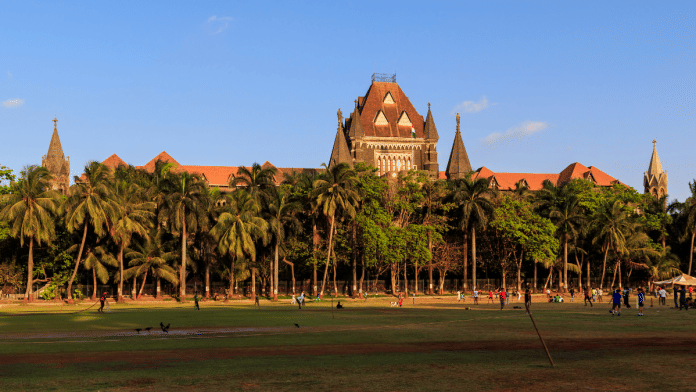
EuroChem has now approached the Bombay High Court, seeking an Indian decree for Rs 19,598 crore, relying on the Russian judgment as “conclusive evidence of this debt”.
In response, the MAIRE group said in a press statement issued Wednesday that EuroChem was trying to seek refuge under the “favorable and friendly Russian courts”, but the Russian judgment cannot be enforced outside Russia.
Also Read: Firm wouldn’t exist without you—HC snub to Marion Biotech directors in Uzbekistan cough syrup deaths
What’s at stake
According to the suit filed by EuroChem in the Bombay High Court, MAIRE’s assets worth $2.2 billion are at stake.
The suit, seen by ThePrint, lists these assets, which include 100 percent shares in its subsidiary Tecnimont Pvt Ltd (TCMPL) registered in India, a GST balance of Rs 119 crore with government authorities, and a balance of Rs 4 crore with government authorities.
It also includes payments under lump sum EPC (Engineering, Procurement and Construction) contracts for the construction of new acrylic acid and butyl acrylate units in Gujarat, a paraxylene plant and related infrastructure in Odisha, and a new polypropylene plant and related facilities in Bihar.
All these projects were awarded by IOCL to Tecnimont through TCMPL.
The suit also lists the balance and deposits maintained by the Italian company with Kotak Mahindra Bank, BNP Paribas and Standard Chartered Bank.
A sanctioned billionaire
The Italian company has alleged that the EuroChem group of companies is owned by Andrey Melnichenko, who is sanctioned under EU Regulations.
In 2022, the European Union imposed sanctions on Melnichenko as part of its restrictive measures to target actions undermining or threatening Ukraine’s territorial integrity, sovereignty and independence. The EU said Melnichenko was part of the most influential circle of Russian businesspeople with close connections to the Russian government.
It also noted that Melnichenko was involved in economic sectors providing a substantial revenue to the Government of the Russian Federation, which is responsible for the annexation of Crimea and the destabilisation of Ukraine.
In its ongoing arbitration, Tecnimont has sought damages of more than Euro 700 million ensuing from EuroChem’s “unlawful” termination of the contract, following Tecnimont’s “lawful suspension” of the contract due to the sanctions.
Last year, after EuroChem approached courts in Russia, Tecnimont obtained peremptory orders, described as serious orders which can be enforced in English courts, from the ICC Arbitral Tribunal, restraining EuroChem from filing cases before Russian courts.
The English High Court as well as the Court of Appeal of England and Wales passed orders directing EuroChem to comply with the Tribunal’s directions and withdraw its cases in Russia.
The MAIRE group said in a press note on 14 January that EuroChem’s attempt to enforce the Russian judgment in India through a suit in the Bombay High Court was in contempt of the English courts’ decisions, which are mutually recognised and enforceable in India.
“The Russian judgment is not enforceable at law and will not, in any event, be enforceable outside of Russia because it was rendered in breach of the 1958 Convention on the Recognition and Enforcement of Foreign Arbitral Awards, of which more than 170 countries are signatories, including the CIS and BRICS countries,” it said.
Why Bombay HC
EuroChem told the Bombay High Court that the Moscow Commercial Court has jurisdiction over Tecnimont because it conducted business in Russia through its “alter ego”, MT Russia.
“The Moscow Commercial Court also had subject-matter and cause of action jurisdiction over the dispute. All parties were either Russian or carrying on business in Russia, the project was based in Russia, the K2 agreements were signed in and were to be performed in Russia, disputes arose in Russia owing to the Defendant’s suspension of work in Russia, and the principal contract was subject to Russian law,” said the suit.
It added that the Moscow Commercial Court has ruled that sanctions imposed on Russian citizens and legal entities are not based on international law and are aimed at causing damage to the Russian Federation. It asserts that economic sanctions imposed by a foreign state cannot serve as grounds for violating the rights of a Russian legal entity.
Regarding the dispute being brought to Mumbai, EuroChem said the Bombay High Court has the jurisdiction to try this suit because Tecnimont carries on business there and is registered as a foreign company in Mumbai’s Malad.
What next
EuroChem has also filed an application for interim relief before the Bombay High Court, asking the court to restrain Tecnimont from removing any of its assets worth Rs 19,598 crore from India. During the hearing on 13 January, Tecnimont sought time to respond.
In response, EuroChem said that providing Tecnimont time might defeat the former’s claim.
According to the high court’s 13 January order, Tecnimont’s lawyers assured the court that the Italian company would maintain the status quo till the next hearing.
“He (Tecnimont’s lawyer) further states that save and except the ordinary course of business, the status quo in respect of the funds shall be maintained till the next date. Statement accepted,” the court noted.
“This effectively means Tecnimont will not proceed with its anti-enforcement action in London and will maintain status quo with regards to its Indian assets worth over 300 million euros, which may soon be subject to execution in India,” said Prateek Bagaria of Singularity Legal, who represents EuroChem Severo-Zapad-2.
However, a day after the high court hearing, the MAIRE group issued a statement saying that it will “keep on vigorously challenging the unlawful actions of EuroChem, and any other person doing anything to infringe the rights of MAIRE and its affiliates, violating multiple orders and directions issued by an ICC Arbitral Tribunal and the English court”.
The next court hearing is scheduled for 19 January.
(Edited by Sugita Katyal)
Also Read: ‘Substance over form’: How SC’s Tiger Global-Flipkart ruling on tax treaties sets crucial precedent