








New Delhi: For thousands of Pakistani Hindu refugees living in the shadows of North Delhi’s Majnu ka Tila gurdwara, the search for a permanent home in India has not yielded any concrete outcome, despite the matter first reaching the courts as early as 2013.
With both the Ministry of Home Affairs and the Ministry of Housing and Urban Affairs
passing the baton of responsibility and rehabilitation to the other, these families are staring at an uncertain future despite being granted Indian citizenship under the Citizenship Amendment Act (CAA), 2019, in August 2025, when they moved the Supreme Court.
The families, mostly from the Scheduled Castes, face imminent homelessness as their makeshift shelters on the Yamuna floodplains are slated for demolition, without any alternative arrangements for rehabilitation. About 250-260 families, comprising approximately 1,217 people, are living at the Pakistani Hindu Refugee Camp at Majnu ka Tila, according to affidavits submitted before the top court.
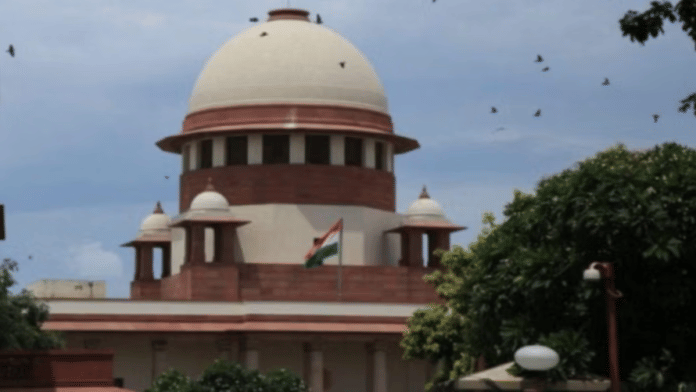
On Monday, 2 February, the top court asked the Centre to explore accommodation options that could be provided to these families, who, it said, “cannot be left at that”.
Appearing for the Centre, Additional Solicitor General Aishwarya Bhati noted that there will be “exhaustive discussion at the higher level” to find a solution for accommodating the refugees at an appropriate place.
The court’s remarks came on an appeal filed by the families in the Supreme Court, challenging a Delhi High Court decision, which, while expressing dismay over the “bureaucratic delay” in resolving the migrants’ problem, had allowed the Delhi Development Authority (DDA) to proceed with its eviction process against the families.
The eviction notices were served to these families in 2024, after the National Green Tribunal’s direction to restore the ecologically sensitive Yamuna floodplains where these Hindu refugees from Pakistan have settled. Some residents have been registered as citizens of India, while the applications of others remain under process.
The Supreme Court was informed that the people were all extremely poor, with little to no means of livelihood, and most were engaged in odd jobs such as day labourers, household maids, and similar informal work.
Also Read: Relying on CAA, SC grants citizenship to Hindu immigrant sacked by Bengal govt as ‘non-Indian’
2024: Demolition notices and interim protection
The dispute escalated in March 2024 when DDA pasted public notices directing the refugees to vacate within two days or face demolition. Ravi Ranjan Singh, identified as a “public-spirited person”, approached Delhi HC on behalf of Hindu refugees living in Majnu ka Tila.
He sought directions to restrain DDA from undertaking demolition until alternative land was provided in line with the stated objectives of the CAA, which aims to provide protection and eventual citizenship to persecuted minorities from Pakistan, Bangladesh, and Afghanistan.
On 12 March 2024, the high court granted interim protection, observing the “humanitarian nature of the issue” and noting that children residing in the camp were studying in nearby government schools and were in the middle of examinations. The high court also referred to its previous order of 2013 that directed the Ministry of Home Affairs (MHA) and the Ministry of Housing and Urban Affairs (MHUA) to provide rehabilitation.
Despite that, affidavits filed by both ministries eventually evaded responsibility, stating either that the matter did not fall within their purview or that the CAA itself provided adequate redress through the citizenship application process.
The single judge judgment of 30 May 2025
According to the petition now before the Supreme Court, the high court—despite making “sincere efforts” to engage with the concerned authorities to facilitate rehabilitation and relocation—failed to come to the rescue of the refugees living in Majnu Ka Tila.
In May 2025, the high court dismissed the writ petition, holding that the refugees had “no right to continue to occupy the area in question”.
“However, these (court’s) efforts have been unfruitful, seemingly due to a classic case of bureaucratic buck-passing, particularly on the part of the respondent no. Union of India. Nevertheless, this Court cannot undertake the exercise of framing a policy to ameliorate the plight of the refugees,” it said, vacating the interim protection.
The court further held that under the “Delhi Slum & JJ Rehabilitation and Relocation Policy, 2015” formulated by the Delhi Urban Shelter Improvement Board (DUSIB), any person seeking relocation must first be a citizen of India, and, therefore, Pakistani refugees could not be rehabilitated under the policy due to their foreign nationality status.
In its 30 May 2025 judgment, the Delhi HC held that according to this policy, any person seeking relocation and rehabilitation must “first and foremost be a citizen of India” to become eligible for the allotment of alternative dwelling units. The high court concluded that, as foreign nationals, the Pakistani refugees could not claim benefits under the DUSIB policy. Also, some of them had their application “under due process”.
Subsequently, on 14 July 2025, DDA issued notices asking the refugees to vacate the premises in view of the May 2025 judgment, without making any alternative provision for shelter, putting concerns over violation of Articles 14 and 21 of the Constitution at the forefront.
The petitioners had cited Article 21 before the Delhi HC, but the court rejected that argument, ruling that “humanitarian or sympathetic considerations” could not interfere with the “ecological rejuvenation” of the Yamuna River.
Concerns about Article 14 (Right to Equality) and Article 21 (Right to Life and Dignity) formed the basis for the petitioners’ later appeal to the Supreme Court.
The high court’s 2024 order was killed by the judgment in May 2025, but the Supreme Court resurrected that protection by issuing its own status quo order in August 2025, formally extending its stay against demolition, ensuring that no coercive action can be taken against the camp while the case is being resolved. The refugees are currently protected not by the high court’s original 2024 order, but Supreme Court’s interim order.
To the Supreme Court
In July 2025, the refugees approached the top court, via Advocate Vishnu Jain, asking for a stay on the high court order and a restraint order against the authorities from “dispossessing” them. They drew support from the Supreme Court’s rulings that directed the authorities to provide alternative accommodation to displaced persons.
In one of them, the top court held that persons affected by the removal of encroachments would be accommodated or rehabilitated under the Prime Minister Awas Yojana.
In November 2025, the Supreme Court had told the central government to “find a way to resolve the issue” as the court was “dealing with the problem of thousands of people who do not have a place to reside”, ordering the interim order to continue.
During the hearing Monday, a bench of Justices M.M. Sundresh and N. Kotiswar Singh stated that they are “primarily concerned with the accommodation of the petitioners in pursuant to the proposed eviction, particularly, when they have been conferred with Indian Citizenship” in August 2025.
A promise of support: Nahar Singh case
The legal struggle of these refugees first came before the Delhi HC in 2013 via a writ petition titled Nahar Singh v. Union of India. At that stage, 482 Pakistani nationals had approached the court seeking shelter and social security, as their valid visas had expired.
In an order dated 29 May 2013, the high court noted the Additional Solicitor General’s statement that the Ministry of Home Affairs would extend help to the “aggrieved refugees” so that they could be accommodated in accordance with the law.
Based on this assurance, the petition was disposed of.
Despite this assurance, the plight of the refugees remained unchanged for years. In August 2021, a Public Interest Litigation was heard by a bench comprising then Chief Justice D.N. Patel and Justice Jyoti Singh, seeking durable solutions to enable the refugees to “live with dignity”. The court directed the authorities to treat their grievances as formal representations and take a decision “as expeditiously as possible and practicable”.
However, no effective steps toward rehabilitation or relocation were taken in the second round as well.
By late 2023, the National Human Rights Commission (NHRC) was asked to intervene as complaints of the “deplorable condition” of the refugee camp grew. The NHRC noted that more than 1,000 people were living without necessities such as electricity, toilets, and proper shelter. Nearly 800 refugees were sharing only 16 toilets.
(Edited by Sugita Katyal)
Also Read: Granted Indian citizenship under CAA, Hindu migrants from Pakistan embrace ticket to ‘freedom’