




New Delhi: When I landed in Dhaka in the second week of February, I was both excited and anxious. Being on the ground during a crucial election was a reporter’s dream come true. In February, as the country went to polls 18 months after a 36-day student-led protest over quota reforms ended the 16-year-long rule of the Awami League, I got front-row tickets to the spectacle that was Bangladesh elections.
Domestically and internationally, the interim administration seemed to have run its course. Curtains were drawn over the Battle of the Begums with the death of Khaleda Zia and the political ban on the Awami League. Zia’s son Tarique Rahman had returned and the election fever was palpable in the capital city. The banners on almost every street corner gave the first clue. It was either Tarique’s picture lining the streets or condolence messages about Khaleda Zia.
What I also immediately noticed was how almost every single wall or overpass was lined with graffiti art–mostly red, yellow or black. The July protests were now part of the city’s political consciousness. It ranged from ‘Khooni Hasina’, ‘fascism’ (a buzzword in the country) to moments from the July protests—names of those killed, the haunting images of Abu Sayed (the first student felled by police), or most of all, Sharif Osman Hadi, the student leader-turned-independent politician who was shot in Dhaka and later died in a Singapore hospital.
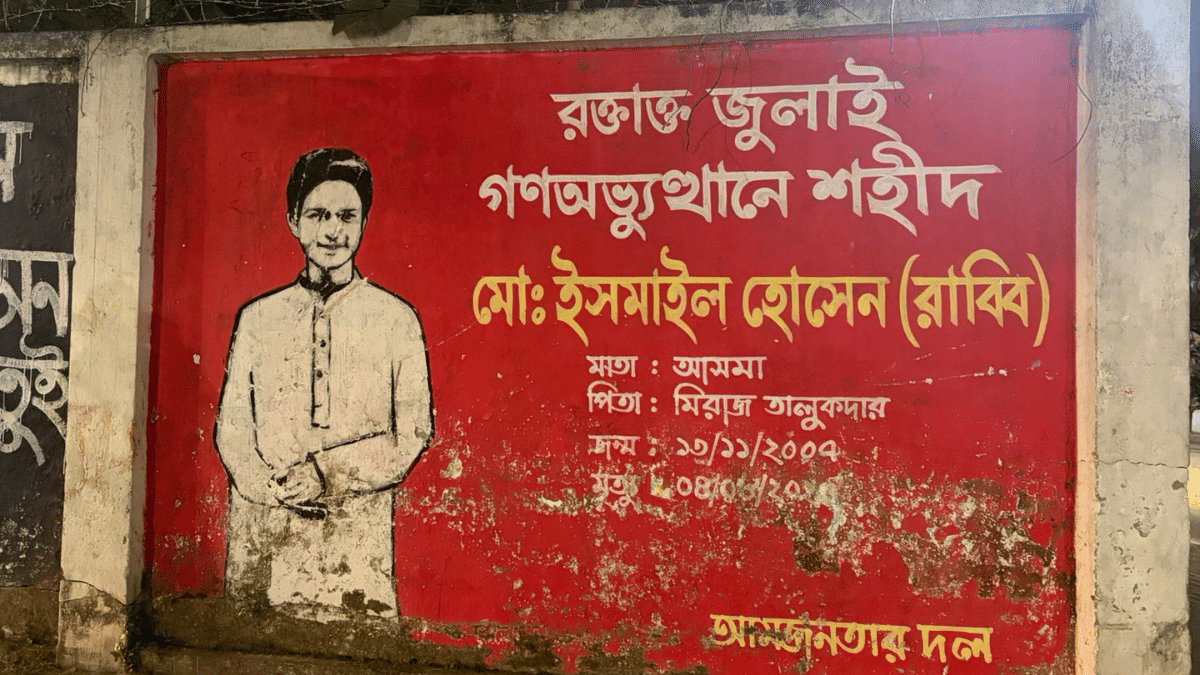
In fact, my first conversation was about Hadi. My cab driver on the way to my hotel, quickly caught on that it was my first time in Dhaka but was surprised to know I could speak Bangla. Soon, I became ‘Apu’ (a term most people in Bangladesh use for women). He spoke at length about why he would vote for the Jamaat, what made Hadi so ‘special,’ his plans to migrate to the Gulf before ending it all with, “Nothing really changes here, ever. Whoever comes to power, I should be able to drive my car.”
That gave me the primer I needed before stepping into an unknown land, alone. As I watched Dhaka’s vibrant rickshaws in all imaginable colours pass by, he elaborated: Traditionally, Bangladesh Nationalist Party (BNP) and Awami League have always won, so why not opt for a third alternative? He wanted to go to the Gulf because, “Where are the jobs in Bangladesh?” And on Hadi, he said, “If he were alive, no one else stood a chance!”
“Was he that popular?”, I asked. “You have no idea, Apu. He was one of us, loved by all.”
Vibrant, chaotic and draped in nostalgia, Dhaka showed me a new side every day. Above all, the city taught me not to believe surface narratives.
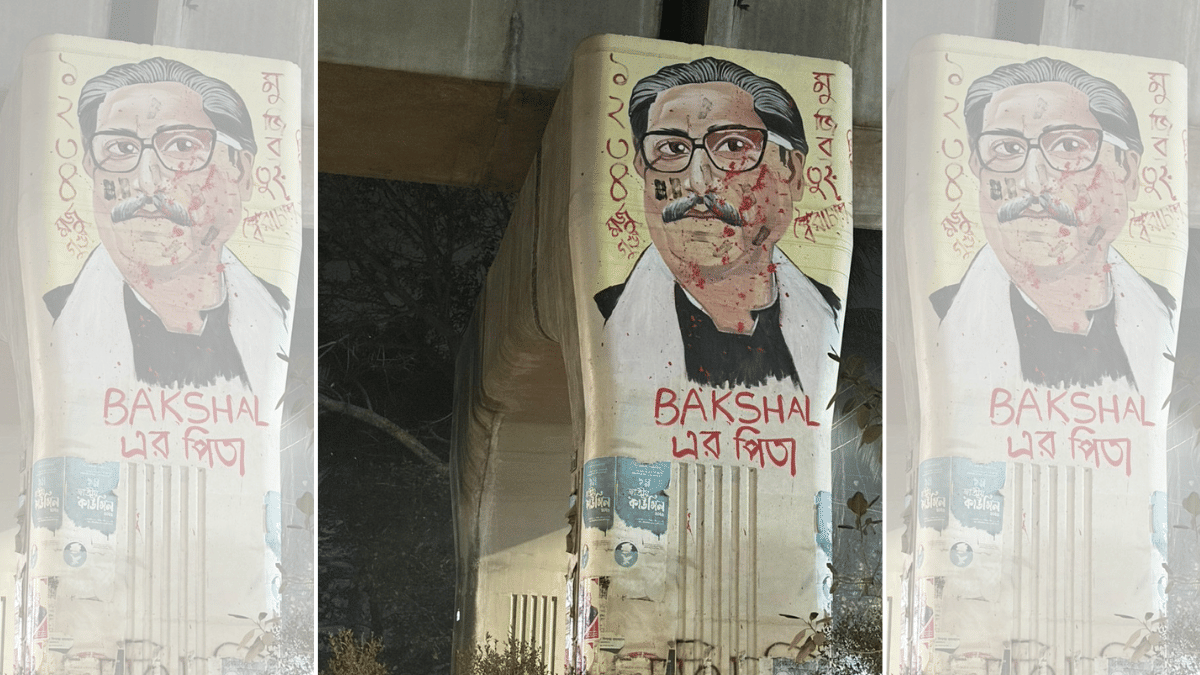
In Dhanmondi-32, now the site of Sheikh Hasina’s and her father Mujibur Rahman’s charred houses, sentiments shifted. Language came in handy as after initial hesitation, a tea-seller and his wife warmed up to me about what happened on the fateful day the museum was burnt. Others soon joined in.
Most were BNP supporters now and had a consensus: “Whatever happened, Khaleda Zia never left her country.” Her son was now a credible option to most—not on his own accord, though some did speak about how he had “now matured” and wasn’t the same as in 2008—but the support mostly stemmed from him being Tarique Zia, Khaleda’s son. The battle of the Begums was, perhaps, then still playing out subtly.
If the days leading up to the elections were electric, the polling day itself was nothing less than celebratory. People lined up outside polling booths said it was “a festival” for them.
After visiting eight polling stations, only one rickshaw puller dissented as he opened up on how he had not gone to vote in his hometown of Rangpur because without Sheikh Hasina, it made no sense. “Do you know what she did for this country? It was because she refused to let America gain power, that she had to go.” When I asked him about the student protests, he added: “Nobody denies that it was wrong of her. It was her mistake but that does not diminish what she did for the country.”
The National Citizen Party was like a sore thorn to many. Across the booths, at least in Dhaka, no one spoke about the party. A man in his 50s rather added how he felt bad because NCP seemed to have “hijacked” the narrative of the July protests. “Was it just them? Ask the rickshaw puller, the labourer working on the streets, we were all out there. We know how to fight. We supported them but now what? They seem clueless.”
Also Read: ‘Didn’t have money to finance campaign. Rickshaw, CNG wala pitched in’—Bangladesh’s youngest MP
A ‘recent phenomenon’
On results day, I stationed myself outside BNP headquarters, expecting a landslide victory. In a café opposite, groups of women dissected outcomes. Some joked about Jamaat coming to power: “Say goodbye to sitting in a cafe, wearing this top.” “Remember to cover your head.”
A conversation revealed how BNP’s politics of optics had won. It was not Tarique who dominated; it was his barrister daughter Zaima. Even her cat was an internet sensation. A woman remarked, “I do not like how she seems to be dominating news cycles but bro, she seems chill like us. I’d even vote for the cat.”
But, there was also a fundamental shift in society. Another woman I met spoke at length about how her Buddhist friend with long hair faced multiple harassment, another who was a Baul singer constantly had shows cancelled, at the last minute. In the hinterlands where her grandparents live, communal violence had increased like never before. None of them wanted to speak on record. Names being made public risked attention.
The contradictions were out in the open. A Hindu cabinet member of the BNP government, a political veteran of 60 years, claimed the attacks on minorities were isolated incidents borne out of a political vacuum, but a conversation with a Christian man told a different story. He did not vote because it did not matter—”none of the governments care about us”.
And then, there was India. But not in a way you’d expect. It took a teenager to shatter myths.
Amin, a 14-year-old water bottle seller, accompanied me across Dhaka, mostly on foot. From Dhanmondi, to the National Parliament, Zia Udyan, the July Uprising Memorial and then Gonobhobon, once looted, now sealed, as we walked through history, all he wanted to know about was India: how did I travel from Delhi, what was the cost, could he visit one day, would he still need a visa? I was curious, “Why do you want to go to India so much?”
“Because I love (actor-politician) Vijay. I have watched all of his movies. He is even contesting elections, right? I also love Allu Arjun and Yash from ‘KGF’,” he added.
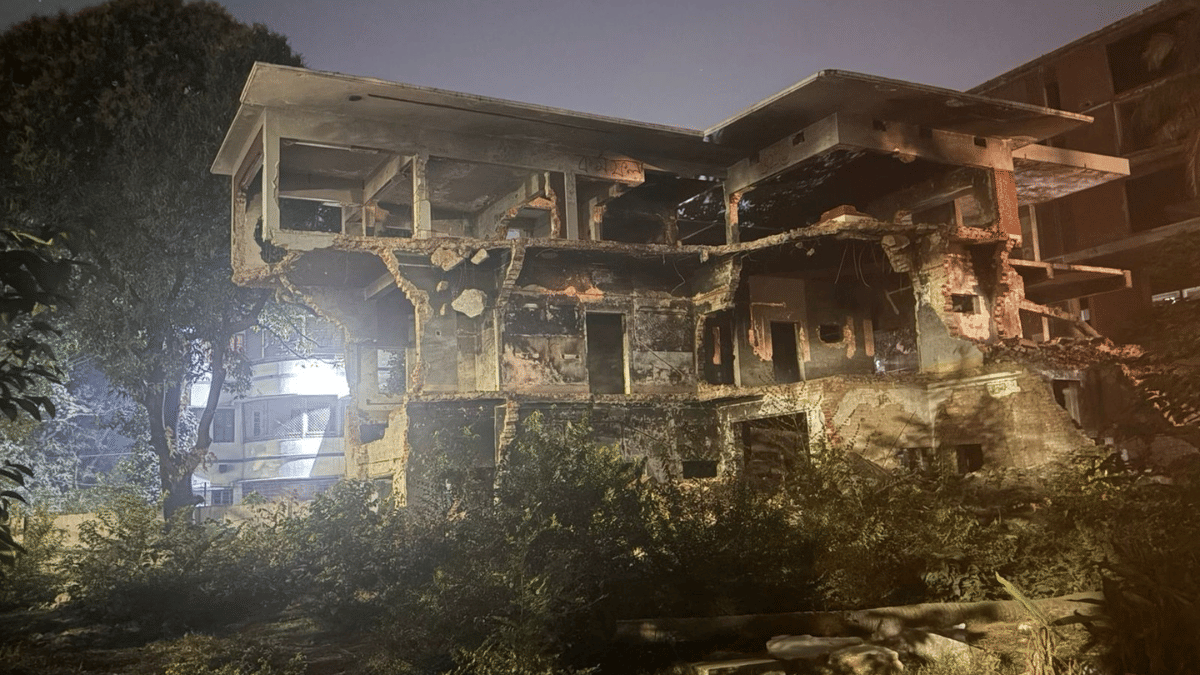
Amin was not the only one with a love for India. A Muslim tea-seller, who discussed Baba Loknath, advised me that “on the streets though, I should not mention my ethnicity.” When I asked why–he simply pointed at the house across Dhanmondi. When I left, he refused to charge me for the multiple cups of tea—”You are a guest. Guests don’t pay.”
A female Muslim painter showed me all her artwork on Hindu theology as she spoke about how she was an ardent admirer of Maa Manasa, the goddess of snakes. Talk about syncretism!
An unusual favourite seemed to be Karim’s biryani—almost everyone wanted to know if I had tasted it. Parks blasted ‘Dhoom Machale’ in full volume and in a restaurant, the TV played ‘Kiya Kiya’ from Bollywood comedy Welcome. Hilariously, even BNP’s campaign song was a refurbished version of the Trinamool Congress’ ‘Khela Hobe’.
However, away from the streets, the anti-India sentiment did play out in subtle ways. When I asked a fellow Bangladeshi journalist why Bollywood songs were being played instead of something like a Coke Studio Bangla (which is immensely popular across the subcontinent), he said something that took me aback: “Because what you consider Bangladeshi, they consider Indian.”
Arnob Chowdhury, the producer for Coke Studio Bangla, was trained in Shantiniketan, West Bengal during his formative years. A similar response followed from a female activist when asked about the burning of cultural institutions like Chhayanaut—“Well, they are all affiliated with India. The music taught there is not Bangladeshi.”
The sentiment spilled over to even the media. During a conversation on the burning of the leading dailies, Daily Star and Prothom Alo, another activist stated bluntly: “What’s there to ask? They were all seen as close to India.”
The sentiment had seeped in, though most called it “a recent phenomenon”.
Perhaps, the most visible strain was when you’d try to speak to politicians. Most simply refused to engage with an Indian journalist. When I managed to get through to one of them, who later was elected as an MP from the NCP, he said: “We have nothing against India, but we will not tolerate any ‘hegemonistic’ state anymore.”
But if there was one thing most appreciated, it was the Indian education system. In multiple discussions over tea, the lack of educational standards in Bangladesh came up several times. “Have you seen that reel of clueless Bangladeshi students being asked what GPA stands for?” they asked. “At least in India, you get a job after a degree. My son has no options. We saw through these situations, but how will they?”
Even students echoed this. When I asked a group of children passing by in front of the national parliament what they would like to see the new government do, they said, “focus on education.”
Over the days, as I went across Dhaka meeting people from across the society—artists, editors, traders, politicians and sidelined members from the queer community—I realised the core concern seemed to be a “return to peace and stability”.
On my last day, I saw the entire city come together to commemmorate Ekushey February or The International Language Day. All through the night as music played from the Shaheed Minar in front of Dhaka University, I saw the young and the old pay tributes to the martyrs. After elections, Dhaka was slowly rising back to life.
The Bangladeshi society, I found, is wrapped in contradictions like any other South Asian country, straddling between continuities while craving for change.
But beyond politics, the people are the hope. As I headed to the airport, an activist who came to see me off said, “Consider this your second home, now.” I smiled. I’d take up the offer without the traffic, though.
(Edited by Tony Rai)
Also Read: Bangladesh lost on all fronts under Yunus. A herculean task awaits the new PM
Great gob Debudatta. You have always covered the region well.