





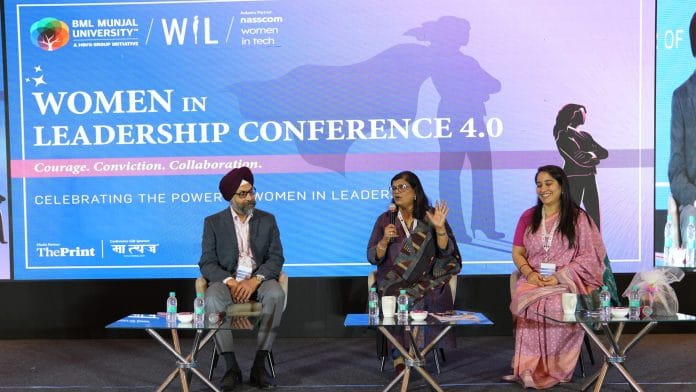



New Delhi: The fourth edition of the Women in Leadership (WIL) Conference, hosted by BML Munjal University on 26 February, at The Palms Country Club in Gurugram, brought together industry leaders, policymakers, academics and professionals to discuss women’s leadership, entrepreneurship and inclusion.
Held under the theme “Courage, Conviction and Collaboration: Celebrating the Power of Women in Leadership,” the offline conference focused on translating conversations around gender diversity into practical leadership action.
The event saw participation from both women and men across industry, with sessions ranging from keynote speeches and panel discussions to hands-on workshops on artificial intelligence and mindfulness.
Call to strengthen women’s representation in leadership
Delivering the welcome address, Swati Munjal, President of BML Munjal University, said leadership should be viewed not merely as a title but as a responsibility grounded in courage, purpose and accountability.
She pointed to global corporate data showing that women hold only about 26 percent of leadership roles, while nearly 30 percent of organisations have reported a decline in women leaders, underscoring the need to strengthen representation and structural support systems.
Drawing inspiration from astronaut Kalpana Chawla, Munjal said conviction and perseverance allow individuals to overcome structural and social barriers. She added that institutions such as BMU must function as a supportive ecosystem that enables shared learning, trust and collaboration among women leaders.
Women increasingly choosing entrepreneurial paths
Setting the context for the conference, Davinder Singh, CEO of ACIC–BML Munjal University, highlighted the growing number of women entering entrepreneurship and launching small businesses.
He said the shift reflects a gradual departure from traditional career expectations and indicates rising confidence among women to shape their own professional journeys. Singh also emphasised the importance of platforms like the WIL conference in enabling dialogue, mentorship and support networks for emerging women leaders.
Leadership anchored in resilience and innovation
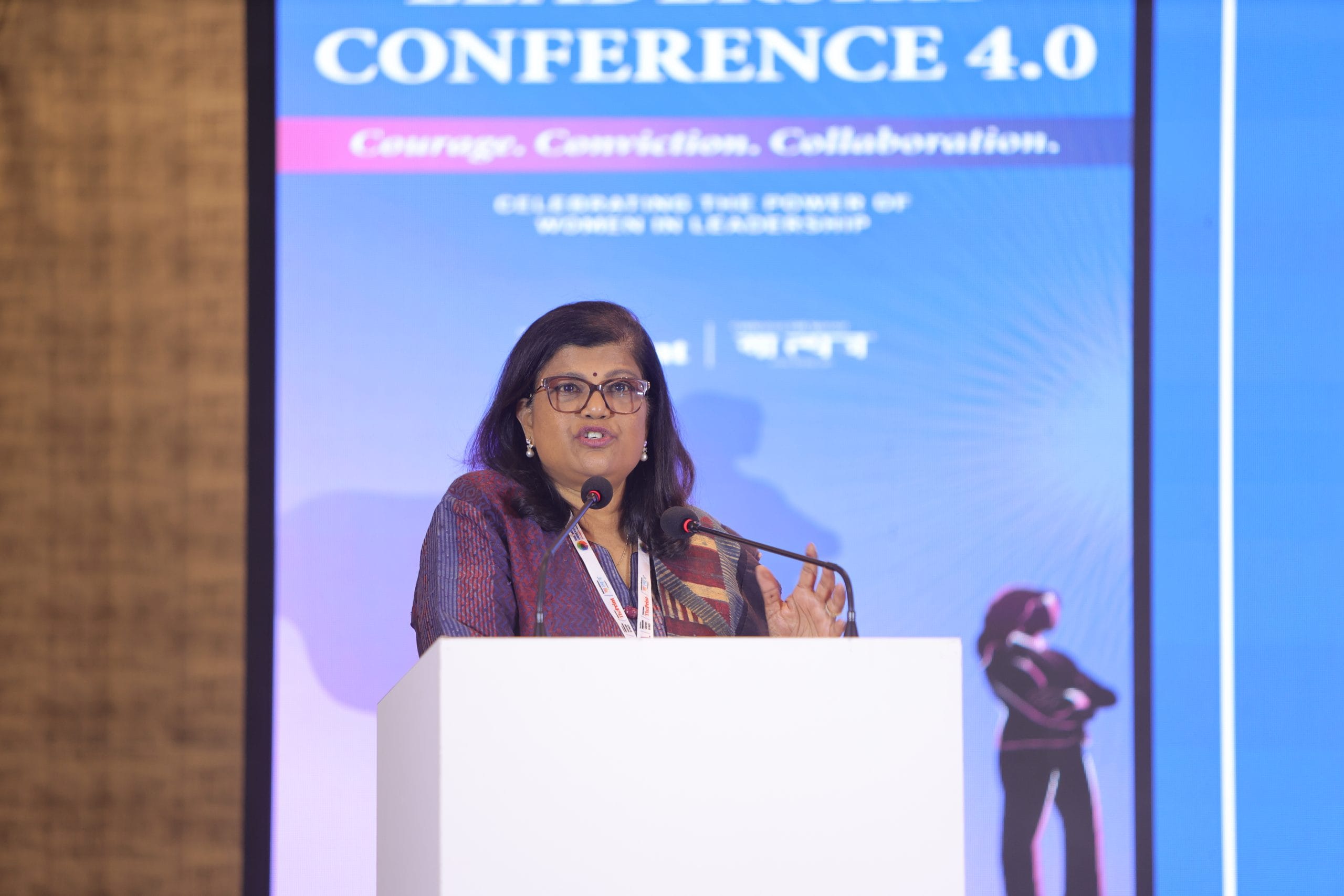
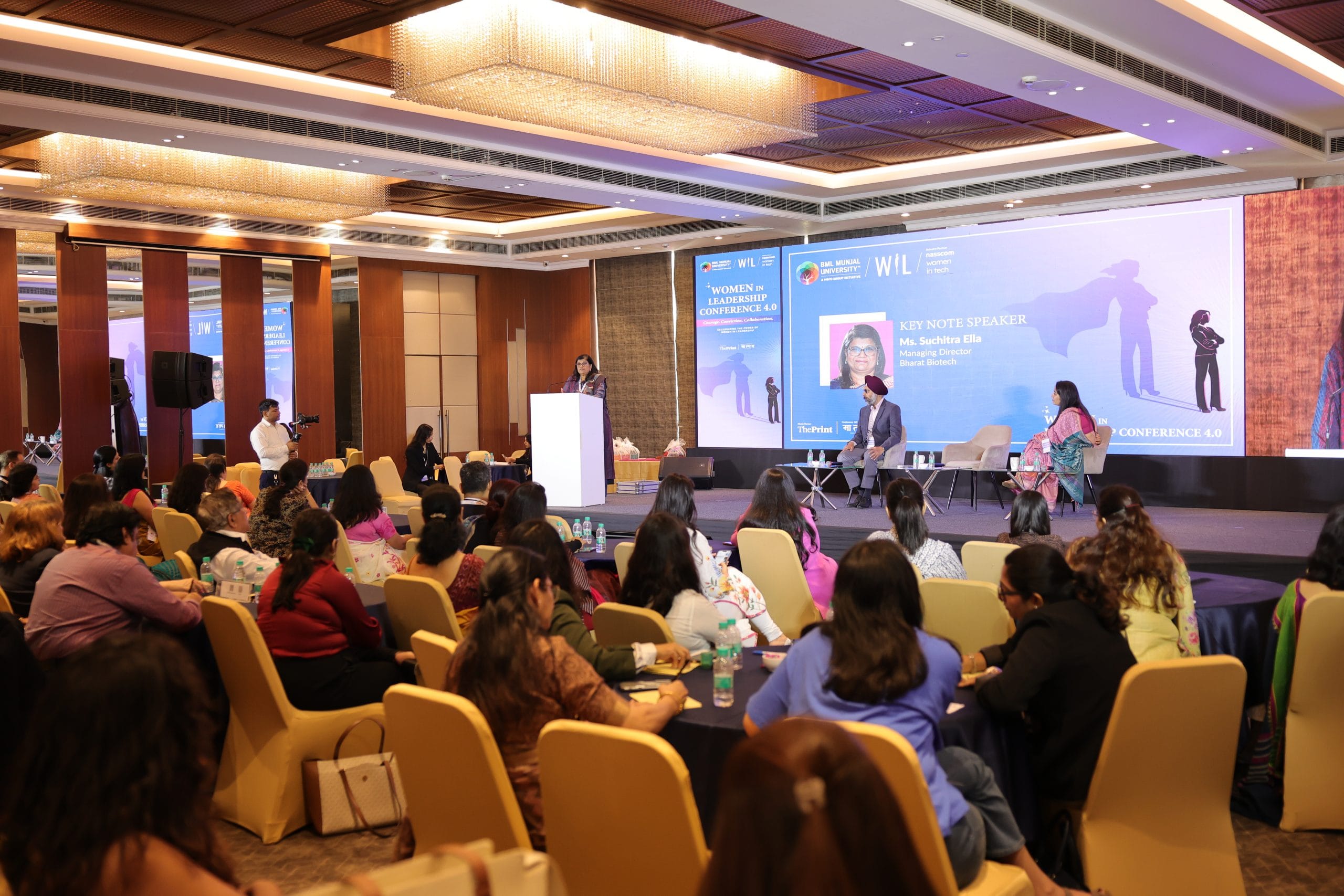
The keynote address was delivered by Suchitra Ella, Managing Director of Bharat Biotech, who reflected on her three-decade entrepreneurial journey.
Ella said leadership is sustained by the principles of courage, conviction and collaboration, and must ultimately serve a larger social purpose. She emphasised that success should be seen as a continuous process rather than a single milestone.
Addressing persistent social assumptions, she said motherhood should never be viewed as a limitation to professional or entrepreneurial growth. Ella also highlighted gaps in India’s research ecosystem exposed during the COVID-19 pandemic and stressed the need for stronger investment in research, training, manufacturing capabilities and human capital.
Encouraging participants to pursue innovation, she said entrepreneurship begins with identifying real-world problems and building meaningful solutions, even if initiatives start on a small scale.
Fireside chat focuses on expertise and governance
A fireside conversation titled “From Breaking Ceilings to Building New Floors” featured Anita Kapur, former chairperson of the Central Board of Direct Taxes, and Pallavi Dinodia, partner at S.R. Dinodia & Co., moderated by Saraswathy Vaidyanathan of BMU’s School of Law.
Kapur reflected on the societal expectations women often encounter while making career choices and emphasised the importance of confidence and conviction in pursuing professional goals.
Both speakers stressed that long-term leadership credibility depends on expertise, continuous learning and professional competence, beyond confidence alone.
Dinodia highlighted the importance of corporate governance knowledge, regulatory understanding and financial literacy, noting that board members and leaders must be able to interpret financial statements, assess risk and contribute meaningfully to strategy. She also pointed to ESG, sustainability and ethical business practices as emerging priorities for contemporary leadership.
Panel examines difficult conversations at the workplace
A panel discussion on “Navigating Difficult Conversations with Empathy, Balance and Thoughtful Diplomacy” brought together Saurabh Uboweja (BOD Group), Sqn Ldr Dimple Rawat (Retd.), HR Head at Barco, Aaradhana Dalmia, Chairperson of FICCI YFlo, and Shobha Kapoor from the Ministry of Education, moderated by Leenika Khattar of Nasscom.
The panel explored how leaders manage emotionally complex conversations while maintaining inclusive workplaces. Speakers stressed that effective leadership begins with self-awareness and emotional regulation, often through simple practices such as pausing, breathing or stepping back before responding.
Participants discussed the difference between assertiveness and aggression, noting that women are frequently encouraged to speak up but risk being labelled aggressive when expressing firm opinions. The panelists said assertiveness stems from clarity and confidence, whereas aggression typically arises from emotional reactivity.
The discussion also highlighted persistent unconscious bias in role allocation, where women are often steered toward supportive roles while men dominate operational or revenue leadership positions. At the same time, panelists noted progress through data-driven approaches to improve gender representation.
Speakers stressed that meaningful inclusion requires capability, opportunity and equitable access to leadership pipelines, particularly for women who may lack mentorship despite strong educational backgrounds.
The panel further emphasised that leadership traits such as empathy, resilience or decisiveness are human qualities rather than gender-specific attributes, and that effective leadership requires balancing firmness with compassion.
Workshops explore AI and mindfulness
The conference also hosted two interactive workshops.
In the AI Confidence Lab, Manpreet Sandhu, a senior technology consultant and corporate trainer, addressed common misconceptions about artificial intelligence and positioned AI as a collaborative tool rather than a replacement for human skills.
The session demonstrated practical uses of tools such as ChatGPT, including language translation for cross-linguistic communication. Sandhu also discussed data privacy considerations and showcased a Python-based automated email response system, where participants scanned a QR code to send a prewritten email and instantly receive an automated reply.
The second session, “Recharge to Rise: Wellness Workshop,” led by mindfulness coach Ritika Sood, focused on emotional regulation and leadership wellbeing.
Participants explored the emotional response cycle—trigger, body reaction, emotion, story and behaviour—and its impact on team dynamics. Guided exercises in breath awareness, body observation and attention control demonstrated practical techniques for maintaining composure under stress.
Sood also explained the neuroscience behind emotional regulation, highlighting the role of the amygdala in emotional reactivity and the prefrontal cortex in rational decision-making. Drawing on the Broaden and Build Theory, she said positive emotions expand creativity and problem-solving capacity, while chronic stress narrows perspective.
The session concluded with practical methods for setting mindful boundaries and practising self-compassion, encouraging participants to strengthen emotional resilience and sustainable leadership habits.
Building a network of future leaders
Organised by Pooja Salwan (conference chair), Keerti Shukla (co-chair), Akriti Chandra (convenor), Roobal Saxena and student chair Namokar Jain, the conference aimed to ignite bold leadership and build a network of changemakers committed to diversity and inclusive growth.
Industry partner Nasscom Women in Tech, media partner ThePrint, and gift sponsor The Matyaj supported the event.
Organisers said the conference sought to move beyond discussion and foster practical collaboration among leaders, entrepreneurs and emerging professionals.
As the event concluded, speakers emphasised that building a future-ready leadership ecosystem requires resilience, ethical decision-making and sustained collaboration across institutions and industries.