





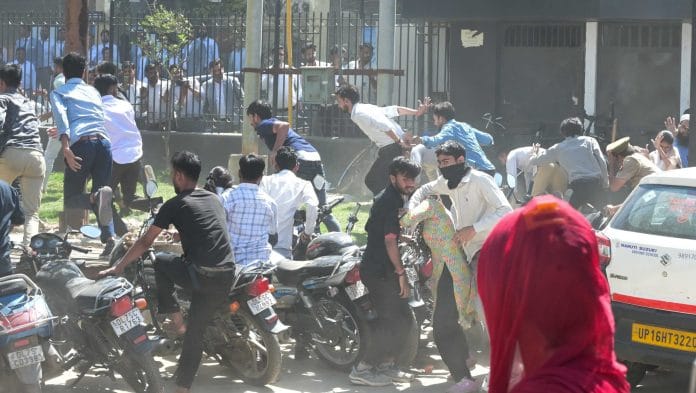



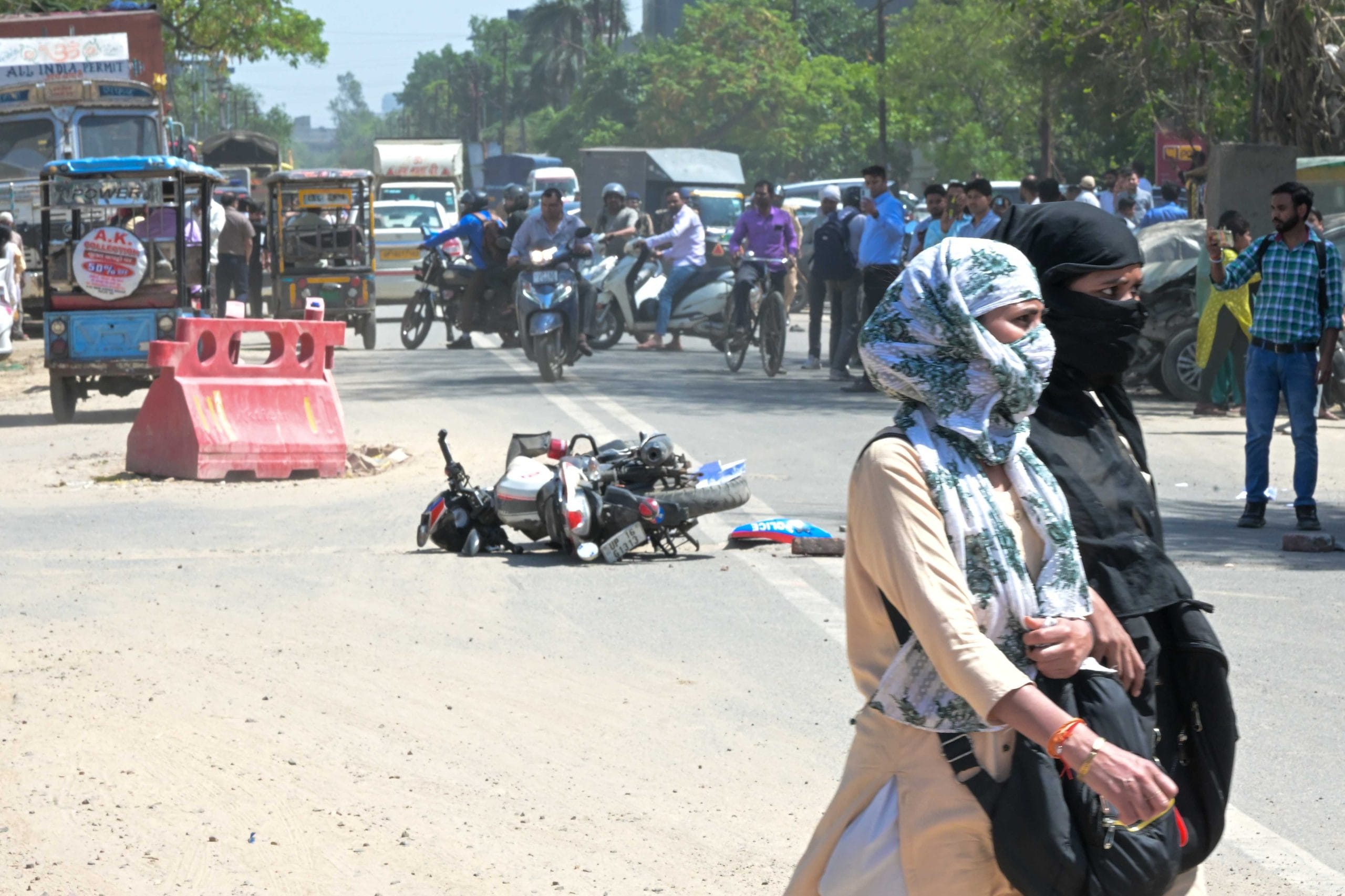
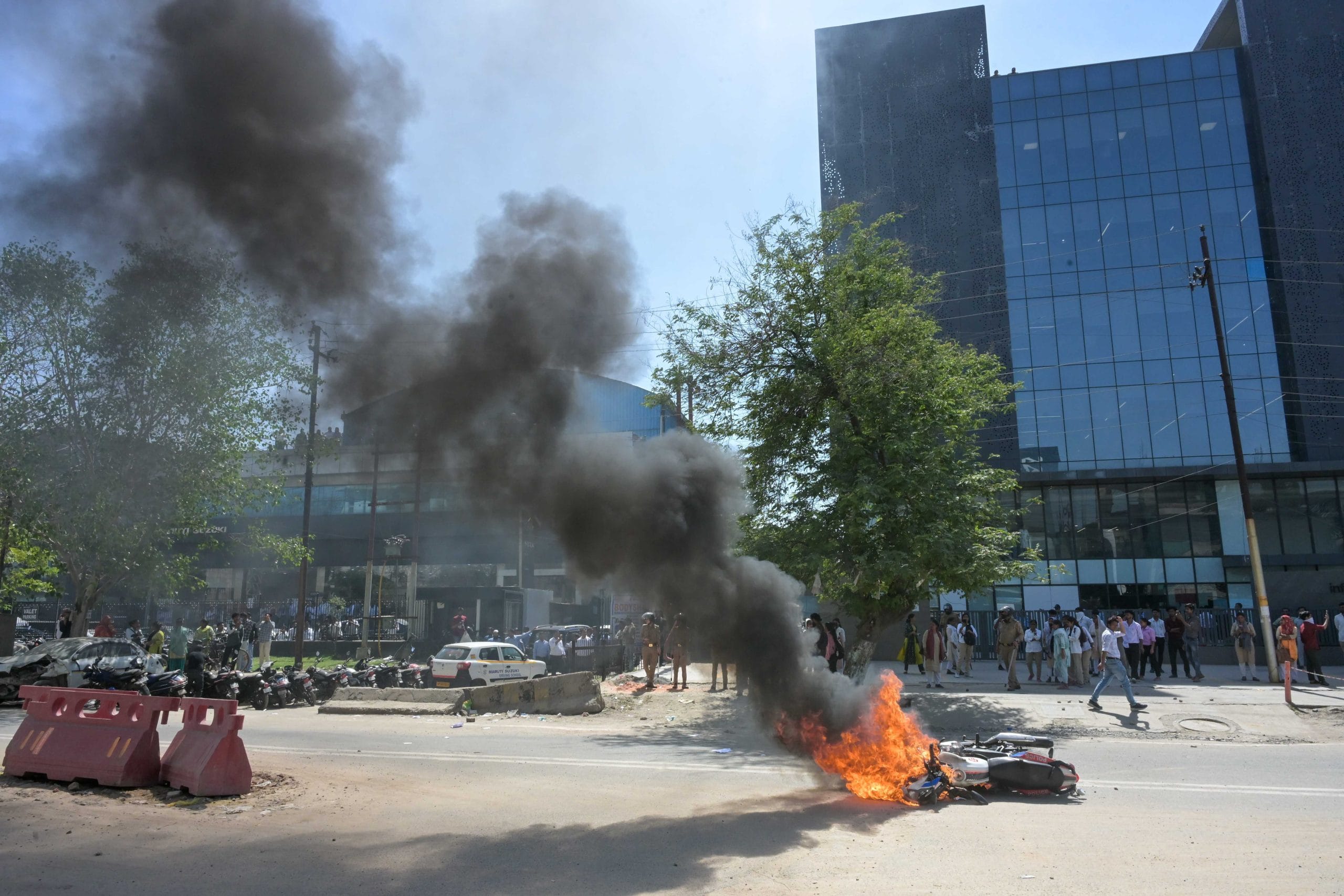
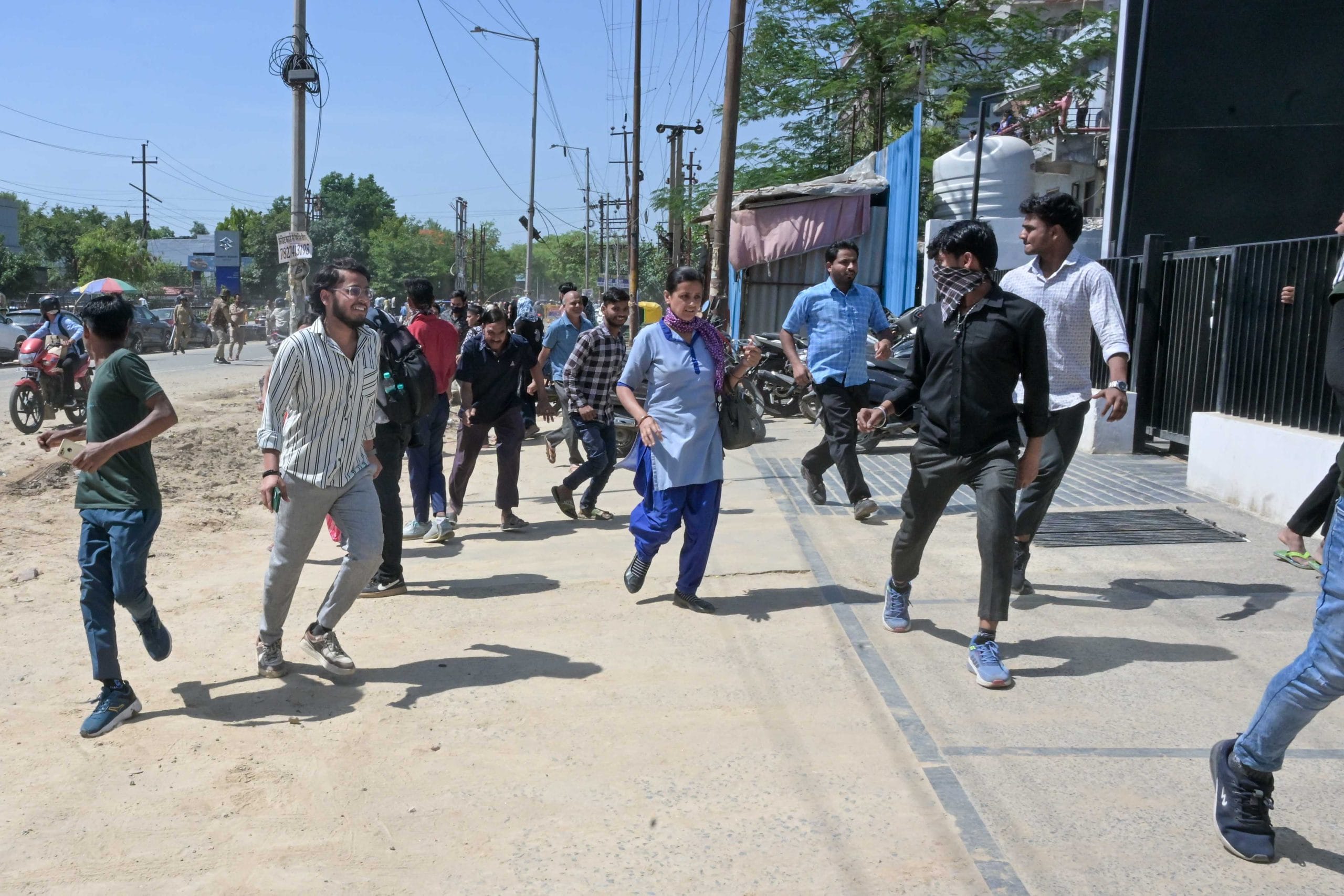
Noida/Manesar: Kaushal Kumar was at a training session at Radical Minds Technologies in Noida when the shouting began. Within minutes, hundreds of workers had entered the premises of this BPO. “Vacate this place and join us in protest,” they shouted, Kumar recalled, standing outside the building’s broken windows in Sector 57 on a day when the NCR town was disrupted by violence and arson leading to long traffic snarls and throwing life out of gear.
Some carried wooden sticks and rods, he said, as they began attacking the building.
Monday was anything but usual across Noida’s industrial clusters, sprawling across multiple sectors and housing nearly 10,000 units, from export factories and car manufacturers to IT firms. Workers moved between factories, calling others out, urging them to join. Slogans like “hamari maangein poori karo” and “kaam ke anusar paisa badhao” cut through the usual hum of production at Noida Sector 57.
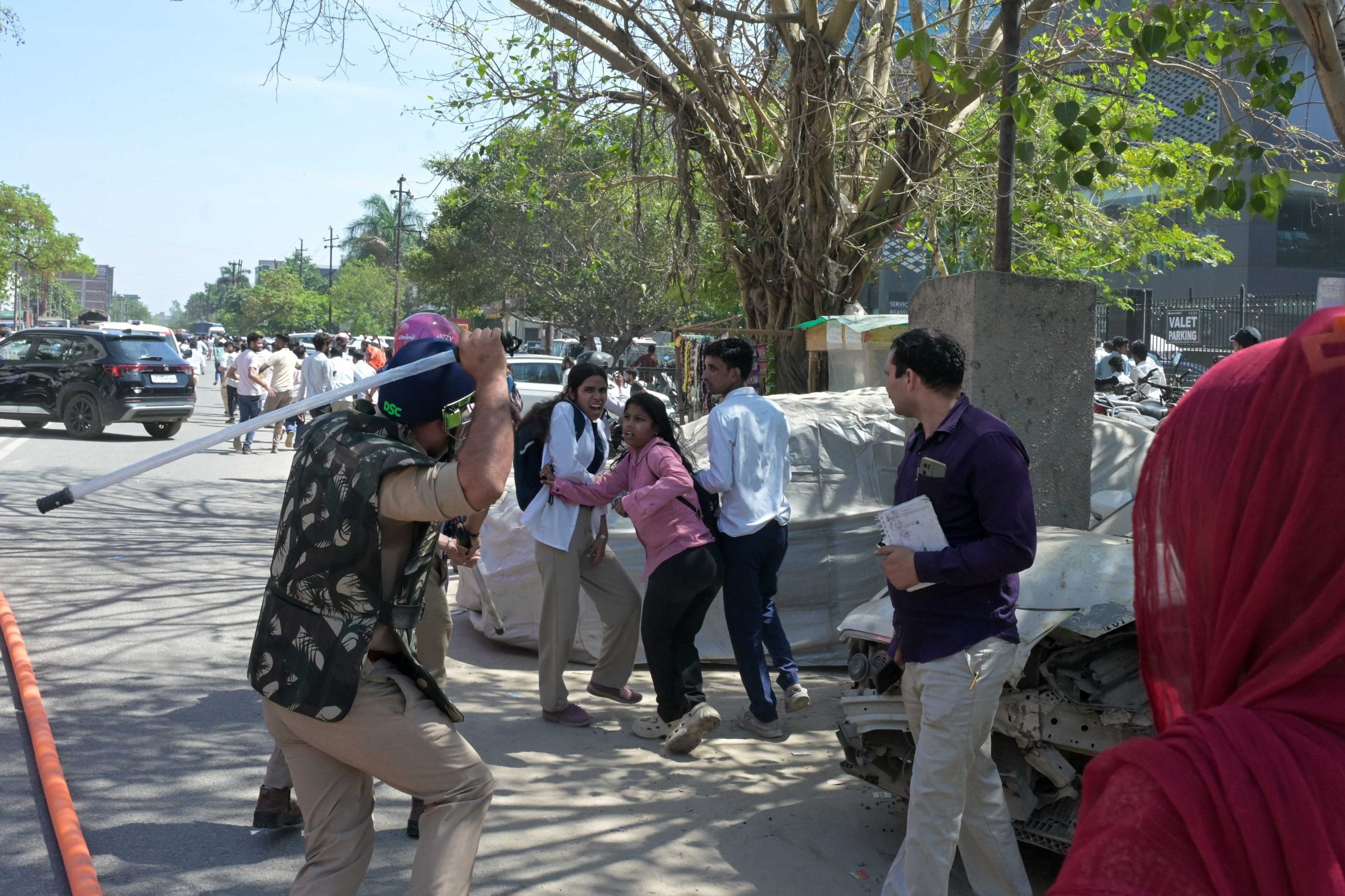
In several units, work slowed or stopped as workers left shop floors to assemble outside. Police teams and Rapid Action Force personnel were deployed across affected areas, with continuous patrolling through narrow industrial lanes. By late Monday night, the scale of the mobilisation had become clearer. Nearly 300 people have been arrested in the police crackdown and 7 FIRs registered.
Gautam Budh Nagar Police Commissioner Laxmi Singh said that between 40,000 and 45,000 workers had gathered across more than 80 locations in the district, “engaging in acts of unrest and disturbance”. In some areas, particularly those bordering other districts, groups from outside had attempted to “make the atmosphere provocative and violent,” she said, adding that several individuals had been arrested while others were being identified through CCTV footage.
What appeared sudden, however, had been building for days. In the days leading up to the Monday violence in Noida, worker protests over wages had first surfaced on the other end of NCR’s industrial belt in Manesar. By Monday afternoon the ripple effect also showing up in Faridabad and Palwal. The mobilisation in Manesar began when workers at the Honda Motorcycle and Scooter India plant sought a wage hike. When the Haryana government announced a 35 per cent increase in minimum wages, it soon became a trigger point in Noida. In the UP NCR town, this translated into a wave of largely leaderless protests, as migrant workers, already strained by rising inflation and stagnant wages, gathered in large numbers. The protests have exposed deep fault lines in the region’s labour economy, forcing authorities into damage-control even as political blame games intensifies.
“The timing of protest is quite unique. It has no face, no leader and no organisation. It just erupted and no one sensed it,” said Jitendra Singh Rana, chairman of the Greater Noida chapter of the Indian Industries Association.
Also read: Gurugram, Noida, Ghaziabad RWAs are fighting among themselves. Temples are the new flashpoint
The calm before the storm
On Sunday afternoon, a day before Noida plunged into chaos, Phase 2 hosiery complex area had no signs of unrest. The roads were unusually clear, factory gates shut, the air carrying a pause that felt deliberate. It was quiet in the way industrial areas rarely are during the week–the kind of lull that suggested something was about to shift. The administration was already preparing for escalation.
At nearly every turn inside the industrial area, police personnel remained posted, keeping watch as workers gathered in small groups near factory gates. Barricades had been set up at key points.
Ankit Kumar, 27, stood outside the Motherson plant in Noida on Sunday, a beedi between his fingers, taking a breather at the end of a long work week. In part, he was. But he was also waiting, along with hundreds of others, for something larger to take shape.
Kumar works at Motherson, doing wiring work. He earns Rs 12,400 a month. “For a year, there has been no increase,” he said. “I want it to at least go to Rs 18,000-20,000 so I can manage my household. That is all we want.”
The budget is stretched thin. Rent for his room is Rs 3,500. Around Rs 1,000 is cut as provident fund–something, he said, he had not fully understood when he first took the job. “After rent and daily expenses, there is barely anything left to send home.”
Kumar is from a landless family in Agra, the eldest son, responsible for his parents. His family expects he will send Rs 8,000 each month; he manages around Rs 5,000. “How will I live then?” he asked.
Rising costs have sharpened the strain. “A small LPG cylinder has increased by Rs 350–400 now. What should I send home?” he said. Before coming to Noida, Kumar worked in Haryana, making automobile parts for Rs 10,000 a month, Rs 9,000 after deductions. “I left because I thought Rs 12,400 would be better. But I am saving nothing. I am living hand to mouth.”
When he first arrived in the city, he said, he did not realise he was being underpaid. “I was new, ignorant. Slowly I understood I was not getting what I had been promised.” What has followed is a shift, from quiet endurance to participation.
“I am not someone who gets into fights,” he said. “But this is suffocating. I don’t care if the police file a case. I have to fight for myself. Who else will?”
“The protesters have said they will surround the police station,” an officer stationed there said. “We are prepared.”
Much of the workforce in Noida’s industrial clusters comes from eastern Uttar Pradesh and Bihar, living in pockets such as Khora colony, barely a few kilometres from their workplaces.
“Most of the workers here earn between Rs 10,000 and Rs 13,000 a month,” said Ketan Kumar, who works at an export unit in Sector 57. “That is not enough to run a family as inflation keeps rising.” He said wages have remained stagnant for years, building frustration.
That frustration found a reference point just across the state border–when protests in Haryana led to a significant wage hike, raising monthly earnings across categories from Rs 11,000 and Rs 13,000 to between Rs 15,000 and Rs 17,000. News of the increase spread quickly, through WhatsApp groups, shared accommodations, and conversations on factory floors.
“When this happens in Haryana, then why not in Uttar Pradesh?” Ketan asked.
Industry representatives say that expectation has been a key trigger.
Rana said that developments in Haryana raised worker expectations in Noida. However, he admitted that in some factories wages are delayed, though most follow government guidelines.
For Ankit Kumar, the question is not just about a raise, but about dignity. “I don’t care about anything else,” he said. “At least let us live and work with some respect.”
Also read: Meet the Kashmiri Muslim leading the ABVP in the valley
Minimum wages and gaps on the ground
Now, officials are meeting industry representatives to understand their concerns.
“The government’s decisions, policies, and the directives issued by the District Magistrate are being communicated to the workers…Some workers are protesting, and I would like to speak with them about how we can address their problems and reduce their difficulties…” said Rakesh Dwivedi, additional labour commissioner, Gautam Budh Nagar, while briefing media on Monday.
But workers argue that official revisions do not always translate into meaningful change.
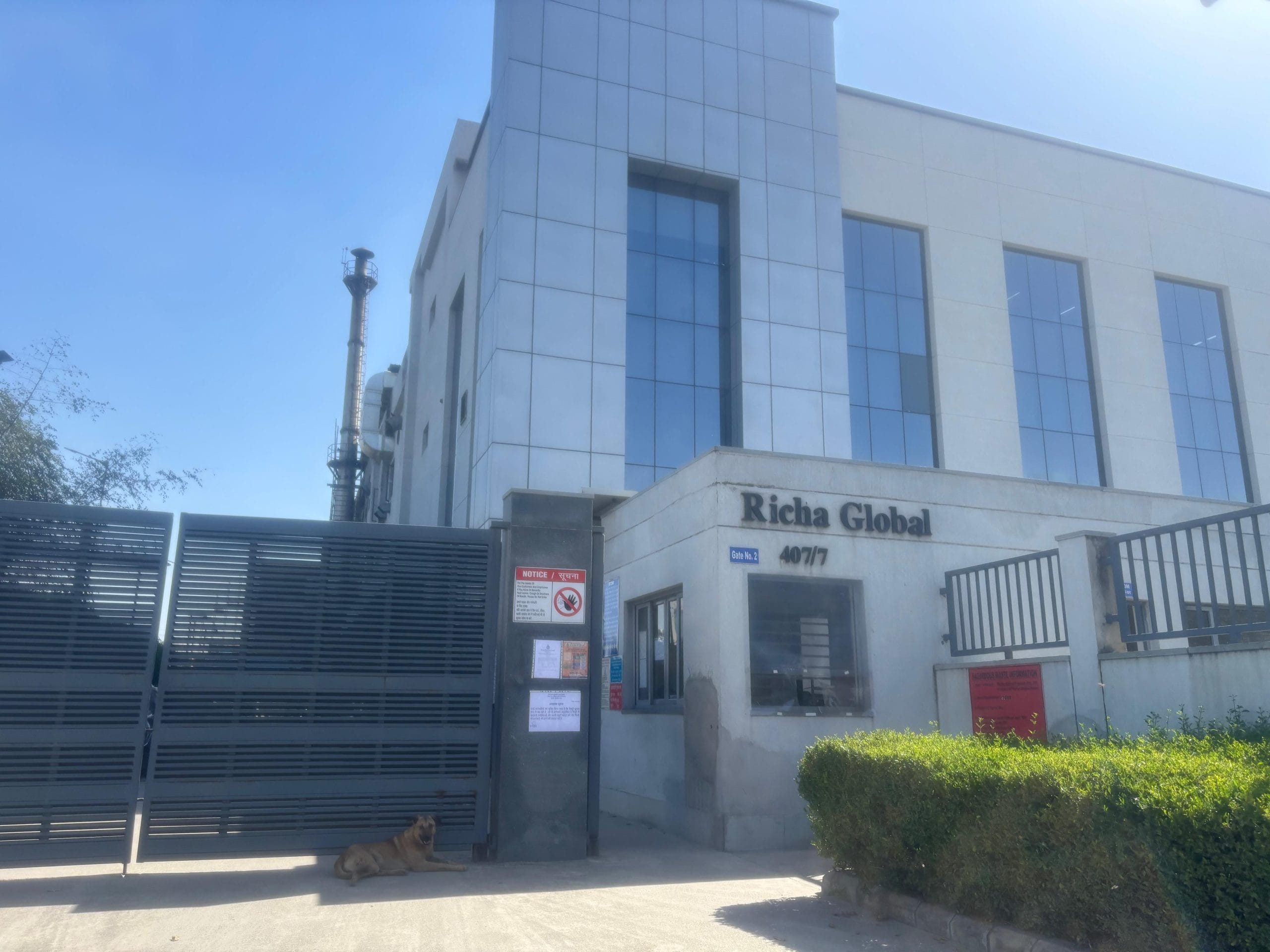
“In March, they increased salaries by just Rs 361,” said Manoj, a worker at Richa Global in Noida. “How does that help when everything else is getting expensive?”
Even where overtime is available, he added, it often comes with punishing targets. “You work from morning to night and still fall short, or fall sick.”
The UP government has constituted a high-powered committee to address the issue, comprising of the industrial development commissioner, senior officials from MSME department, labour and employment department and the labour commissioner, as well as members from industry associations.
Meanwhile, the chief minister Yogi Adityanath while addressing a rally in Muzaffarnagar appealed to the labourers that the double engine government is building a model of security and good governance. “Some conspiring to spread unrest and stop the state from moving towards peace and prosperity,” he said.
The opposition party hit out at the BJP government over the violent protest. Samajwadi Party chief Akhilesh Yadav alleged that injustice has reached its peak. ” Injustice is happening economically. Injustice is being inflicted by increasing inflation. Injustice is being done by rising unemployment. What we saw today in Noida–workers have been demanding their rights on a large scale,” said Yadav.
In Haryana, although the government has notified increased wages, workers and labour unionists are not convinced. Vinod Kumar, vice president of CITU Haryana, said workers have three main demands–increase the minimum wage, strictly apply overtime double wages, and ensure workplaces safety.
A Haryana Labour Department notification dated 9 April 2026 revised minimum wages for all employment in the state with effect from 1 April 2026 at Rs 15,220.71 for unskilled workers, Rs 16,780.74 for semi-skilled workers, Rs 18,500.81 for skilled workers, and Rs 19,425.85 for highly skilled workers. While wages have been revised, labour unions are seeking a minimum wage of Rs 23,196, as recommended by the State Minimum Wage Committee on 29 December 2025.
In a letter to the Haryana chief minister, CITU has also demanded the cancellation of FIRs against workers, compensation for injuries, and the supply of LPG at government rates. The last minimum wage revision in Haryana was in 2015. Under the law, it is meant to be revised every five years, but the process has seen repeated delays.
Also read: Punjabi Dalit fiction is reaching an English audience at last. The book is called Gangrene
From Manesar to Noida
The current wave of unrest can be traced back to Industrial Model Township (IMT) in Manesar, where workers at Honda Motorcycle and Scooter India first began mobilising on 3April. From there, demonstrations spread across units, moving from one company to another before intensifying in certain clusters.
At Richa Global, a major textile exporter, and adjoining units, tensions escalated as workers gathered outside factory gates, blocking entry and calling others to join. Management representatives said attempts were made to explain that revised wages could only be implemented after formal notification, but this did little to disperse the crowds.
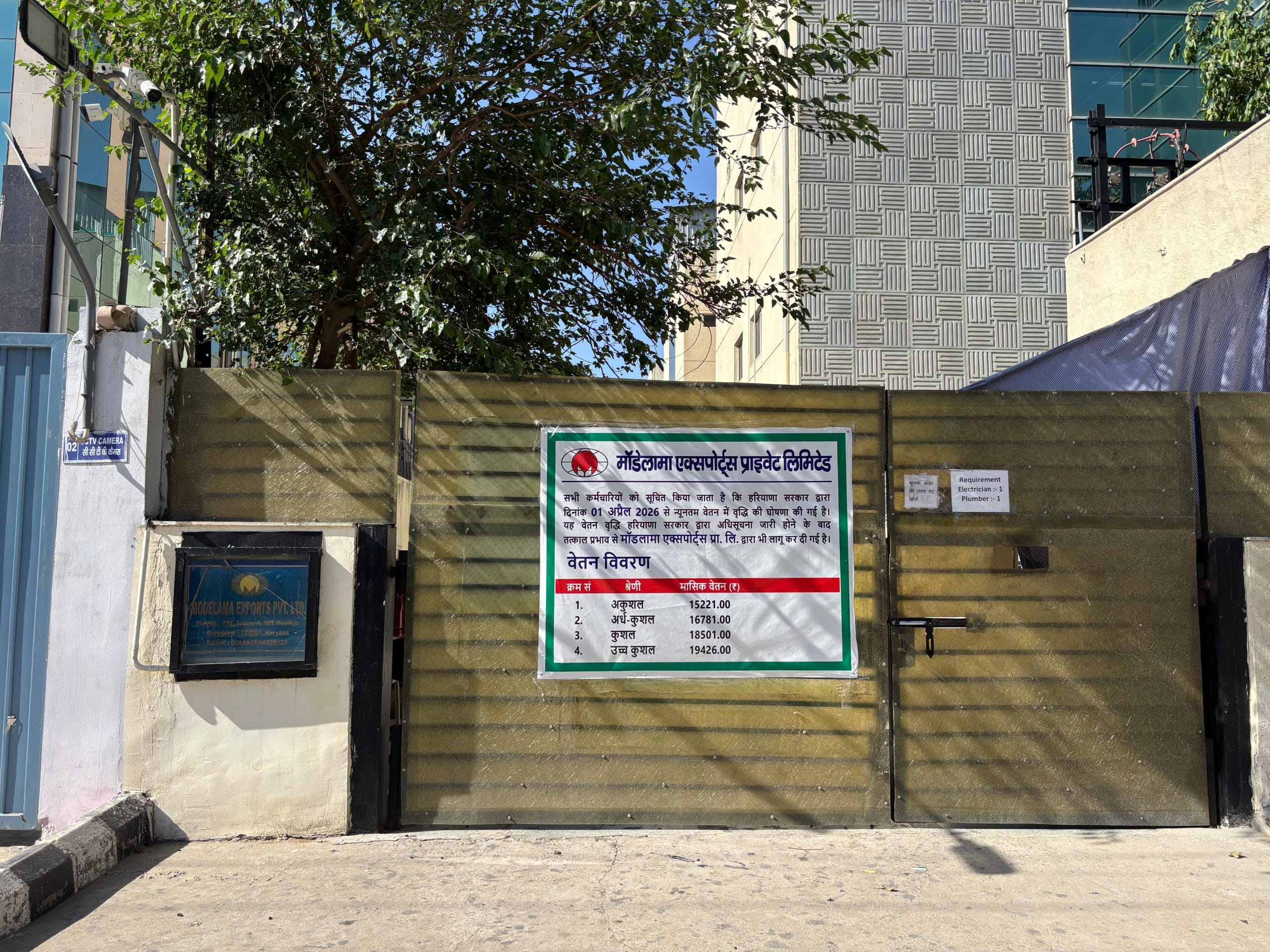
In the days that followed, workers across several companies in IMT announced a strike beginning 6 April. Section 163 of the Bharatiya Nyaya Sanhita (BNS) was imposed in Manesar and adjoining areas on 8 April. Although the wage hike was notified on 9 April, the situation soon turned volatile.
Two FIRs were filed on 9 April, by Modelama Exports Pvt. Ltd. and Richa Global Exports Pvt. Ltd. The FIR filed by Richa Global invokes Section 109(1) of the BNS, pertaining to attempt to murder. It alleges that “at all three units of Richa Global Exports Pvt. Ltd., miscreants attacked company management, employees, and police personnel with intent to kill”, engaging in vandalism, assault, vehicle damage, and stone pelting. The complaint further claims that certain organisations, including Inquilabi Mazdoor and the Automobile Industrial Contract Workers Union, instigated workers.
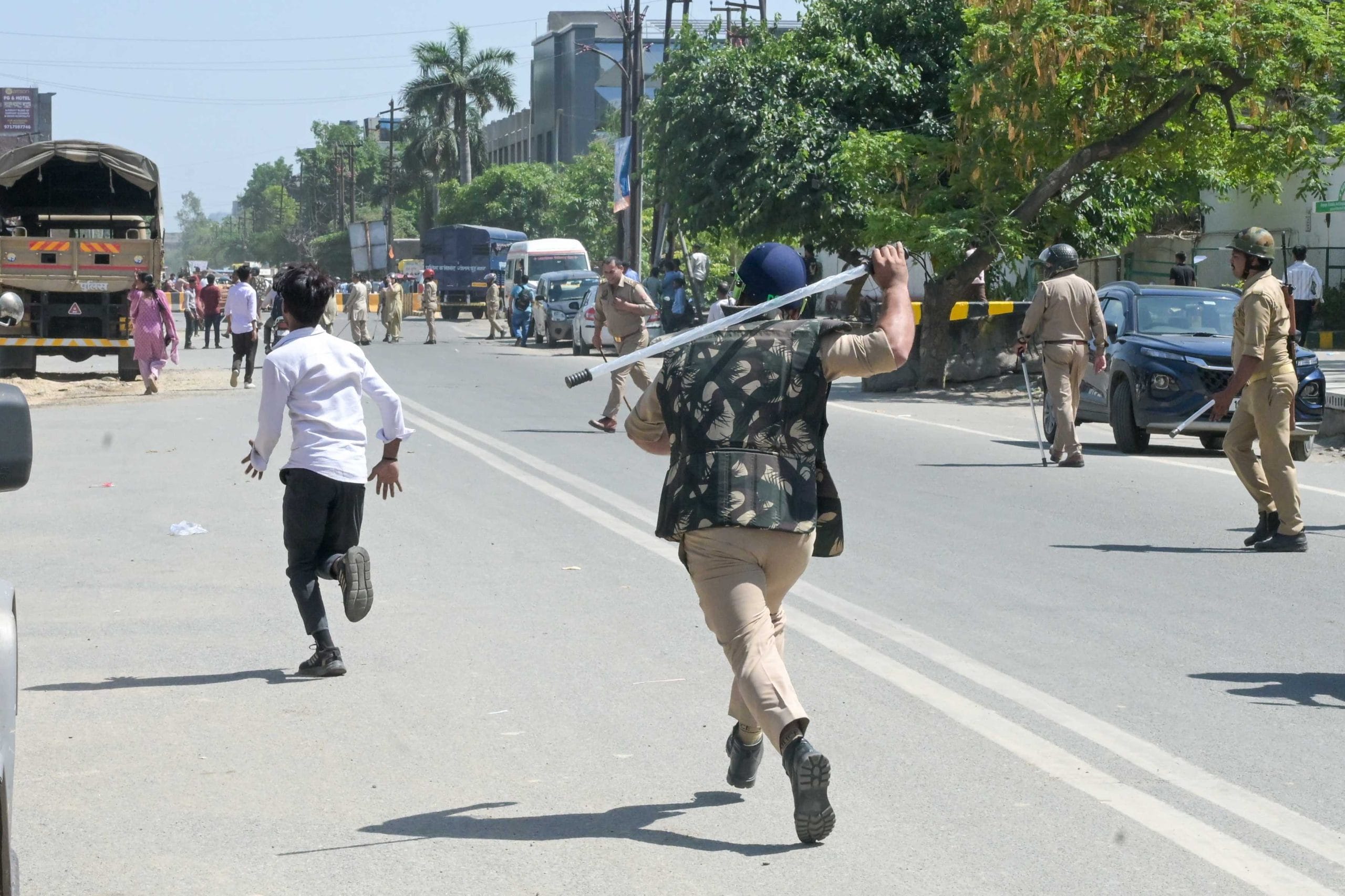
The second FIR, filed by Modelama Exports, invokes provisions related to causing hurt to public servants, assault or use of criminal force, and unlawful assembly and rioting.
A day later, at least 55 people were arrested in IMT Manesar. Of them, 11 were booked on serious charges, including attempt to murder, while 44 others, including 20 women, were arrested for vandalism. Protests in Manesar subsided soon after.
Also read: Lady bouncers of Delhi NCR and their fight for dal, roti, respect
Uncertainty in Gurgaon court
Even as protests unfolded in Noida, the fallout of the Manesar protests played out in the corridors of the Gurgaon district and sessions court. On Monday, the complex filled with union members and anxious families of those arrested in the Manesar protests.
Of those arrested, 11 men have been booked under serious charges, including attempt to murder, and sent to 14-day judicial custody. The remaining 44, among them 20 women, were to be produced in court, where bail pleas were to be heard. But by the end of the day, only eight pleas were filed.
The most immediate question was also the most basic: who exactly had been arrested?
With protests that were largely unorganised, there was no clear list of detainees. Many of those picked up are migrant workers living alone in the city, making it harder for families to track them. The FIRs are unnamed, further complicating identification. Even those helping compile lists of detainees have been picked up. One such worker was taken from his home late Sunday night by men in plainclothes.
In one corner of the court complex, 23-year-old Pankaj Kumar sat with his head in his hands, waiting for a call from his brother, who had gone to try and meet their uncle in jail. The three of them had moved to Manesar about a year and a half ago for work. “We never thought we would be doing rounds of courts and jails,” he said.
His uncle, Vikas Kumar, works at Aumovio. He earned around Rs 12,500 a month, Pankaj said, and was expecting an increase to Rs 15,000. Vikas has been booked under attempt to murder.
“They were protesting peacefully, but it was the company that instigated the violence,” Pankaj alleged. “They were picked up in the guise of medical assistance and then arrested.”
According to him, the protests began on Wednesday; by Thursday evening, workers were being detained. On Friday, they were produced in court and then sent to jail.
“From Aumovio alone, around 12 people have been picked up. We don’t even know under which FIR he has been booked,” he said, adding that most of the violence had taken place at Richa Global.
For four days now, Pankaj and his brother have avoided calls from their family in Ayodhya. “We don’t know what to tell them. We are just hoping things get sorted so there is nothing to say,” he said.
What has unsettled families most, they said, is the absence of names in the FIRs. Union members warn that this leaves room for arbitrary detentions.
“Even after the wage revision, protests are continuing because there is no clarity on overtime,” a family member said. “Overtime is supposed to be paid at double the rate, but that is not happening.”
The police, however, maintained that the situation was under control. The SHO of IMT Manesar Sector 7 police station said the protests began at Honda and then spread from one company to another. “Now everything is peaceful. Police is patrolling and deployed across IMT to prevent any future agitation,” he said.
In the wake of the large scale protests, the Uttar Pradesh government on Tuesday decided to revise minimum wages. Monthly wages in Gautam Buddha Nagar and Ghaziabad now stand at Rs 13,690 from Rs 11,313 for unskilled workers, Rs 15,059 for semi-skilled workers, and Rs 16,868 for skilled workers.
In other municipal corporation areas, the revised monthly wages have been set at Rs 13,006 for unskilled workers, Rs 14,306 for semiskilled workers and Rs 16025 for skilled workers. For the remaining districts, unskilled workers will earn Rs 12356, semi skilled workers Rs 13591 and skilled workers Rs 12552.
Officials said the revision, in line with new labour codes, aims to balance worker welfare with industry pressures, while dismissing claims of a uniform Rs 20,000 minimum wage as “misleading”.
Shivam Kumar, from Gorakhpur in Uttar Pradesh, is a graduate with a BA degree. At 25, he has been working in Noida for the past two years as a mechanic. For him, the job was meant to be an entry into city life, a way out of the cycle of small farming his family depended on.
But after years of working 10 to 12 hours a day, he says he has had enough. “I studied, I got a job, I did my work. I did everything right. And still every day is a struggle. This is not what I imagined,” he said.
(Edited by Anurag Chaubey)