





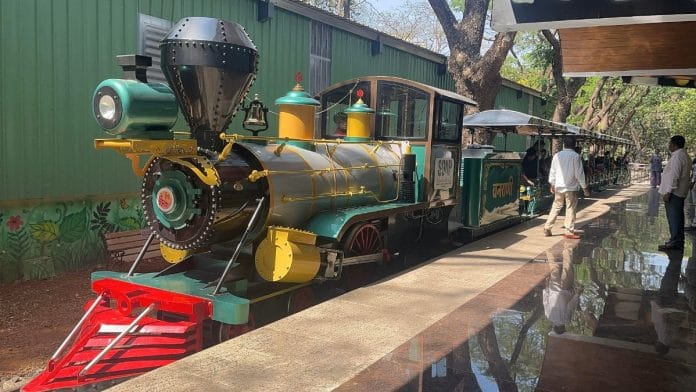



Mumbai: The whistle of the Van Rani toy train is once again cutting through the forest canopy at Sanjay Gandhi National Park (SGNP) in Borivali East—and for many Mumbaikars, that sound means more than nostalgia. It marks the return of a city heritage.
After nearly five years of silence—the park shut during the Covid-19 pandemic, and Van Rani operations came to a complete halt in May 2021 when Cyclone Tauktae wrecked the tracks and surrounding infrastructure—the train has been rebuilt from the ground up.
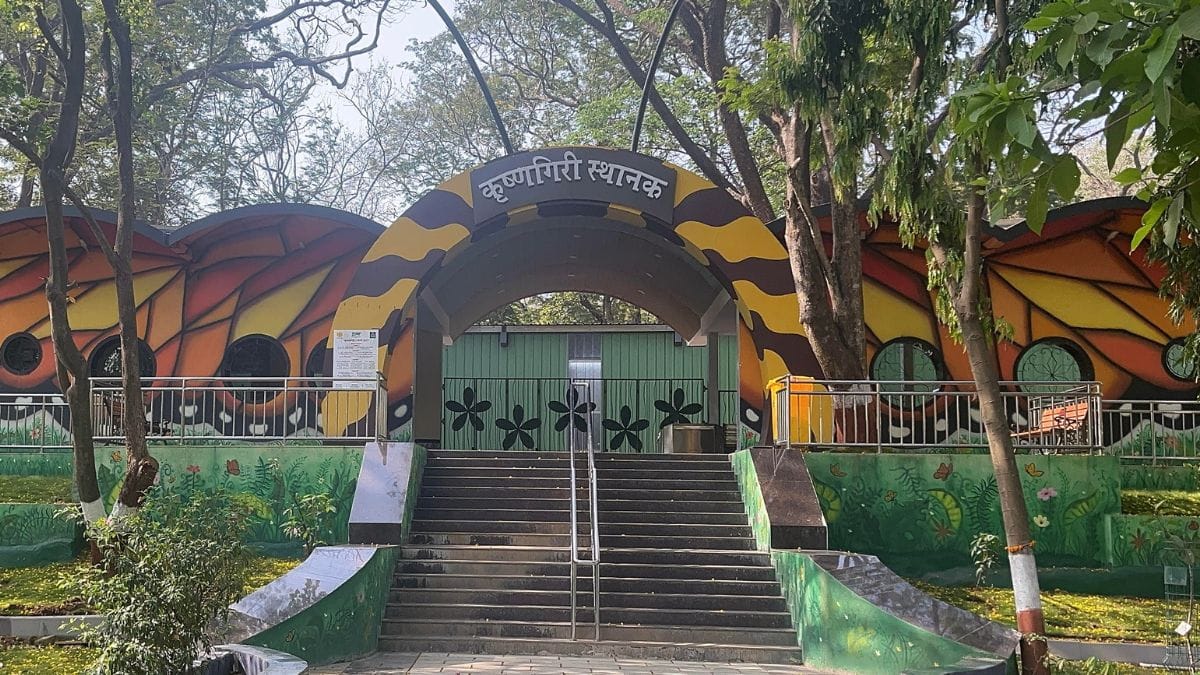
The Indian Railways and park authorities invested over Rs 43 crore in the overhaul, with technical support from RITES, a public sector enterprise under the Ministry of Railways. What has emerged is not a restoration but a reinvention: two battery-powered trains, a vistadome coach option, cement sleepers replacing wooden ones, and a refurbished Krishnagiri station as the boarding and exit point.
The Van Rani—the name translates to ‘queen of the forest’—was first introduced in the 1970s as a gift to the park from industrialist Ratan Tata. It quickly became synonymous with school picnics and family outings in Mumbai.
“In the 1970s, the Van Rani was gifted to the national park by Ratan Tata. We will keep the engine of the old train on display soon as a tribute to the original Van Rani,” said Kiran Patil, Deputy Director (South) at SGNP.
Though the revived train began running on 6 January 2026, the official inauguration took place on 14 March, when Union Minister of Commerce and Industry and Lok Sabha MP for Mumbai North, Piyush Goyal, flagged it off in the presence of state Forest Minister Ganesh Naik and IT and Cultural Affairs Minister Ashish Shelar.
“This was truly a train that, for 50 years, held immense appeal for visitors to the Sanjay Gandhi National Park,” Goyal told reporters.
He added, “Its tracks were damaged during a cyclone in 2020, necessitating its closure; however, I am delighted that CM Devendra Fadnavis and DCM (Deputy Chief Minister) Eknath Shinde have granted approval for its revival.”
#WATCH | Maharashtra | The iconic Van Rani toy train relaunched at Sanjay Gandhi National Park, Borivali.
Union Minister Piyush Goyal says, "…This was truly a train that, for 50 years, held immense appeal for visitors to the Sanjay Gandhi National Park. Its tracks were… pic.twitter.com/YvSTtHZLWh
— ANI (@ANI) March 14, 2026
Van Rani 2.0
The most consequential change is under the bonnet. The new Van Rani runs on battery power, replacing a diesel engine—eliminating emissions inside a protected forest zone that is one of the most visited national parks within the city.
The two trains, each with four coaches, run on a 2.3-kilometre narrow-gauge track that loops through biodiversity hotspots, a mini zoo and artificial tunnels before returning to Krishnagiri station—a circular route designed so as not to disturb the park’s wildlife or its existing biodiversity. Each trip lasts 20 minutes and carries between 70 and 80 passengers.
“Daily operations begin at 9am and end at 5pm on weekdays and extend to 6pm on weekends during tourist inflow,” said Patil.
Passengers can choose between two coach types. The open-air carriages preserve the feel of the original Van Rani; and the vistadome coaches, with glass roofs and large windows, offer panoramic views of the forest canopy.
“Usually we only take the open-air train out, since it resembles the previous Van Rani. During weekends, though, we receive a higher footfall and that’s when we bring out the second vistadome train, to manage the crowd,” said a forest officer managing the train.
Beyond what visitors see, the infrastructure has been substantially upgraded. The earlier wooden tracks—prone to wear and frequent maintenance—have been replaced with cement, reducing long-term upkeep. Patil said the park plans to add projectors inside the coaches and an audio guide to deepen the visitor experience.
Mumbai: The ‘Van Rani’ Toy Train has returned to Sanjay Gandhi National Park, Borivali, after being shut since 2021 due to Cyclone Tauktae. The eco-friendly train, with 80-passenger capacity, will run through Krishnagiri Upvan’s 5.5 sq km area. A second open-air toy train is also… pic.twitter.com/3JmmZy0Rpf
— IANS (@ians_india) July 17, 2025
A Sustainable Upgrade!
The redeveloped Van Rani Toy Train at #SanjayGandhiNationalPark, #Mumbai, now runs on a fully battery-powered system, replacing the earlier diesel locomotive, making the ride cleaner, quieter and more eco-friendly.
(1/2) pic.twitter.com/Kk9O0WGOeO
— RITES Limited (@RITESLIMITED) March 14, 2026
Also Read: A global Buddhist monastery thrived in Mumbai for 1,400 years. ‘Messages from the past’
Revenue and response
The numbers since the revival point to an attraction that has lost none of its pull.
Between 6 January and 14 March 2026—before the official inauguration—the train sold 14,013 tickets and generated Rs 10.19 lakh in revenue. Rides on inauguration day were free; paid operations in the days following reflected steady demand.
On 15 March, 492 passengers came aboard, generating Rs 41,140. Weekday figures were lower—159 visitors (Rs 13,374) on 17 March and 189 visitors (Rs 16,021) on 18 March—but the festive uplift of Gudhi Padwa, the Marathi New Year, brought 398 visitors and Rs 32,477 on 19 March.
In total, the second edition of the train has so far sold 15,251 tickets and earned Rs 11.23 lakh.
For many visitors, the return is personal.
Sharad Soman, 35, a South Mumbai resident who rode the Van Rani as a child with his parents, brought his six-year-old son for his first trip. “My parents used to bring me to the national park whenever they could. At the time it looked different, secluded. It had a forest vibe. I have fond memories of taking the toy train many times with my parents when I was a child. I wanted my son to have the same experience. He was elated with the experience,” Soman said.
Reema Naik, 40, who came from Mira-Bhayander in North Mumbai, saw the ride as something larger than leisure. “The experience that the train offers is holistic. It starts with rich green spaces and further travels through human settlements inside the park and buildings around it. It is important to create such experiences for people to understand the importance of preserving trees and green spaces.”
The Van Rani carries more than passengers. It carries the memory of what this city once allowed itself — and is slowly beginning to reclaim.
(Edited by Prerna Madan)
Also Read: Mumbai and the banality of bigotry—it all starts with food