








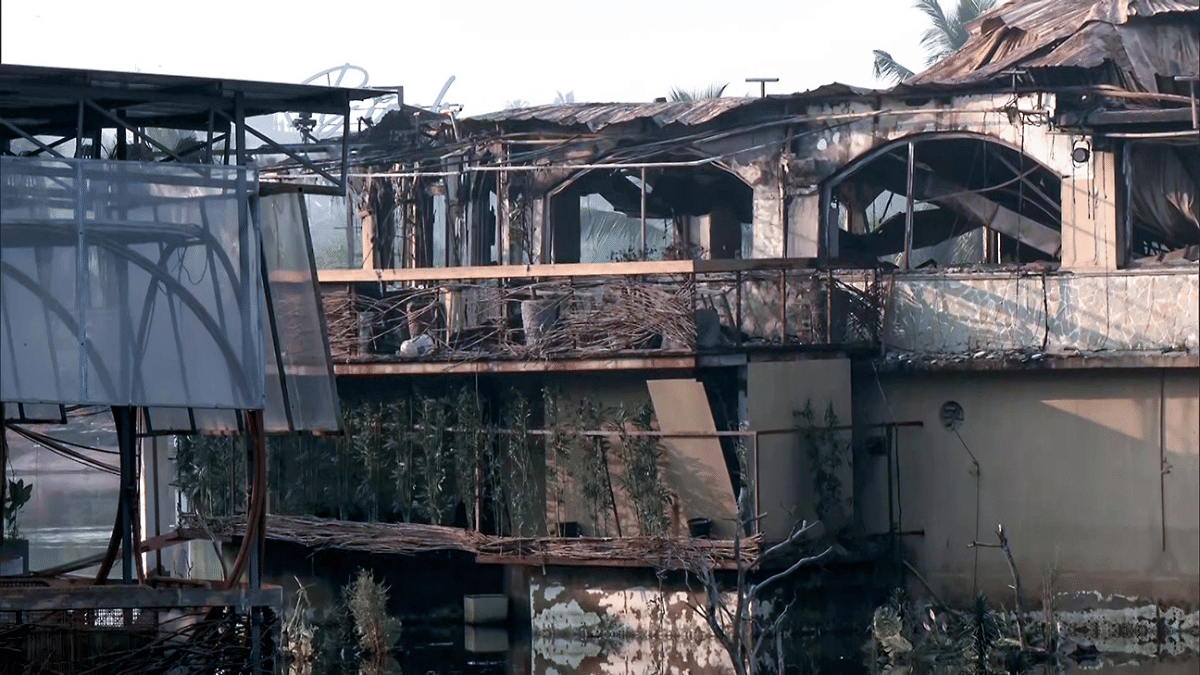
Panaji, Goa: The 6 December inferno at Goa’s Birch by Romeo Lane has turned the spotlight on the state’s firefighting machinery, and the multiple challenges in enforcing fire safety rules in North Goa, the nightclub hub that mushroomed so fast that regulatory mechanisms couldn’t keep up.
From wooden beach shacks exposed to high-speed coastal winds, to narrow lanes leading to beaches, the Goa Fire and Emergency Services faces many challenges.
One of the biggest problems is widespread violations of fire no-objection certificate (NOC) conditions that, fire department officials admit, are common but rarely penalised. Moreover, fire officials say, they have limited authority in granting approvals or enforcing rules.
The state has witnessed 2,619 fire-related incidents this year alone, according to a fire department incidents report.
“We face difficulty in the coastal belt with shacks along the coast that are all wooden structures due to the CRZ (Coastal Regulation Zone) rules, and therefore, highly combustible,” a fire department officer, who didn’t want to be identified, told ThePrint. “It’s not just their kitchen, but more so the firecrackers and fire dancing that happens there without any checks.”
The department has a total strength of 1,906, and it mandates a strict turnaround-time protocol—vehicles must move out of the station within 60 seconds of receiving a call.
Typically, stations deploy two fire vehicles and one emergency ladder vehicle, depending on the situation.
“In critical situations like the fire at the Birch nightclub, the firefighters call for backup, and emergency vehicles from nearby stations leave to provide assistance,” a firefighter told ThePrint.
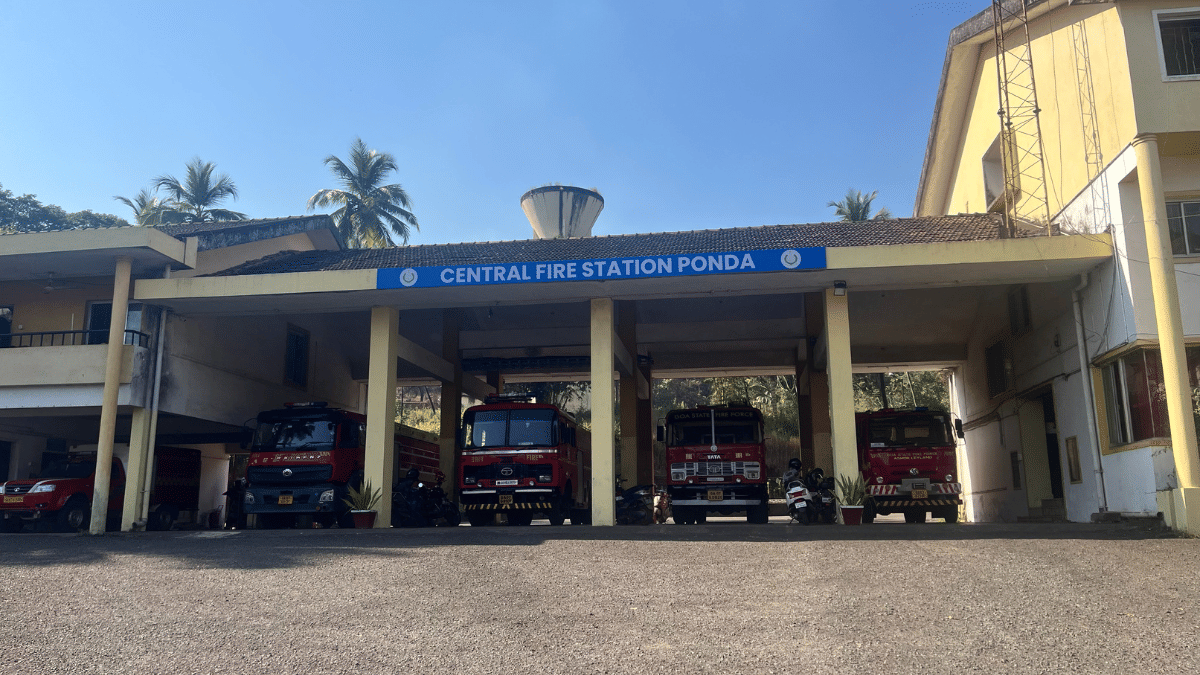
“The time taken to reach the site depends on the distance from the station but usually takes us 15-20 minutes to reach. In this case (Birch fire), we reached in 20 minutes since it was at the beach with accessibility impediments. We needed help and so we asked the Mapusa station to send a vehicle,” the firefighter added.
Handling the Birch fire was tricky because of the number of casualties, but the Goa fire department has seen worse than this, officials said.
In January 2023, Goa witnessed its largest industrial fire in the Pilerne Industrial Estate at a Berger Becker Coatings Pvt Ltd paint factory, as the result of a short circuit. Nearly 200 people were evacuated from nearby residential areas because of toxic smoke that engulfed the air.
“There was no loss of life, but the fire department deployed over 100 firefighters assisted by special forces and personnel from the port authority. The fire containment efforts ran for over 24 hours,” a firefighter from Panaji told ThePrint.
Also Read: Birch by Romeo Lane is a prime example of how Delhi’s audacity survives in Goa
3 zones, 16 stations
Goa’s Fire and Emergency Services Department is divided into three zones—North, Central and South—under the overall control of the director of the Directorate of Fire and Emergency Services.
Each fire station is headed by a station fire officer and has approximately 30 to 45 personnel, including one station officer, two sub-officers, three to four leading firemen and around 10 to 15 firefighters. Emergency response is coordinated through the control room at Panaji headquarters.
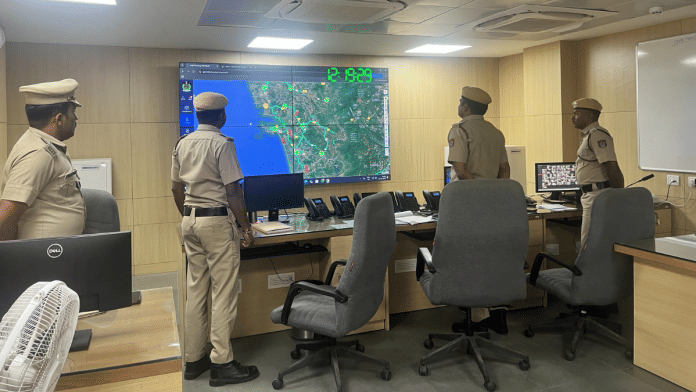
Calls are logged with details and diverted to the nearest station. “The control room then diverts the call to the nearest local fire station,” an officer at the control room told ThePrint.
A standard turnout includes one officer, one driver, one leading firefighter and four firefighters, in each fire tender.
The tenders are equipped with lighting systems, victim-location cameras, hydraulic spreaders, cutters and door breakers. The fire tenders are GPS-enabled and monitored in real time, with additional support drawn from neighbouring stations during major incidents.
Field fires & wooden shacks
Field fires account for the largest number of fires that Goa’s fire department deals with each year. Last year, the department recorded 1,185 field fires, and this year the number increased to 1,253.
The reason? Deliberate fires to clear the grass and empty the land for plantation, along with short circuits from high-tension wires that pass over the fields.
“Dry grass and field fires are the most common fire incidents we deal with in Goa. The reason for these fires is generally when the locals want to clear the grass or empty their fields to set up their fields for the plantations,” a senior officer told ThePrint.

“Apart from that, when high-tension wires are passing above the fields, if there is a short circuit, the sparks lead to fire on the grass,” the officer added.
Beach shacks in Goa are highly vulnerable to fires because of their basic wooden structure, which is easily combustible. Local authorities give them a temporary NOC as these shacks are seasonal and remain shut during the monsoons when tourism is scarce.
The officer told ThePrint that the risk of fires spreading at beach shacks is also higher because of the high wind velocity on the coast.
For this reason, they are asked to keep 2,000-5,000 litres of water available to use during fire incidents.
Narrow lanes impeding access
“The shacks are at beaches, roads to which are narrow and often occupied with other shops and establishments. The emergency vehicles are often not able to directly reach the beaches and, therefore, need to tend to the fire manually with water pumps connected to the tenders,” the officer said.
“There are certain regulations put forth for these shacks wherein they are asked to install a fire extinguisher consisting of ABC powder primarily filled with monoammonium phosphate,” he added.
“We face difficulty in coastal belt with shacks along coast that are all wooden structures due to the CRZ rules, and therefore, highly combustible,” fire department officer.
The common fires have three classifications. Type A, for solids like wood and paper; Type B for liquids like oil and gasoline; and Type C for electrical equipment. Hence, the name ABC powder, which is designed to tackle the most common causes of fire and is generally available in all fire extinguishers. It works by coating the exposed surfaces and, in turn, interrupting the chemical chain reaction caused by the fire.
“We do not prefer having shacks on beaches since it is not safe, but the local body has the final authority and hence a temporary NOC for six months is provided by the fire department to owners,” the officer added.
NOCs, enforcement gaps
Apart from firefighting, the department’s core functions include fire prevention and training. Fire prevention largely involves inspections and the issuance of NOCs, with recommendations based on the risk associated with the occupancy.
Once compliance is verified during re-inspection and the prescribed fee of Rs 10 per square metre as a one-time payment is paid, the NOC is issued.
“The NOC will now be issued for five years, as part of ease of living and ease of doing business, while the owners of establishments will have to submit a self-declaration for the fire safety equipment installed in their establishments,” the official said.
“The department is also set to empanel third-party agencies that will be in charge of auditing installations at the establishments,” the official added.
Shacks are at beaches, roads to which are narrow & often occupied with other shops & establishments. emergency vehicles are often not able to directly reach the beaches, says an officer .
Smaller structures below 100 square metres do not require a fire NOC. Instead, owners must submit a self-declaration to the local body, which then issues a trade licence.
“Structures below 70 square metres require at least one fire extinguisher, while those between 70 and 100 square metres must have two,” Bosco Ferrao, assistant divisional officer, North Zone, Directorate of Fire and Emergency Services, told ThePrint.
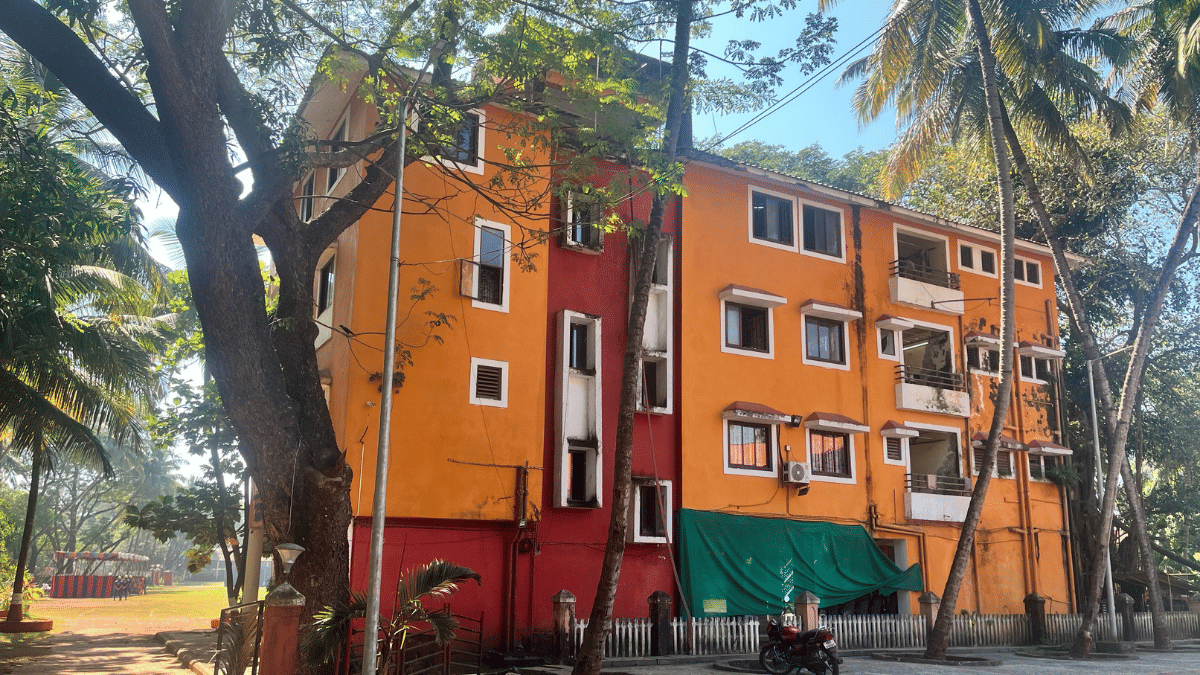
Another senior officer acknowledged that discrepancies can arise at the panchayat level.
“Sometimes a trade licence is issued for a particular occupancy, like a beauty parlour, restaurant or guest house, but later the use changes. The fire service does not have a say once that happens,” he said.
He added that the department does not have the authority to seal establishments.
“There are several cases where the NOC is provided for a certain kind of establishment, but after the licence is issued, the establishment is then used for another purpose. In this case, we can only raise the issue. The power to seal lies with the panchayat, collector, police or departments like Pollution Control Board, FDA, Excise and CRZ,” the senior officer told ThePrint.
He further admitted that the system relies heavily on compliance and oversight by local bodies. “The fire (department) should also have the power to seal,” he stated.
Training beyond the state
The Goa State Fire Force Training Centre conducts 17 specialised courses in fire safety management for industrial and in-service personnel and is recognised as a regional training centre by the Ministry of Home Affairs and the National Fire Service College (NFSC) for junior officers’ and sub-officers’ courses.
“Trainees are sent from NFSC to Goa, while the centre also conducts in-house training for Goa Fire and Emergency Services staff,” a senior officer in charge of the training centre in Panaji, told ThePrint.
These courses are mandatory for promotions, with firefighters required to complete specific programmes at different stages of service.
Short-term specialised programmes of about 15 days are also conducted for schools, government buildings, private industries and hotels, including the Taj group.
Under the Centre’s ‘Yuva Aapda Mitra Training Program’, 900 college students are to be trained annually by each centre in basic disaster and fire safety preparedness.
In Goa, 200 students have completed the seven-day module so far, with a third batch scheduled in the north and south zones.
(Edited by Sugita Katyal)
Also Read: Goa nightclub fire: No business in Thailand, Luthra bros clearly tried to flee, police tell court