





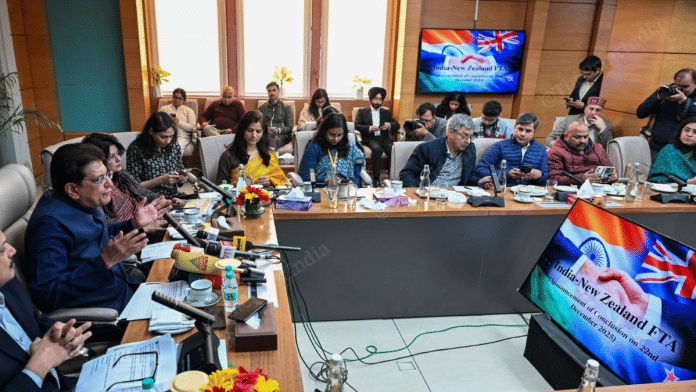



New Delhi: India and New Zealand concluded a free-trade agreement, with New Delhi shielding its sensitive dairy sector even as it pursues a broader opening of the economy.
The deal cuts duties on 95% of New Zealand’s exports to the South Asian nation — ranging from timber to wool — but stops short of opening India’s dairy market to the world’s largest dairy exporter, according to official statements. Major economies, including the US, have been pushing India to provide wider access to its farm sector.
India “protected” the interests of its farmers in dairy and other agricultural products, Commerce and Industry Minister Piyush Goyal said at a news conference in New Delhi on Monday. The nation is never going to open up its dairy sector under trade pacts, he added.
Farmers are a major voting bloc in the most-populous nation, where millions of smallholders own less than 2 hectares (5 acres) of land. Trade talks with Washington have been held up over New Delhi’s red lines on dairy and farming, Bloomberg News has reported.
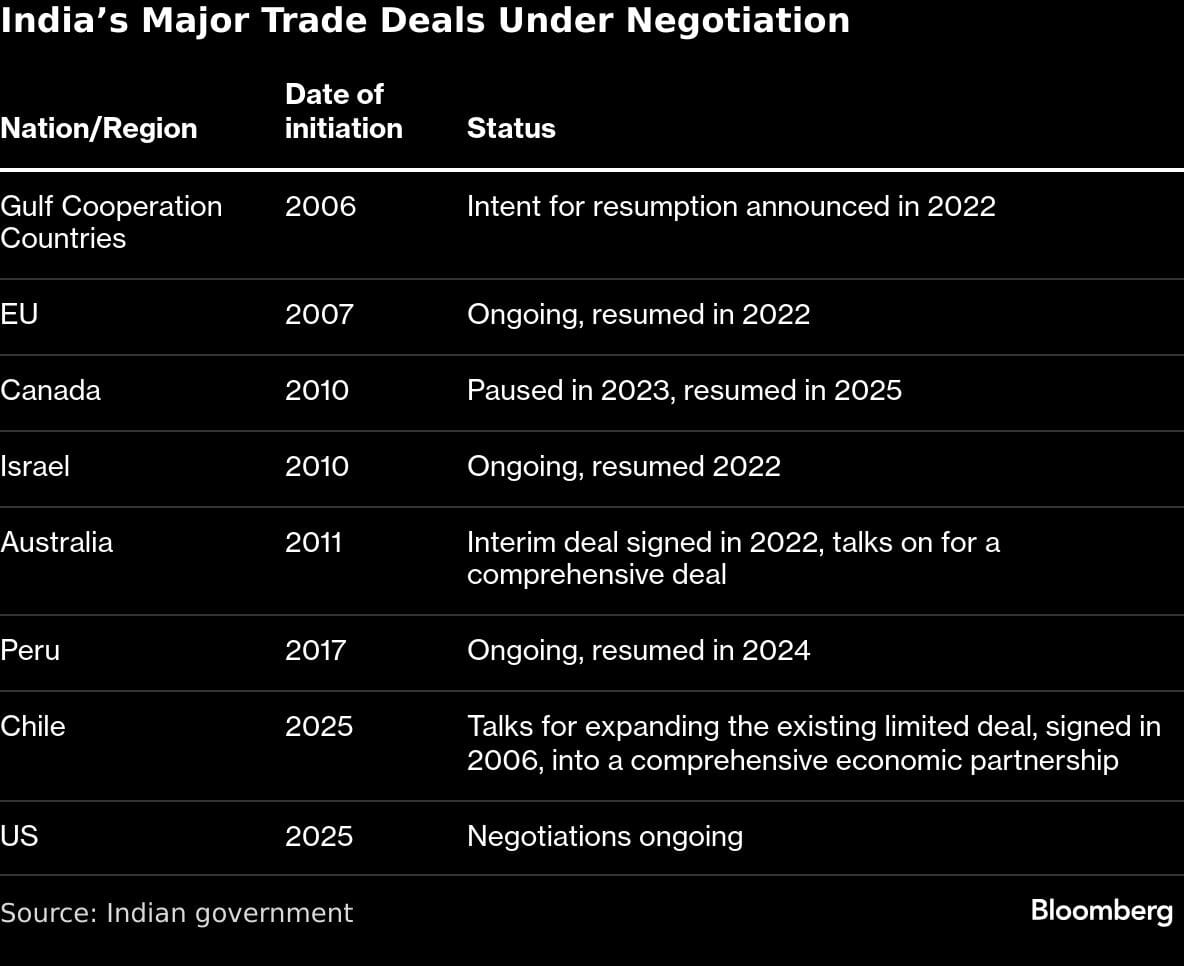
The agreement is the third free-trade pact New Delhi has concluded this year as it seeks to shed a protectionist image by lowering trade and non-trade barriers long bemoaned by investors. The push has taken on greater urgency after US President Donald Trump imposed 50% tariffs on Indian goods — the highest in Asia — squeezing exporters in labor-intensive sectors.
India concluded free-trade agreements with Oman last week and the UK in May.
New Zealand’s trade minister said in a statement Monday that the “historic” agreement will make 95% of its current exports to India tariff-free or subject to sharply reduced duties, covering products ranging from forestry and coal to sheepmeat and infant formula.
India has also reduced duties on limited apple imports from New Zealand, its first concession on the fruit under any free-trade agreement. The move comes even as the US has been pressing New Delhi to open its market to American apples.
In exchange, New Zealand will eliminate levies on all Indian exports and ease mobility rules for students and workers from the South Asian nation, according to a separate statement from New Delhi.
Indian Prime Minister Narendra Modi held a phone conversation with his New Zealand counterpart Christopher Luxon on Monday and both expressed confidence in doubling bilateral trade over the next five years, New Delhi said in a statement. The South Pacific nation has also agreed to invest $20 billion in India over the next 15 years.
While the New Zealand FTA signals New Delhi’s push to expand its global economic footprints, it is unlikely to deliver a major boost to India’s exports given the relatively small trade volumes. Total trade between New Zealand and India stood at $1.3 billion in 2024-25 with India’s exports at $711 million and imports from New Zealand at $587 million.
According to the New Delhi statement, the deal offers significant gains on mobility, improving entry and stay provisions for Indian professionals and students. It also opens new employment routes for skilled professionals through a Temporary Employment Entry Visa, capped at 5,000 visas at any given time with stays of up to three years.
The easing of immigration rules has already led to some criticism in the South Pacific nation. New Zealand First, a junior member of the governing coalition, said on Monday it will vote against any legislation required to enable the agreement with India.
Calling it a “bad deal,” its leader Winston Peters said “it gives too much away, especially on immigration, and does not get enough in return for New Zealanders, including on dairy.”
The legislation is likely to go before New Zealand’s parliament in 2027. Luxon told reporters in Wellington on Monday that he expected to get sufficient support to make it into a law. India, by contrast, requires only cabinet approval for trade pacts. The cabinet cleared the New Zealand agreement last week, Commerce Secretary Rajesh Agrawal said.
“The India–New Zealand FTA is less a trade breakthrough than a framework for deeper cooperation,” said Ajay Srivastava, former trade official and founder of the Global Trade Research Initiative. “While it brings greater predictability in goods, services, mobility and investment, its real impact will depend on how both countries use it to strengthen practical economic links.”
Disclaimer: This report is auto generated from the Bloomberg news service. ThePrint holds no responsibility for its content.
Also Read: India’s merchandise exports to US rising month-on-month despite Trump tariffs, govt data shows