








New Delhi: Saying that the government’s inaction has led to many parents seeking an unproven method of treatment for their children suffering from Autism Spectrum Disorder (ASD), the Supreme Court on Friday ruled that the use of stem cell therapy will be considered a “malpractice”.
A bench of Justices J. B. Pardiwala and R. Mahadevan said, “Every use of stem cells in patients outside an approved clinical trial is unethical and shall be considered as malpractice. Therefore, medical practitioners who offer such stem cell therapy as a routine clinical service and not in a research/clinical trial setting, could be said to be failing to meet the reasonable “standard of care” owed by them towards the patients”
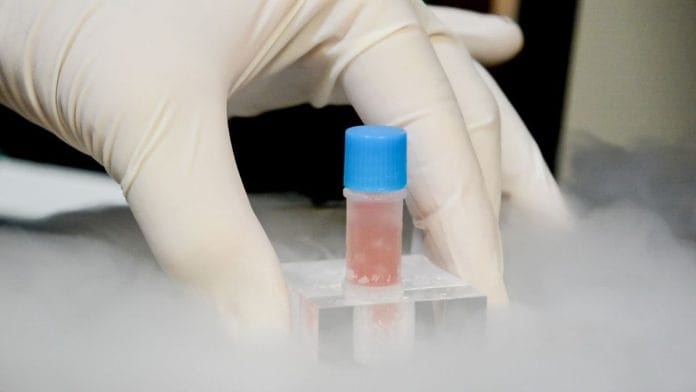
Stem cell therapy involves administering various types of stem cells such as human cord blood mononuclear cells, fetal stem cells and bone marrow aspirate concentrate stem cells, for therapeutic use in conditions like autism, Alzheimer’s and Parkinson’s disease. Essentially, it uses stem cells from an individual’s own body to repair or replace diseased or dysfunctional tissue.
The court was acting on a plea filed by a charitable trust, in public interest, which raised concerns relating to the rampant promotion, prescription and administration of stem cell therapy for the treatment of Autism Spectrum Disorder (ASD) by several clinics nationwide.
The crux of the issue before the court, however, was the legal permissibility of the administration of stem cells for the curative treatment of autism by clinics.
In its 99-page ruling, the court noted that although stem cells administered for therapeutic use in autism are characterised as drugs under the Drugs Act, 1940, the same itself cannot be “determinative of the fact that it is permissible to be administered as a clinical service”. It also made clear that although voluntary participation in regulated clinical trials remains permissible, stem cell therapy for autism lacks adequate information required for valid consent and runs the risk of violating medical ethics.
The court also noted that according to the National Medical Commission recommendations and the National Ethical Guidelines formulated by the Indian Council of Medical Research (ICMR), stem cell therapy has not been recommended for autism as a routine clinical treatment. According to these guidelines, the court noted that stem cell use in patients must be limited only to an approved and monitored clinical trial setting, which is aimed at advancing science and medicine, but is not offered as therapy.
The court also made clear that unproven treatments like stem cell therapy cannot be claimed as a matter of right.
Speaking to ThePrint, iProbono India, which filed the plea on behalf of Yash Charitable Trust, Dr Vibha Krishnamurthy, K. S. Ganpathy (parent of a child who received stem cell therapy), and the Forum for Medical Ethics Society, said, “This ruling is a significant step forward for disability rights as it strengthens safeguards against the commercial exploitation of families and reinforces accountability in the provision of medical treatment.”
The women-led social justice organisation also said that in a nutshell, the court has now held that stem cell therapy for autism cannot be offered as a routine clinical service and must be restricted strictly to approved and monitored clinical trial settings. “The court emphasised that unproven therapies cannot be justified as standard treatment and that medical care must be grounded in credible scientific evidence and ethical practice”.
While there is no proven cure for ASD, there is a significant amount of research in the field which claims the use of stem cells can alleviate symptoms of this condition. Although the use of stem cells for this purpose is still debatable, the court had to decide whether it is legally permissible to administer stem cells on persons diagnosed with autism as a routine healthcare procedure.
In the 2024 ruling delivered by the top court in M. A. Biviji v. Sunita and Others (2024), it had said that as long as a doctor follows a practice acceptable to the medical profession of that day, he cannot be held liable for negligence merely because a better alternative course or method of treatment was also available. In doing so, the bench noted that the standard of care is to be judged in the light of the knowledge available at the time of the incident.
What was the case
By way of its plea, the petitioners had argued that although stem cell therapy could still be said to be at an experimental stage, it was being touted as a treatment or a cure for autism by different clinics, hospitals and institutions, in violation of the existing legal framework.
It argued that individuals diagnosed with autism, and their parents or caregivers, who are usually unaware of the scientific and legal intricacies, unsuspectingly place their implicit faith in such hospitals or clinics, in the hope of a cure. As a result, such people often fall prey to cost-intensive procedures like stem cell therapy, which, the plea argued, was illegal.
The petitioners also argued that such a treatment does not account for a safety net, which is available to subjects of clinical trials under the present regulatory framework. Even though a framework for regulation of such therapies exists, it is not being enforced by the government, the PIL said.
The plea also listed several clinics in India which offer and advertise stem cell therapy as a cure for autism. In August 2017, the issue was first brought to the attention of the 16th Lok Sabha as an unstarred question addressed to the Minister of State, Ministry of Health and Family Welfare.
In response, the Centre said there were 59 entities that were currently engaged in the practice of offering stem cell therapy, while adding that there was no central record of reported cases. The central government also pointed out that the National Guidelines for Stem Cell and Research were also issued to guide clinicians and scientists to conduct research scientifically.
The PIL also argued that the existing regulatory framework under the Drugs and Cosmetics Act, 1940, and the New Drugs and Clinical Trials (NDCT) Rules, 2019, should be enforced, which includes directions to prohibit the administration of stem cell therapy for autism, as a routine treatment.
Besides this, the petitioners also sought to curb advertisements and promotions by clinics and doctors, and to initiate penal action against institutions allegedly offering such treatment illegally.
What the court ruled
Pointing out that medical practitioners owe patients a duty to exercise a reasonable degree of care, skill and knowledge, the court said that this standard is not met when doctors administer interventions lacking credible scientific support.
A medical practitioner cannot be said to meet the standard of reasonable care if an intervention “lacks credible scientific evidence of safety and efficacy” or where authoritative medical bodies have unequivocally stated that such treatment is not recommended, the court said.
Underlining that a doctor’s conduct must align with a practice acceptable to the medical profession at the time of the incident, based on the knowledge then available, the court said unproven interventions cannot be defended as an exercise of due care or reasonable judgment.
For existing patients who are undergoing such therapy, the court accepted that it could not be stopped “all of a sudden” and directed the Ministry of Health and Family Welfare, AIIMS and the National Medical Commission to provide the best solution so such patients could continue receiving such therapy, until they can be rerouted to institutions conducting clinical trials.
The court noted that in the present framework, stem cells will come under the purview of ‘drugs’ as ‘substances’ under Section 3(b)(i) of the Drugs Act, 1940. However, stem cells which have not undergone processing by means of substantial or minimal manipulation, will not be considered a new drug under the NDCT Rules, 2019
This also means that if any research is conducted about such stem cells, it will be governed by the regulatory framework given under the NDCT Rules, 2019.
The court also noted that the National Ethical Guidelines, in Clause 7.91 provide that any use of stem cells involving human participants shall be undertaken as a clinic trial.
(Edited by Viny Mishra)