





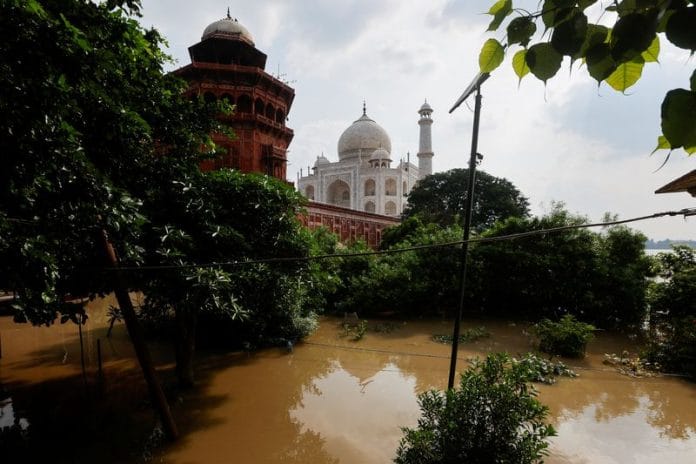



LUCKNOW (Reuters) – A river that runs through the northern Indian state of Uttar Pradesh has risen to lap the compound walls of the iconic Taj Mahal in Agra city, causing concern about damage to the 17th-century white marble monument.
The water level of the Yamuna river has increased over the last few days after unusually heavy rain in northern India, including Uttar Pradesh, which has received 108% of its normal rainfall since the four-month monsoon season began on June 1.
According to India’s Central Water Commission (CWC), the portion of the river flowing alongside the Taj Mahal rose to 152 metres (499 feet) on Tuesday evening, well above the warning level for potential danger of 151.4 metres. The level considered dangerous is 152.4 metres.
Local media outlets reported that the last time the river reached the walls of the monument, built by Mughal Emperor Shah Jahan in memory of his queen Mumtaz Mahal, was 45 years ago, in 1978.
CWC data also indicates that its station near the monument recorded the river’s highest flood level that year at 154.76 metres.
Visuals from the area on Tuesday showed the red sandstone boundary wall of the Taj Mahal surrounded by muddy water, with the mausoleum itself looming over the scene, untouched by the river.
Officials from the Archaeological Survey of India (ASI), which oversees the Taj Mahal along with several other monuments in the country, said there is “no serious concern” about the monument at present.
“If it rains more, or the water stays this high for some days, we will need to assess the situation again,” said Raj Kumar Patel, superintendent archaeologist with ASI.
Several other monuments and gardens located in the vicinity of the Taj Mahal, closer to the banks of the Yamuna, however, “have been submerged” and damaged, he said.
These include the tomb of Itimad-ud-Daulah, often called “baby Taj”, which dates back to the 1600s, and Mehtab Bagh, also from the same period, whose structure has been damaged and garden area – currently under water – completely destroyed.
(Reporting by Saurabh Sharma, writing by Sakshi Dayal; Editing by Sharon Singleton)
Disclaimer: This report is auto generated from the Reuters news service. ThePrint holds no responsibilty for its content.