








In Episode 1819 of Cut The Clutter, Shekhar Gupta moves beyond the Gulf war itself to focus on its fallout for India—especially the strain it could place on LPG supplies, pump prices and household energy bills. Drawing on India’s heavy dependence on imported LPG, crude and gas, he explains why a prolonged conflict in the Gulf can quickly ripple into Indian kitchens and transport costs, and why the country’s gradual shift to PNG and LNG is still nowhere near enough to provide full insulation from such shocks.
Here’s the full transcript for clarity:
We are stepping away from the war in the Gulf today—giving it a break, but not quite giving ourselves a break, because we are still staying within the war. We are not talking about what is happening on the battlefield. We are talking about the consequences for us, particularly the Indian consumer, the ordinary Indian citizen.
What we see right now is the distress over LPG. The government keeps saying every day that it has enough LPG. Every tanker that comes in is celebrated and makes headlines. It is almost like the 1960s, when there were front-page news items saying two more ships laden with wheat had arrived from the US.
That was a ship-to-mouth existence. Now, it looks like a ship-to-burner, tanker-to-burner existence.
So LPG is what has got attention right now. However, if the war continues, other stress points will also come. Right now, if you are driving a car or riding a taxi, you have not felt the crunch or the pressure. But that will come if the war goes on, because how long will the government hold on to petroleum prices—the pump prices in India?
It has done so so far. I can see why: because of the elections, and some of them are critical for the government, particularly West Bengal. So if the war goes on, then 28 April onwards, watch out for those pump prices.
More pressure points will build up. The reasons are very simple. India imports almost 90 percent of its crude oil needs. India’s crude oil production has not been increasing. It has been falling for many, many years, going back to 2011 in fact. Also, India has a large import dependence on gas as well. More importantly, India has a larger import dependence on LPG. So all of this mix will come under stress.
What we see right now is only LPG because LPG is where our import dependence is the greatest, and LPG is also an area which the Modi government has pushed in a big way because they came in with the Ujjwala scheme, taking LPG to the poorest households. That is a very good idea, because if you burn organic matter—leaves, wood, even cow-dung cakes—to cook at home, that produces smoke and very bad air quality, and it is very bad for people working in the kitchen, which is mostly women.
This has been a very good initiative, and the success of the initiative lies in the fact that 32 crore households in India now use LPG. So, LPG connections are 32 crores right now. It is a hell of a lot. However, a lot of it is imported. That is why LPG has got the first pressure.
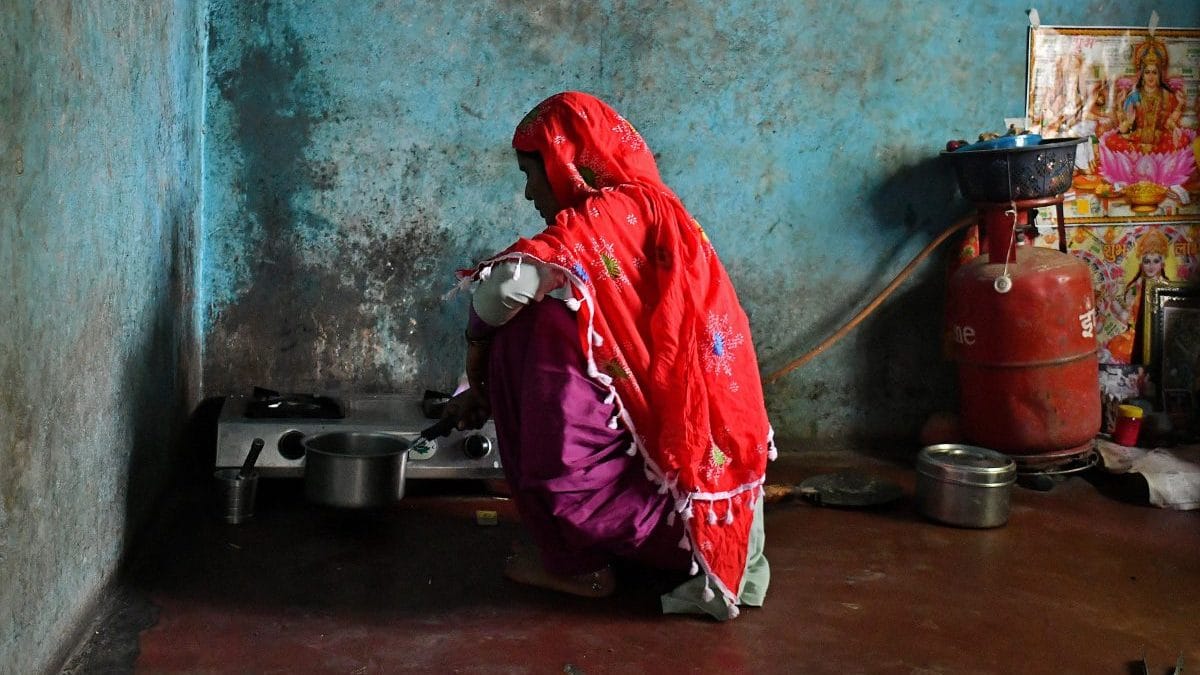
If you look at India’s LPG production, India generally produces about 30 percent of its LPG needs. LPG means liquefied petroleum gas. I know all these acronyms are floating around, and they will continue to float around. Just as in the Covid times we all became biologists, we are all becoming energy specialists right now. That is the life of a journalist: you have to read, and you have to learn.
So get used to these acronyms, because they will become part of our lives now, just as those biology terms did during the Covid days. What is happening right now, if it continues, if this war goes on for another month or so, then the calamity on the world—not in terms of lives lost, but in terms of economic distress—will be no less than the Covid calamity.
That is why get used to LPG: liquefied petroleum gas. And I will tell you why each one has its name—CNG, compressed natural gas; PNG, piped natural gas; and LNG, liquefied natural gas. They are all varieties of gas, or natural gas, or hydrocarbon gas, which are transported in different ways, packaged in different ways and used in different ways. In some cases, they also have different calorific value.
For example, the PNG that we burn at home, for example in Delhi—almost all of Delhi now has Indraprastha Gas Limited pipelines. So, you can use a pipeline and get gas in your home 24/7. There is no booking cylinders, going and getting cylinders, or having one delivered to you. It comes into your pipeline. You pay a bill. It costs a little more than LPG cylinder gas.
However, it is much more convenient and it is always available. That is not the one that India is short of right now. And I will explain to you why.
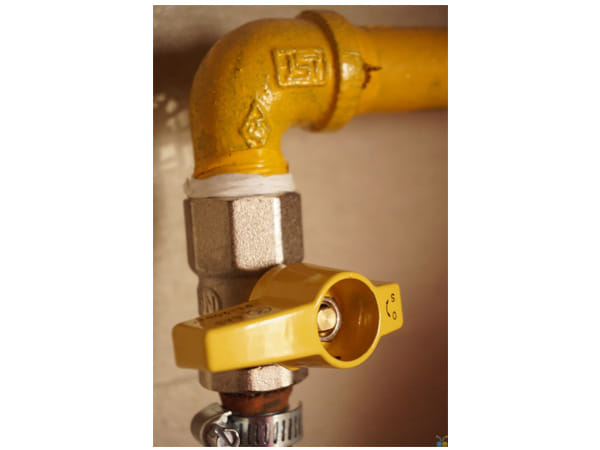
PNG, that is piped natural gas, comes to you through a pipe. This is natural gas as it comes from the well. India produces about 50 percent of its need for natural gas. Some of it comes from the various oil fields in India, and quite a bit comes from the Krishna-Godavari basin oil fields, run by Reliance, British Petroleum and ONGC. That is where India hopes and expects that, if they dig a couple more wells, gas production will go up. That is how, on natural gas, India produces about 50 percent. Import dependence is 50 percent.
This gas is available elsewhere in the world. India is not so dependent on the Gulf countries. I will tell you how. This gas comes into India in the form of LNG—liquefied natural gas. When gas comes out of a field, it can be in the US. India is buying quite a bit from the US. It can be from Australia, which has been trying to sell India liquefied natural gas for a very long time. Except the tanker cost seemed too high.
With energy, economics is always an issue. When life is normal, when there is peace in the world, when crude prices come down to $60 per barrel, then all of these calculations work out. Then many of the things we are talking about today will look unfeasible. What is the point of spending all this money buying LNG tankers and getting gas from Australia? It is so expensive when you can buy it cheaper in the Gulf. But when crude goes up to $110 or $120, then everything else becomes feasible. That is how energy economics works.
That is how exploration and production also become cyclical. When prices go up, you start investing. By the time you have invested and started harvesting the results, the prices may have gone down, because nobody can anticipate these cycles. Who can anticipate when another fresh round of fighting will break out between, say, Israel and Iran? Or, who could have anticipated that Russia would invade Ukraine on such a large scale and face such massive sanctions for such a long time?
That is why energy markets are very problematic and very tricky. Now, back to this: I told you how PNG comes into India. Right now, about 1.5 crore households have PNG, and you might have seen that the government is putting out advertisements and ministers are making statements asking more and more people to shift to PNG. That is again because 50 percent of natural gas is made here. Our import dependence is less, and the rest we can get as LNG.
LNG comes in ships in specialised LNG tankers. Why is it called liquefied? For natural gas to liquefy, it has to be cooled to very low temperatures—almost minus 160 degrees. Once it is cooled like that, it compresses to about one-thousandth of its size. So, for simplicity, 1,000 units of this gas become about one unit. That allows a lot of this gas to be transported in these containers.
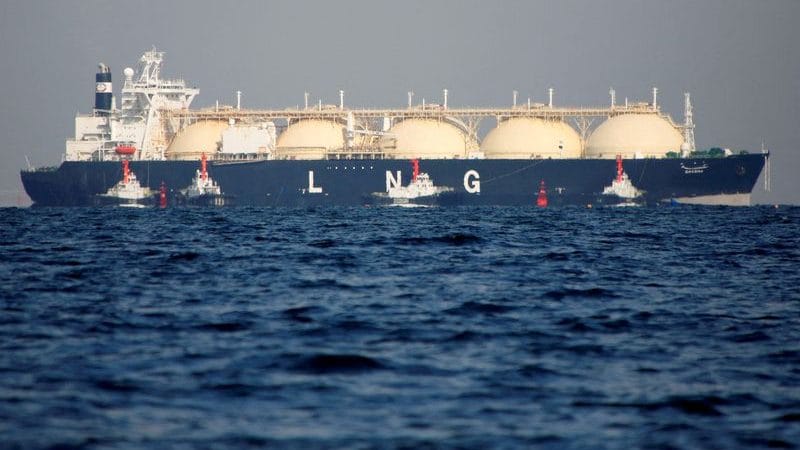
These then come to gas terminals—LNG terminals. India now has eight specialised LNG terminals because the country is really hungry for energy. India is a growing economy with a very large population, and India has been signing LNG deals with various countries, especially Qatar. The gas then is converted back into natural gas and supplied to industry and households through the larger pipelines that GAIL has built across the country.
So far, in India there are 25,000 km of pipelines. However, these pipelines do not go to many parts of the country. Another 10,000 km are being built. The big cities and metro cities are connected with the pipelines. Otherwise, the pipelines were generally designed to connect the industrial hubs in the country. As a result, many areas of the east, central India, and some of the poorest parts of India are not properly connected.
The other challenge with PNG and with city gas delivery, as it is called CGD, is that India is so poorly urbanised. India is urbanising, but in a completely unplanned, chaotic way. We are not planning our cities. We are not building any new cities. In fact, we have not built any new city since Chandigarh. Even by global standards, that is still a tiny city, because India has not built big cities properly. Its big cities have grown haphazardly. Its tier-two and tier-three cities have also grown haphazardly.
So what are our cities? Our cities are basically a combination of potholes, open drains, encroachments, unauthorised constructions, and even if you look up, you see a web of cables and wires. Our cities are a bloody mess. And because of that mess, it becomes really difficult—almost impossible—to take these gas pipelines through our cities. That is why even in our metro cities, not all areas can be serviced by gas pipelines, because there is no right of way.
That is something that is a work in progress. The government is already pushing people towards PNG. There are incentives being given to city gas distribution companies. Also, many families which have PNG in homes but are still holding on to LPG connections have been told—in fact, ordered—to give up their LPG connections. They can no longer book LPG. That is about 60 lakh families at the moment. India has about 1.5 crore families which totally rely on PNG, and the government believes that once the 60 lakh others give up their LPG connections, as they have been ordered to, this number will become about 2 crore.
It is still very small—2 crore using PNG compared with 32 crore depending on LPG. Now, where does LPG come from and why is LPG such a complication? We had spoken about it in some detail in an earlier episode, which we will share a link to. But LPG is a combination of butane and propane. It comes as a byproduct of crude processing. It can also be produced from natural gas.
This combination, when propane and butane are mixed, is then cooled and put under pressure. That is how it comes in your cylinder. It is put under much higher pressure to be put into tankers as it comes from, say, Qatar or the UAE, which is our largest supplier of LPG. In fact, the UAE accounts for 36.5 percent of our imports. Qatar is 21.4 percent, Kuwait is 16 percent and Saudi Arabia is 14 percent.
If you add all of it up, then you are already looking at about 88 per cent of LPG imports. Not all our LPG is imported. Under normal circumstances, about 60 to 65 percent has been imported, while 30 to 35 percent has been produced domestically, mostly as a byproduct of crude distillation at our refineries. India has some of the biggest oil refineries in the world, and now because India is so short of LPG, the government has asked these refineries to produce more LPG as a byproduct.
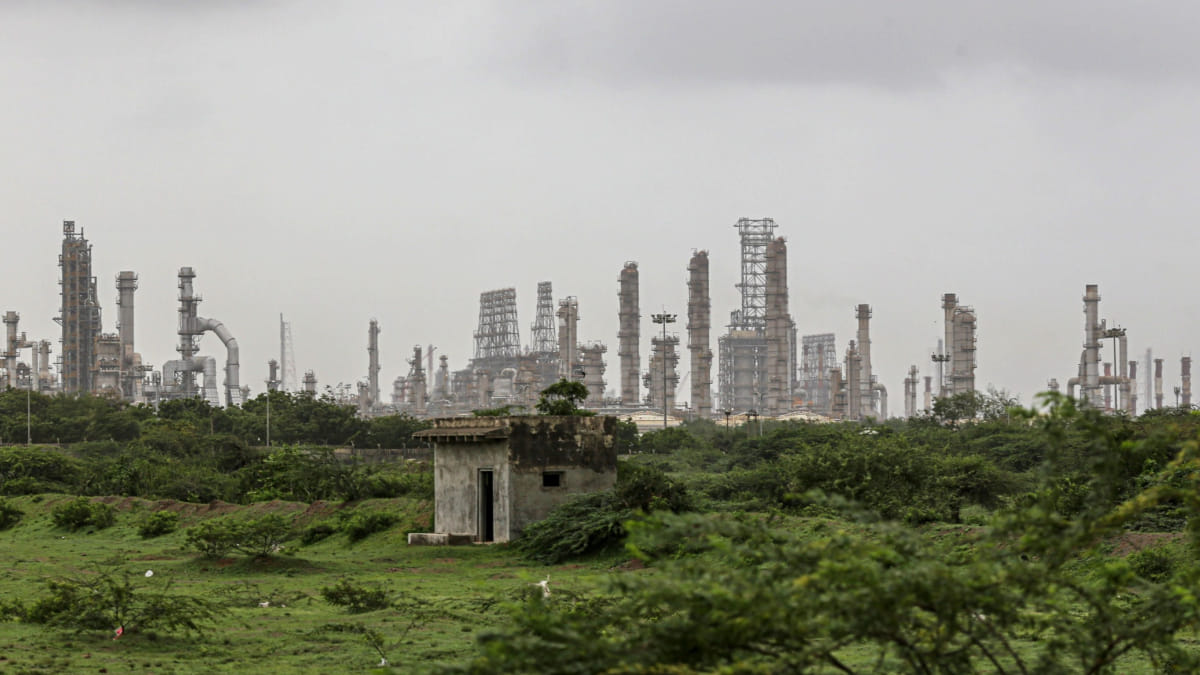
Now, as you can understand, there is only so much that crude oil can yield. So if you produce more LPG, you will be producing less of something else. The government, however, at this point has asked oil refineries to produce more LPG, which means our dependence would be less than about 50 percent once these refineries fully increase LPG production.
To understand the LPG problem, India’s need is about 34 million tonnes per year. Of this, India produces 12 million tonnes per year in normal times. Now, India has upped it. The rest is imported, and of that, 90 percent comes through the Gulf of Hormuz, because almost all of it—about 88 percent—comes from the UAE, Qatar, Saudi Arabia and Kuwait. If you throw Oman into the mix as well, then you would say almost all of it. It is only lately that India has been ordering some LPG from the US as well.
The fact is that the rest of the world will struggle to produce enough LPG for India’s needs, and that is where India has to look for options. Some of the data we get is coming from parliamentary committee meetings. Parliamentary committees of various ministries are meeting these days to discuss the budgetary demands of each ministry. The presentation that the Ministry of Petroleum and Natural Gas made to its own committee said that by 2034, they intend to take PNG households to 12 crore.
However, even if that happens—even if GAIL builds more pipelines, if pipelines connect more cities, if our cities somehow dramatically improve governance, and maybe there is an incentive structure built in—even then, if we only reach the number of 12 crore, the fact is India’s PNG consumption or PNG spread has been increasing at about 18 percent compounded annual growth rate. To get to 12 crore, it has to grow much faster, maybe 25 percent.
The biggest constraint there will be the quality of our city governance. If anything, it is one more incentive for our city governance to improve. India’s north and west are better covered by the pipelines. But the east and central India are a disaster. The east also includes some of our most heavily populated areas—some of our poorest and most heavily populated areas: Bihar, large parts of Uttar Pradesh, which are not very urbanised; West Bengal; and the Northeast. All of these will continue to have LPG dependence for a very long time.
Does India have to be LPG-dependent forever? The dependence can come down. The fact is that if the Ministry of Petroleum and Natural Gas targets are met—and I hope they will be, in fact I am quite sure they can be met—even then more than 20 crore Indian households will be dependent on LPG. That is why this progress has to be more ambitious, or India has to move to other alternatives, because parts of the world that produce hydrocarbons are prone to instability.
It is one thing for us to say, ‘Oh, Americans, the western powers, they start wars in these countries because there is oil. Wars start because of oil.’ But it is also because many of these regions have the resource curse. It is because of the oil and the easy wealth that oil gives them that they do not see the incentive to improve their political systems or move towards democracy.
The availability of wealth—easy wealth from oil and other resources—incentivises their governments to continue with dictatorships, so they can use this money to buy their populations and distribute welfare in many ways. That is why, as long as you remain dependent on hydrocarbons, particularly crude- and gas-related hydrocarbons, you will always be prone to these shocks.
In my lived memory, there was the 1973 Yom Kippur War oil shock, when oil-producing countries got together and cartelised the prices. That contributed to India’s inflation rate going upwards of 28 percent and a lot of popular disaffection, and ultimately Indira Gandhi imposing the Emergency because she could not handle that anger.
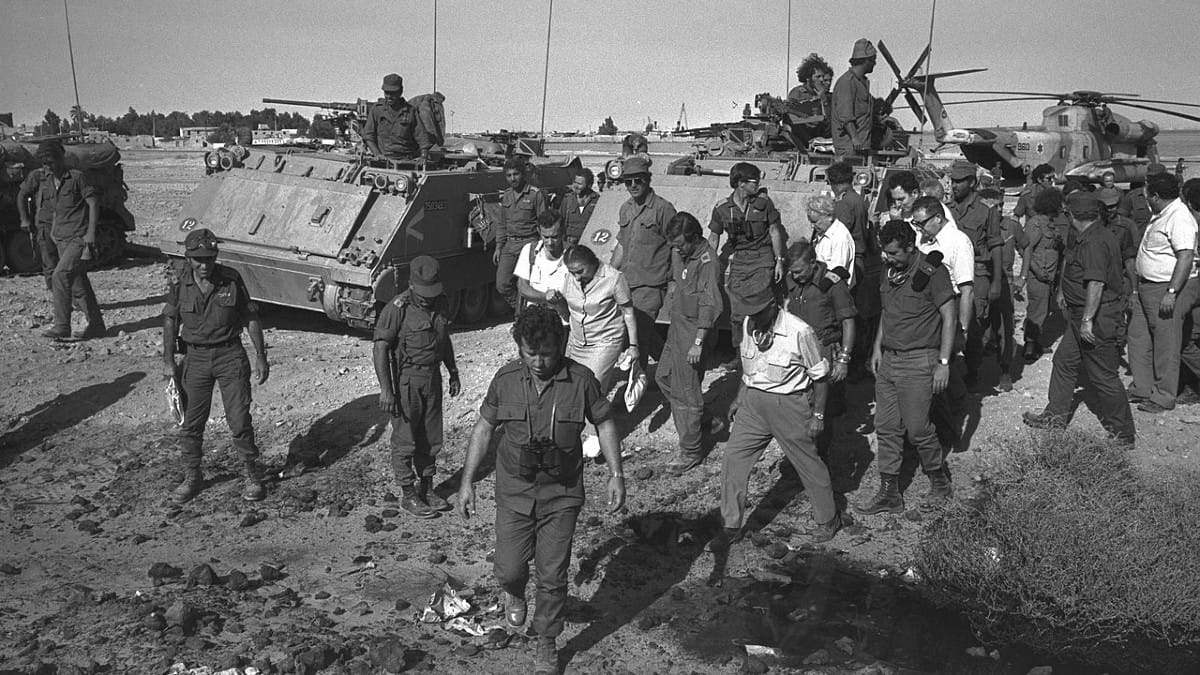
Then we saw the tanker war between 1986 and 1988 between Iran and Iraq. That did not involve Israel and did not involve any Western powers. It was Iran fighting Iraq. For the record, it was Iraq that invaded Iran because they thought Iran was just coming out of the revolution and was weak. So Saddam Hussein invaded Khomeini’s Iran. They fought each other to a very bloody and cruel standstill. The last two years of that was the tanker war that led to an oil shock.
Then came the occupation of Kuwait. That was when Saddam Hussein not only ruined Kuwait’s oil wells but, as he was retreating, set them on fire. I, along with Prashant Panshikar, our photographer at India Today, was there and we walked across the zones there. These oil fields were burning, and I cannot tell you what an awful sight it was. These were really giant oil fires, and that caused one more oil shock.
After that came the Russian invasion of Ukraine, which caused an oil shock because of the sanctions and because prices went up. And now one more fresh war in the Gulf. That is why this uncertainty will continue, and periodically it has already hit five times in my lifetime.
Every 10 or 15 years there will be an oil crisis, an energy crisis, in the world. How does a country like India get around it?
I know it is very easy to say, let us go for alternatives, let us go for renewables. That is being done. India is producing a lot of electricity with renewables now. In fact, India has beaten all its own targets on electricity. So maybe, as time passes, India will become less coal-dependent for electricity. That is very good for carbon emissions.
But that will not help India where gas and petrol are needed. For that, India will need hydrocarbons of some kind or another. You may hate coal, with which India still produces 74 percent of its electricity, but it is the same dirty, much-maligned coal which may show India a way out of this gas dependence in some ways.
A question came to my mind as I was reading up and following this story: how come the Chinese are not so hassled by this? How come the Chinese are not so stressed, even though they are also very import-dependent on hydrocarbons? I know the Chinese have pipelines coming in from Russia. They have a long land border, but all of their gas and oil needs cannot be met like that, because China is a very large economy with very high energy consumption.
Then I discovered, as I checked around, that the Chinese actually started using coal and coal gasification, and they have mastered that business. They have mastered that business, while India has only been talking about it. India has been talking about it in the 11th Five-Year Plan, the 12th Five-Year Plan, under the United Progressive Alliance (UPA), starting something here and some pilot there.
In 2020, India started the National Gasification Mission, and this is 2026. We are not producing even 1 percent of what China does. That is a story I will tell you separately, maybe even in a national interest programme.
The only lines I would still double-check against the video are the exact wording around “the occupation of Kuwait” and the final China comparison, because those are the most likely places for speech-recognition drift.
(Edited by Tony Rai)
Biogas production from waste and dungs should also be stepped up fast. In the rural area, solar stoves and smokeless wood/coal/diesel stoves should be promoted to replace LPG.
Diesel stoves for commercial purpose should also be promoted.