









Chandigarh: The suicide of Gagandeep Singh Randhawa, a district manager with the Punjab State Warehousing Corporation (PSWC) last month has done more than trigger just a political storm in the state.
The incident has brought into focus the lucrative business of grain storage in Punjab that involves a network of private players—largely people considered “VIPs”—channeling thousands of crores in guaranteed rental income.
Despite a layered contracting process, the system suffers from perceived administrative discretion, political influence and corruption.
On 21 March, Randhawa apparently took his own life by consuming poison amid sustained pressure linked to the allocation of a warehousing contract.
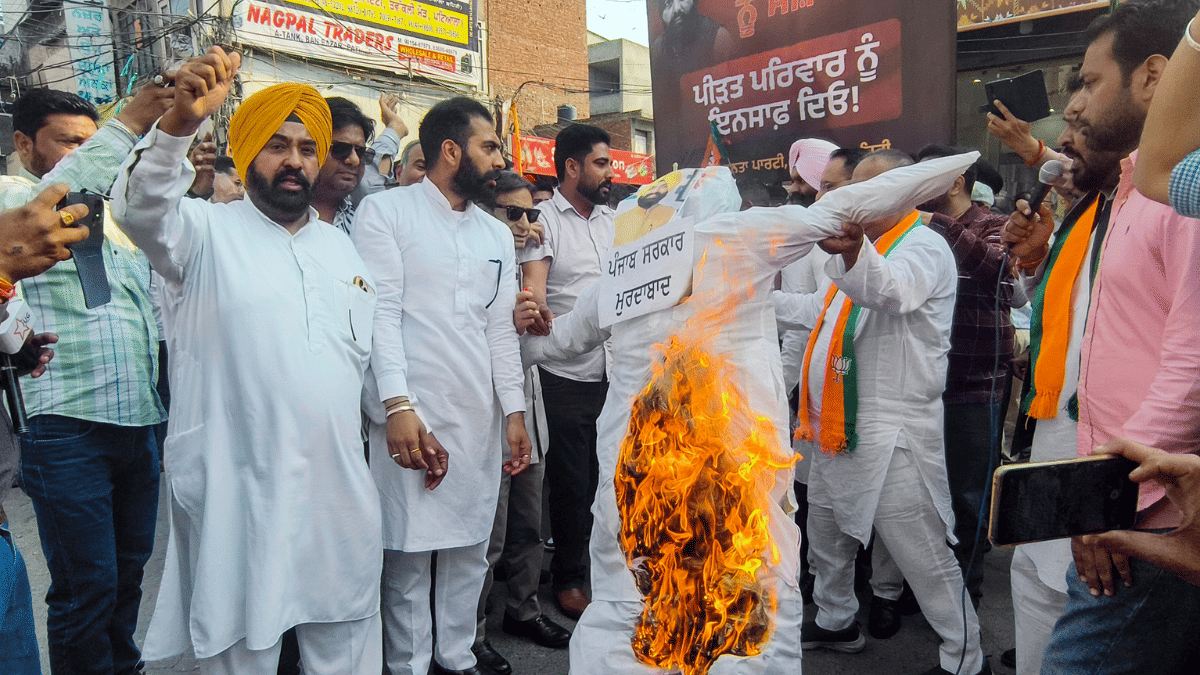
In a video recorded before his death, he named then minister and AAP leader Laljit Singh Bhullar, accusing him of harassment. The minister was subsequently made to resign and was arrested.
But the questions the episode raised extend far beyond individual culpability.
At the core of the controversy lies a high-stakes process: the allocation of storage capacity under private entrepreneur guarantee (PEG) scheme of the Food Corporation of India (FCI).
The minister’s father, Sukhdev Singh Bhullar, who is an arhtiya—part of Punjab’s powerful commission agent network—was found eligible for only a 20,000 metric tonne (MT) storage contract as opposed to the 50,000 MT he had applied for.
The dispute arose about the remaining 30,000 MT contract for which another bidder, Baba Naga Agri Pvt Ltd, was found to be eligible.
Gurmeet Singh Khuddian, the minister for agriculture, the department that handles the Punjab State Warehousing Corporation, told ThePrint that the Food Corporation of India (FCI) has informed the Punjab government that the controversial contract has been kept in abeyance.
“Any further decision on the matter would be taken following the outcome of the multiple investigations that are going on,” he said.
Apart from the police investigation into the circumstances that led to Randhawa allegedly killing himself, an administrative inquiry is on to assess if the corruption tainted the bidding system.
👉 These are the letters written by DM Dr. Gagandeep Singh Randhawa.
👉 The letters contain detailed accounts of the misbehavior, threats and intimidation he faced on 13 March, 2026.
👉 First letter dated 14 March 2026 was written to MD Warehouse Gautam Jain
Result: zero
— Bikram Singh Majithia (@bsmajithia) March 21, 2026
When contacted, Amritsar police commissioner Gurpreet Singh Bhullar said a probe is underway. ThePrint also reached out to Chief Secretary K.A.P. Sinha, Food Corporation of India (North Zone) Executive Director A. K Sinha, a representative of Baba Naga, and family members of minister Bhullar via calls and messages. This report will be updated if and when they respond.
FCI AGM (Regional Office, Chandigarh) Nipun Trikha said he did not wish to comment on the matter.
Also Read: Punjab warehousing official who ended life had written to boss about ‘abuse’ by Laljit Bhullar
The ‘pressure’
Sources in the Punjab State Warehousing Corporation told ThePrint that Laljit Singh Bhullar was allegedly pressuring Randhawa to declare his father eligible for the rest of the 30,000 MT contract too.
The minister, sources added, was upset as he believed Randhawa had favoured Baba Naga for financial considerations while overlooking alleged technical defects in their bid.
Randhawa’s family alleged that he was called by Bhullar to his residence in Tarn Taran on 13 March and beaten up by Bhullar and his staff member in the presence of his father.
The family has further alleged that the minister forced Randhawa to remove his clothes. Bhullar and his staff made a video of him, forcing him to confess to having taken a bribe from Baba Naga to declare them eligible for the contract.
The scheme
To understand why a single warehousing contract could trigger such high-stakes conflict, one must turn to the framework within which these allocations are made: the Private Entrepreneur Guarantee (PEG) Scheme of the Food Corporation of India (FCI).
Introduced in 2008–2010, the PEG scheme marked a shift in policy. Instead of relying solely on government-built godowns, the FCI decided to invite private players to build storage capacity, backed by a crucial assurance: a guarantee of rental income for years.
Under the scheme, FCI—through Central Warehousing Corporation or through state agencies such as PSWC, Pungrain, Markfed acting on its behalf—identifies storage gaps in specific districts.
‘Established arhtiya families who have diversified into storage infrastructure, regionally influential agri-business firms logistics who have monopolies across state do not want storage to go to an outsider’, says PSWC officer.
Tenders are then issued inviting private entrepreneurs to construct warehouses of specified capacities. The bidders must provide land, meet technical specifications, and quote a rental rate. The bidding process is completed online, on GeM, the government e-marketplace website.
Once bids are received, district level technical evaluation committees, which have officials of the state agency and the FCI, are expected to visit the sites proposed and assess these technically.

During this assessment process, the question of location acquires seminal importance. Warehouses must sit at the intersection of two logistical flows: procurement and evacuation.
Grain is procured at mandis, stored temporarily, and then transported—often by rail—to other parts of the country. A warehouse located far from a railhead increases transport costs, slows down movement, and can strain the system during peak procurement seasons.
For this reason, distance from rail infrastructure is a legitimate and often decisive factor in evaluating bids technically.
Under the PEG scheme, the FCI prefers the offered sites to be within 8 km of a rail head. However those offering sites for more than 8 km can also apply but their financial bids are then “normalised” by subtracting the additional expenditure that the FCI would entail as extra transportation charges.
All those who are found eligible in the preliminary technical bids are listed for the next stage of financial bids. The financial bids rest on the criteria of the lowest rent demanded.
Once the financial bids are opened, the final list of eligible bidders along with the details of their technical and financial qualifications are sent by the nodal agency to a state level committee (SLC), headed by the Executive Director, (North) FCI.
The committee has Punjab’s principal secretary (Food and Civil Supplies), principal secretary (Agriculture, MD PSWC (Punjab State Warehousing Corporation), MD Pungrain and MD Markfed as members.
Once the bids are cleared by the SLC, the agenda is sent to the central high-level committee, headed by Chairman and MD FCI.
Once the list is cleared by the central high level committee, the bidders are asked to go ahead with the construction of the facility. The lease is guaranteed for fixed period, often ranging from five to 10 years or more. But can be continued to be used by the FCI even after the end of the guarantee period.
The facility is taken on lease by FCI in two variants–lease with service and lease only. In the first variant, the owner of the store or warehouse has to also maintain the freshness of the stored grain, while in the latter variant, the store owner only provides the space.
The bidding process for both these variants is the same.
The defining feature of the PEG scheme is the guarantee itself.
Even if the warehouse is not fully utilised, the operator is assured a minimum level of payment, transforming these contracts into stable, annuity-like income streams. This guarantee is what makes PEG contracts so valuable—and so contested.
A warehouse with a capacity of 20,000 MT can generate annual revenues in the range of Rs 2–3 crore.
Larger capacities scale proportionately, and given the long tenure of contracts, the cumulative returns can be substantial.
But the entire process—from the issuing of the tenders to the allocation of the bid—is lengthy and can take anything between 6 months to years.
PSWC officials told ThePrint that after the first set of tenders were issued in March 2024, the PSWC has managed to allot only 30,000 MT of storage space. Another 6.5 lakh metric tonnes has been cleared by the Corporation and is pending at the other levels of clearances.
State-backed revenue stream
Across Punjab, the grain storage and handling is estimated to constitute a business worth over Rs 2,000 crore annually. This includes not just rental payments for warehouses, but also the associated ecosystem of transport, labour, and handling contracts.
In such an environment, access to a PEG contract is not merely a business opportunity; it is an entry point into a steady, State-backed revenue stream.
The beneficiaries of this system are diverse but interconnected. Apart from traditional arhtiyas who have been long embedded in Punjab’s mandi economy and agricultural firms and logistics companies, politicians, policemen and bureaucrats are lead players in the sector.
Sources in the PSWC said the competition for these contracts is driven less by assured income and more by new entrants trying to break into a space long dominated by a few entrenched players.
“Established arhtiya families who have diversified into storage infrastructure, regionally influential agri-business firms, millers, logistics-linked companies with land banks near mandis and railheads have monopolies across the state and they do not want storage to go to an outsider.
“In several districts, clusters of warehouses are controlled by a relatively small number of players who have accumulated capacity over multiple tender cycles. Their advantage lies not just in capital but in local knowledge, land access, and administrative familiarity,” said the PSWC officer.
👉 This is proof that Minister @Laljitbhullar wanted to secure tenders in the name of his father, Sukhdev Singh Bhullar.
👉 This is just one proof; Laljit Bhullar has taken several such tenders and intended to take many more.
👉 Due to this, Dr. Gagandeep Singh Randhawa was… pic.twitter.com/IelPmsJOiK
— Bikram Singh Majithia (@bsmajithia) March 21, 2026
After the first PEG scheme ended in 2008-2010, the FCI reintroduced the scheme in Punjab in March 2024 when the first set of advertisements appeared inviting tenders from private entrepreneurs. The total storage space required was 46 lakh metric tonnes spread across multiple locations throughout the state. The task was divided amongst the CWC, PSWC, Pungrain and Markfed.
The PSWC was tasked with creation of 16.70 lakh metric tonnes godown capacity in 27 locations. The notice inviting tenders was issued in August last year. Of these 27 locations, the one now under contention was listed as a site in Bhikiwind/Patti tehsils falling in district Tarn Taran, a border district of Punjab.
According to the notice inviting tenders, the FCI wanted storage capacity of 50,000 MT in either of these tehsils, to be catered to be the Patti rail head.
Then minister Bhullar’s father Sukhdev Singh applied for the tender and offered to build a godown with a storage capacity of 50,000 MT on 17.75 acres of land in Patti, a site which was 8 km from the Patti rail head. His bid, as revealed by PSWC, ticked all the boxes, technically.
An agri firm, Baba Naga also offered to build the godown of 30000 MT over 14.6 acres of land in village Usman falling in Tarn Taran tehsil. Sources in the warehousing corporation point out that the land offered by Baba Naga did not fall in either Bhikhiwind or Patti tehsil, which was specified in the tender document.
“Since there is no bar on applying for the tender outside the geographical limit of the district, Baba Naga’s site was also cleared by the district level technical evaluation committee,” said the source in PSWC.
Apart from these two bids, another bid was received but it was found to be a pseudo bid with no details provided. “Sometimes, serious bidders get such pseudo bids submitted so that their bids are not rejected for being the only bids,” explained an officer of the PSWC.
After Bhullar’s bid and that of Baba Naga was found to be technically eligible, their financial bids were opened.
Highly placed sources told ThePrint that Baba Naga’s demand for rent was much lower than that of Bhullar and despite the fact that his land was farther from the rail head than Bhullar’s land, it would have been still cheaper for the FCI to allot the tender to Baba Naga.
“But since Baba Naga had only offered to construct a godown of 30,000 MT capacity and the FCI’s storage gap in the area is 50,000 MT, for the rest of the 20,000 MT, Bhullar’s bid was listed as eligible. The information sheet containing the technical evaluation and the financial evaluation of the two bids was prepared and put up to the state level committee of the FCI,” said the PSWC officer.
The SLC met on 3 March to consider the various tenders received by the state agencies. The SLC also considered the bids from Tarn Taran. However, before the SLC meeting’s outcome could be finalised, Bhullar’s father complained to the SLC against Randhawa.
“All through the bidding process, Bhullar was under the impression that his father’s was the only bid from the area. That is also probably the reason that he quoted a high rental rate. However, when he came to know that there was another bidder in competition, on 13 March, he sent a complaint to the SLC alleging that Baba Naga’s bid had been wrongfully cleared by the district technical evaluation committee (headed) by Randhawa,” related the PSWC officer.
The minister’s objection to the competing bidder rested on the point that Usman village was in Tarn Taran and not in Patti or Bhikhiwind mentioned in the tender notice.
Moreover, Baba Naga listed the nearest rail to its land as Tarn Taran at 11 km while also mentioning in his bid document that the Patti rail head was 22 km away. The senior Bhullar’s land on the other hand was in Patti, barely 8 kilometres away from the rail head.
“He (the then minister) blamed Randhawa for allowing Baba Naga’s bid to be considered despite what he termed a flaw in evaluation,” said the PSWC officer.
“The complaint was sent by the SLC to the PSWC, asking them to respond after reviewing the technical evaluation of Baba Naga’s bid conducted by the district committee,” said Food and Civil Supplies Principal Secretary Rahul Tiwari, also a member of the SLC.
A PSWC officer quoted above said that things moved fast following the minister’s father’s complaint. “The minister allegedly called Randhawa to his house and maltreated him to pressurise him to reject Baba Naga’s bid so that his father’s bid was the only one left in competition,” he said.
Upset over having allegedly been meted out inhuman treatment at the hands of the minister and his father, Randhawa got the matter to the notice of the PSWC MD Gautam Jain.
“Deputy Commissioner of Tarn Taran Rahul met him on my request and counselled him. We also transferred him out of Amritsar and he assured me that he will be joining in Chandigarh on Tuesday (16 March) We even offered him security but he refused that,” said Jain, adding that it will not be appropriate for him to comment more about the matter as a departmental enquiry was underway in the matter.
(Edited by Ajeet Tiwari)
Also Read: Punjab’s Green Revolution-era success is long over. Four factors now constrain its economy