





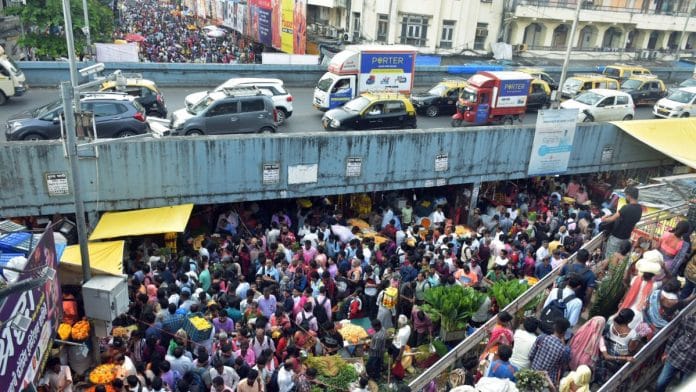



Mumbai: A municipal crackdown on “illegal Bangladeshi” hawkers launched by Mumbai Mayor Ritu Tawde has turned the spotlight on a decade of administrative failure, exposing how a law designed to protect and regulate street vendors went unimplemented for 12 years amid legal challenges.
At the centre of that delay is the Town Vending Committee (TVC), a statutory body constituted under the Brihanmumbai Municipal Corporation (BMC) only last year following the Bombay High Court’s intervention.
What the law says
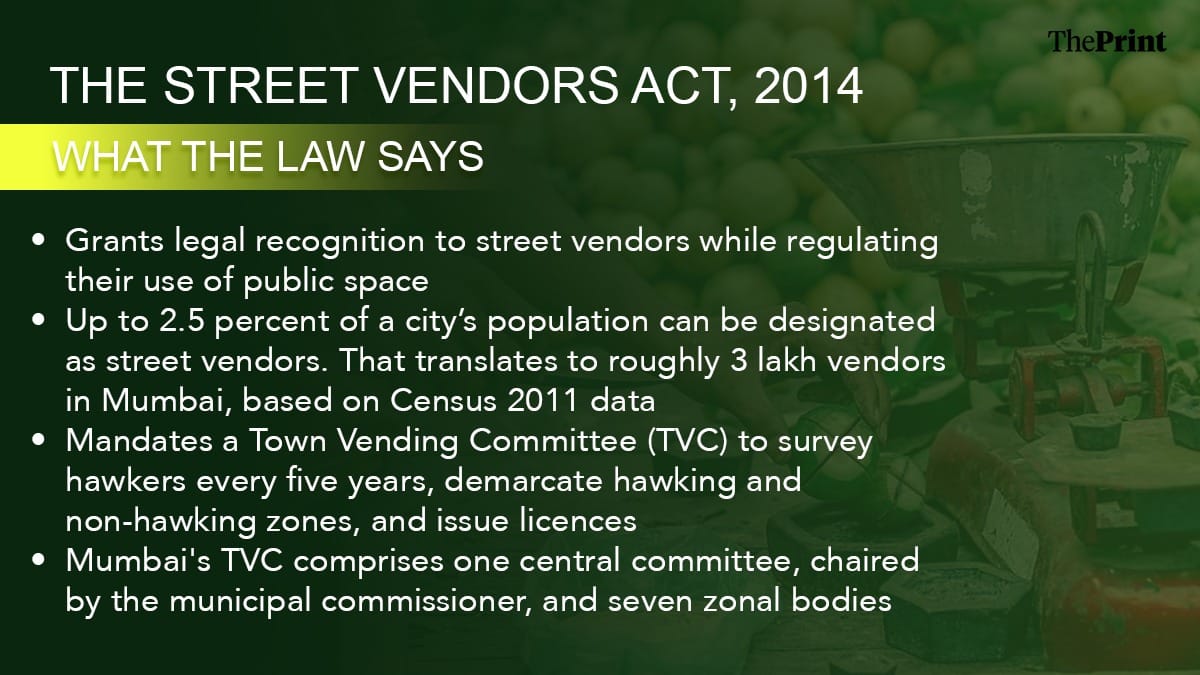
The Street Vendors (Protection of Livelihood and Regulation of Street Vending) Act, 2014, grants legal recognition to hawkers while regulating their use of public space. Under the central Act, up to 2.5 percent of a city’s population can be designated as street vendors.
For Mumbai, based on its Census 2011 population of roughly 12 million, that translates to approximately 3 lakh vendors.
The Act’s operational centrepiece is the TVC, which comprises hawkers, civic officials, police, NGOs and citizens.
In Mumbai, there is a central TVC chaired by the municipal commissioner, and seven zonal TVCs. These committees are empowered to survey hawkers every five years, demarcate hawking and non-hawking zones, issue licences, and maintain order across the city’s vending areas.
Also Read: LPG crisis: Mumbai’s humble laadi pav takes a hit; bakeries lose business, eateries struggle
12 years without a TVC
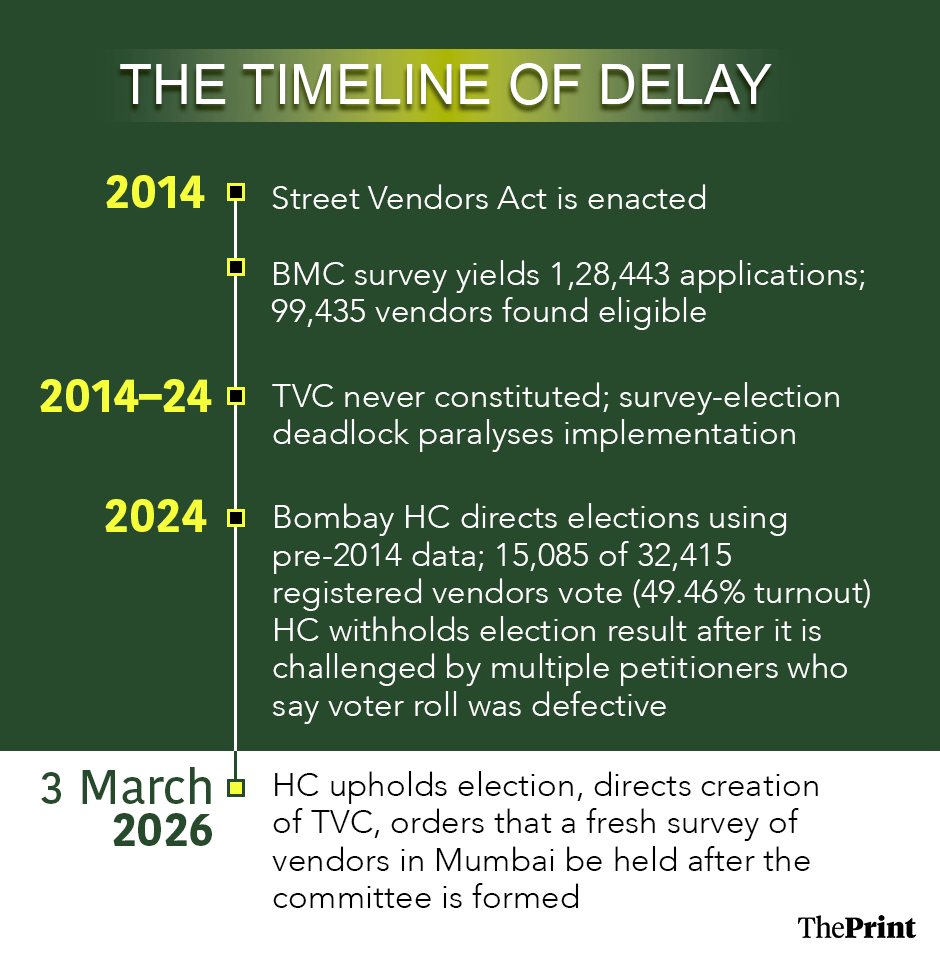
The law was enacted in 2014. Yet for over a decade, the TVC in Mumbai was not constituted. “It was a very difficult situation for us. We had to survey the hawkers, but without a TVC in place, we couldn’t survey them. And to elect a TVC, we needed legally surveyed hawkers,” a civic official told ThePrint.
This loop was eventually broken by the judiciary. The Bombay High Court directed the BMC in 2024 to hold TVC elections using pre-2014 survey data. Polling was held on 29 August 2024—of 32,415 registered street vendors, 15,085 cast their ballots, a turnout of 49.46 percent.
But the elections were immediately challenged as petitioners alleged the voter roll was defective: it listed only around 32,000 hawkers, against the 99,435 found eligible by the BMC following its July 2014 survey.
The high court consequently directed that the election results should be withheld till a final decision is taken.
On 23 March this year, the Bombay High Court bench of Justice Kamal Khata and Justice A.S. Gadkari said upheld legality and results of the election.
It said that it was appropriate to uphold the result “and allow the statutory framework to be operationalised in its true spirit. To set aside the entire process of election at this juncture would only prolong the administrative vacuum for at least another three years”.
The court’s exasperation with the twelve-year delay was unambiguous. “The elections have repeatedly been challenged from time to time on diverse grounds, as is evident from the record. As a result, the TVCs have yet to be constituted and consequently, the Street Vendors Act has remained unimplemented for over twelve years. This state of affairs cannot be permitted to continue any further,” the bench said.
The court also directed BMC to permit 99,435 eligible street vendors (from the 2014 survey) to continue working in accordance with the guidelines laid down in various judgments, and ordered that once the TVC is constituted, it must conduct a fresh survey to include all eligible vendors.
On the lack of the law being implemented in Mumbai, the court observed that footpaths remain encroached upon, compelling pedestrians to walk on roads and exposing themselves to risk. Residents, particularly women, find it extremely difficult to access buildings or use footpaths, conditions that also give rise to inappropriate physical contact, the court noted.
Corruption & capacity concerns
Mumbai Hawkers Union president Shashank Rao said that even with the TVC now constituted, the Act’s implementation will remain undermined by systemic corruption.
“The question (being asked) is how will they implement this Act. But a larger question is: will they implement it?… Because of the corruption that goes on,” said Rao.
Rao alleged that unlicensed hawkers pay municipal officials at least Rs 3,000 per month to be allowed to work on Mumbai’s streets.
“From what the hawkers tell us, they pay minimum Rs 3,000 per month for being allowed to hawk on the streets of Mumbai. If so much money is being collected, then why would the authorities regularise these hawkers? Corruption is the crux,” Rao said.
The capacity gap is equally stark. Rao said the Act would allow 3 lakh vendors in Mumbai, but the figure is likely an undercount, given population growth since the 2011 Census. The next nationwide Census has been pending for years.
Against the 3 lakh-figure, the BMC has designated space for only 23,000 hawkers, he said.
The situation was further constrained following the 2017 Elphinstone Road railway station stampede, after which hawkers were directed to move 100 metres away from educational institutions, hospitals, and railway stations—eliminating a significant portion of viable vending locations across the city, he said.
“The BMC has space only for 23,000 hawkers. Plus, a survey needs to be done because today the number will be even more than 3 lakh. So, the question is where will the rest go? Where will you accommodate them? They need to be regularised for the benefit and security of Mumbai city, its citizens and hawkers,” said Rao.
BMC Assistant Commissioner Vinayak Vispute who serves as the authority for TVC and is responsible for implementation of the Street Vendors Act, did not respond to requests for comment till Saturday.
The crackdown & controversy
Since becoming Mayor in February this year, a first for a Bharatiya Janata Party (BJP) leader in Mumbai, Ritu Tawde has publicly vowed to remove what she has described as illegal Bangladeshi nationals who work as street vendors in the city.
Rao said he does not dispute the principle of BMC’s action. “One thing is clear that they (undocumented Bangladeshi vendors) need to be identified and action initiated as per what the law says. Illegal Bangladeshis should not be tolerated. And in hawking, it is an easy way to come into since there is no identification or anything,” he said.
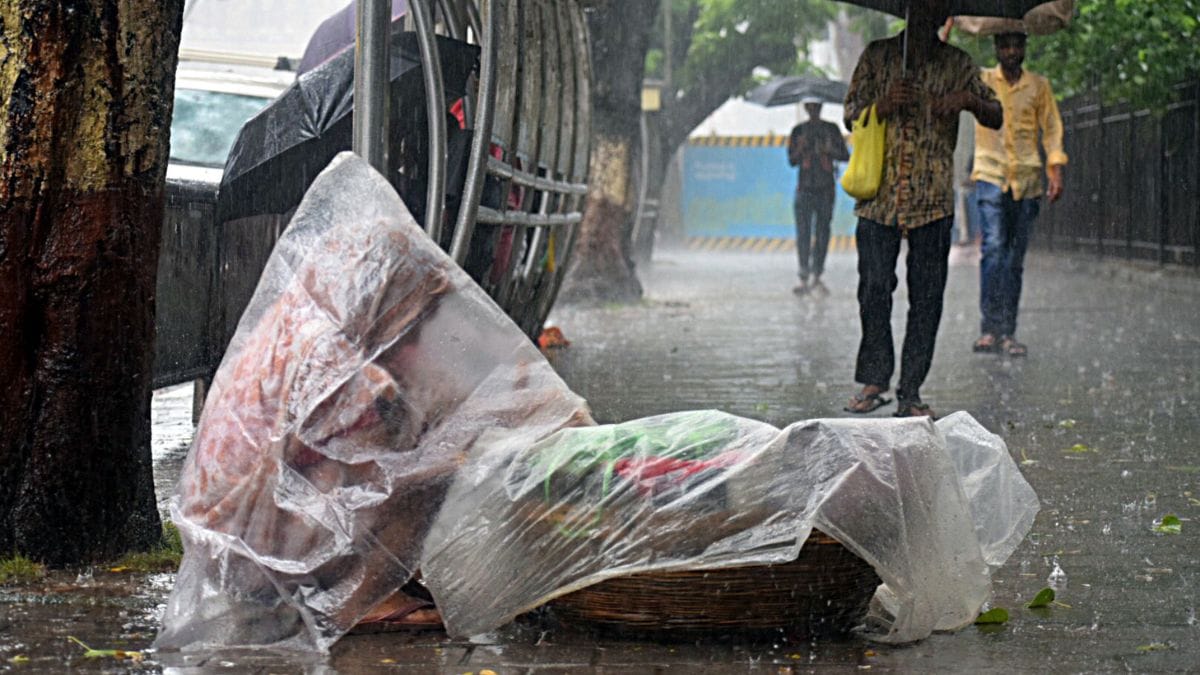
But the drive’s damage is tangible. A vegetable vendor in Mumbai’s Sion told ThePrint he has sold onions and potatoes from the same spot for over ten years. “The BMC itself is not implementing the Street Vendors Act properly and they are calling us illegal. We are getting displaced without providing for a proper place as well. Where will we go,” he asked.
(Edited by Prerna Madan)