








New Delhi: As INDIA bloc MPs submit a motion in both Houses of Parliament for removing Chief Election Commissioner (CEC) Gyanesh Kumar, the constitutional process for it—which mirrors the process for removing a Supreme Court judge—has come into sharp focus.
In the past, India has seen backlash against CECs but this is the first time a formal notice is being moved seeking the removal of the CEC.
Reportedly, seven charges are listed against the CEC in the notice. These include: “Partisan and discriminatory conduct in office, deliberate obstruction of investigation of electoral fraud, mass disenfranchisement of voters, misbehaviour, arbitrary handling of Special Intensive Revision (SIR), partiality towards a political party, ignoring complaints of electoral irregularities”.
A 1988 batch Kerala cadre officer of the Indian Administrative Service, Gyanesh Kumar in February 2025 took charge as CEC.
The appointment of Kumar was itself controversial—marking the first under the Chief Election Commissioner and Other Election Commissioners (Appointment, Conditions of Service and Term of Office) Act, 2023—the Chief Justice of India was excluded from the selection panel.
The 2023 Act replaced the CJI with a Union cabinet minister, giving the ruling government a 2-1 majority and raising concerns regarding the independence of the Election Commission.
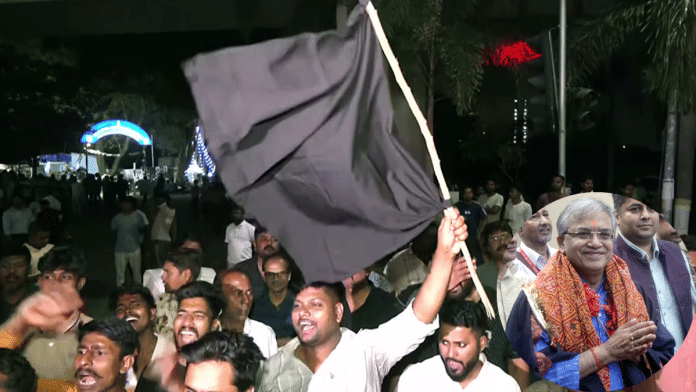
Kumar, in his visit to Kolkata this week, was shown black flags. Concerns have been raised against the SIR exercise currently on in West Bengal, with Trinamool Congress supremo and Chief Minister Mamata Banerjee accusing the poll panel of deleting genuine voter names.
In November 2025, Leader of the Opposition Rahul Gandhi also held press conferences raising ‘vote chori‘ concerns related to alleged vote rigging in the Haryana elections. The EC rejected these allegations as “incorrect and baseless”.
What is the process
According to Rules of Procedure and Conduct of Business, at least 100 Lok Sabha MPs need to sign a notice seeking the removal of the CEC, while the number stands at 50 in the Rajya Sabha.
As many as 130 Lok Sabha MPs and 63 Rajya Sabha MPs have signed a notice seeking the removal of Chief Election Commissioner Gyanesh Kumar, news reports said on Thursday.
According to sources, the notice has been signed by all members of INDIA bloc parties, including AAP, even though it is no longer officially part of the opposition alliance.
Opposition parties have accused CEC Gyanesh Kumar of aiding the ruling BJP on several occasions, especially in the ongoing Special Intensive Revision (SIR) of electoral rolls, which they alleged aims to help the saffron party at the Centre.
How the grounds for removal play out
Under Article 324(5) of the Indian Constitution, the CEC can be removed in the same manner and on the same grounds as a Supreme Court judge—for “proven misbehaviour” or “incapacity”—and only after a special-majority vote is passed in both Houses of Parliament.
The motion for removal may be introduced in either House of Parliament; the motion must be passed by each House with a majority of the total membership of that House and a majority of at least two-thirds of the members present and voting.
Under Section 3 of Judges (Inquiry) Act, 1968, if the notice for the motion is given on the same day in both Houses of Parliament, no committee shall be constituted unless the motion has been admitted in both Houses.
After the motion has been admitted in both Houses, a committee shall be constituted jointly by the Lok Sabha Speaker and the Rajya Sabha Chairman—to investigate the charges.
After the admission of the motion, the three-member fact-finding committee consisting of the Chief Justice of India (CJI) or a Supreme Court judge nominated by the CJI, the Chief Justice of one of the 25 high courts, and a “distinguished jurist” will be formed.
The committee’s proceedings are like any court proceeding where witnesses and the accused are cross-examined.
The CEC, too, will get a chance to speak before the committee.
Accordingly, once the committee submits its report, it will be tabled in the House—initiating a formal notice for removal and starting the discussions and voting.
When the House discusses the motion, Kumar will have the right to defend himself—just like a Supreme Court judge.
(Edited by Viny Mishra)
Also read: Former EC Ashok Lavasa says immunity to CEC and ECs from legal proceedings is ‘baffling’
Dog’s bark growel but who cares in Hindus country hindustan?what happened the non confidence motion against the honarable speaker,?the same fate for CEC impeachment, Muslim ass lickers Anti Hindu Anti national corrupt oppositions want everything own ways not as per the law of the land.a day is not far Hindus and other nationalists will manhandle the opposition dogs out the parliament premises.jai Hindu unity Jai Hindus Jai shree Ram.