





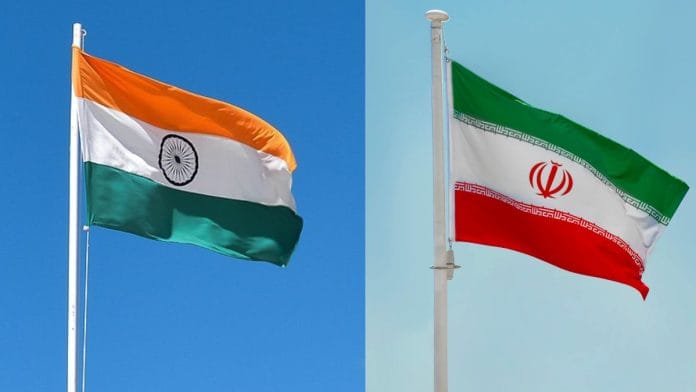



New Delhi: From artificial intelligence and 3D printing to nanotechnology and clean energy systems, science institutes from India and Iran have built a strong research partnership over the last decade. But the ongoing US-Israel-Iran war has left the fate of dozens of MoUs and scientific agreements in a lurch.
ThePrint examined publicly available MoUs and partnership announcements between top Indian scientific institutes, including the Council of Scientific and Industrial Research (CSIR), IIT-Delhi, IIT-Roorkee, Jamia Millia Islamia, and the Indian National Science Academy and Iranian universities.
They range from genetic studies, biotechnology, nanotechnology, earth sciences, robotics and environmental engineering.
“We have active MoUs with Iranian universities and institutes. We are not sure how those will proceed, now that they are in the midst of a war. Once the cloud around it clears, we will have better clarity,” a senior professor at IIT-Delhi told ThePrint.
IIT-Delhi has five active MoUs with Iran’s Amirkabir University of Technology, Tarbiat Modares University, KN Toosi University of Technology, Sharif University of Technology and Sharif University of Technology.
Also read: Iran conflict has reached India. Muslims are again asked to prove their patriotism
Knowledge exchange
Professors and students from IIT-Delhi said that the majority of the currently active MoUs with Iranian universities were signed between 2022 and 2023, to strengthen domain expertise, scientific acumen, and academic knowledge between the two countries.
All of these MoUs are due for completion in 2027-28.
In a 2023 newsletter introducing one of these MoUs with KN Toosi University of Technology, IIT-Delhi Professor S Kapuria from the department of applied mechanics, who was leading the programme from the Indian end, said that this was an initiative to “bring the latest advancements in the field (of composite and material sciences) to students and researchers.”
According to this agreement, the two institutes would bring their knowledge of building lightweight, high-performance structures from bridges to human organs with 3D printing techniques.
From the Iranian side, the programme is led by Professor S Mohammad Reza Khalili from the mechanical engineering department of the KN Toosi University of Technology.
ThePrint’s email request to Professor Khalili did not receive a response.
In 2021, India’s IIT-Roorkee also signed an MoU with Iran’s Ferdowsi University of Mashhad (FUM) to promote knowledge exchange in water sciences and resource management.
“Ministry of Science, Research and Technology (MSRT) of the government of the Islamic Republic of Iran and the Department of Science and Technology (DST) of the government of Republic of India are mutually coming together to exchange knowledge on water resources management under the umbrella of an MoU signed between the government of Iran and India to promote bilateral scientific and technological cooperation between the two great nations,” the terms of the MoU read.
Between 2016 and 2022, Delhi’s Jamia Millia Islamia also signed agreements with the National Institute of Genetic Engineering and Biotechnology, Payam-e Noor University, and Allameh Tabataba’i University.
With the National Institute of Genetic Engineering and Biology, the agreement was to delve deeper into the subjects of life sciences, genetic engineering, biotechnology and molecular biology.
A senior professor from Jamia Millia Islamia University told ThePrint that the tenure of most of the university’s partnerships was either over or was on the verge of expiry. However, faculty members routinely collaborate with their counterparts in Iran.
“There are several fields in which Iran has progressed tremendously. Nanotechnology and AI are fields where their research and innovations are significant,” the professor said.
According to the American Iranian Council, a US-based bipartisan think tank promoting relations between the countries, the country has made noticeable progress in biotechnology, nanotechnology, renewable energy, and artificial intelligence over the last decade.
“As advancements in AI continue to explode on the international scene, Iran has been keen to capitalise on the technology’s ascent and establish itself as a leader in the field. The government recently announced that it plans to be a leader in the market by 2032,” the AIC website read.
The website also added, “While Iran has made admirable progress in the application of AI for civilian purposes, serious concerns remain over the country’s weaponisation of this potentially dangerous technology.”
(Edited by Theres Sudeep)