





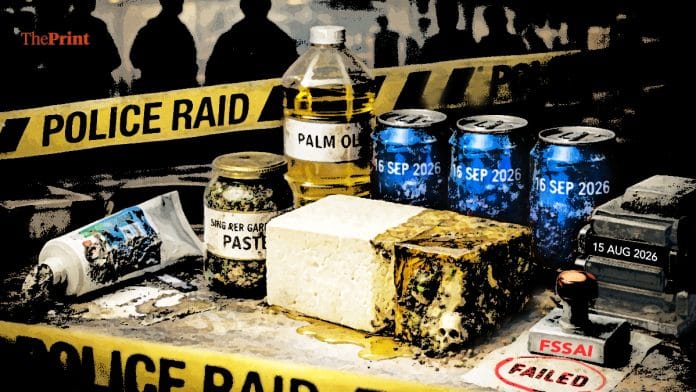



New Delhi: From toothpaste and paneer to soft drinks and even ginger-garlic paste, everyday household staples may not be what they seem. A series of police raids across India over the first few months of 2026 has exposed how even essentials are being counterfeited and sold in the market.
Counterfeit syndicates have moved from high-end luxury products to high-volume, daily-use consumables, and people are not only losing money but also unknowingly using chemicalised products that are causing irreversible harm to their health.
Last week, the Food Safety and Standards Authority of India (FSSAI) filed an FIR with the Delhi Police against multiple social media accounts that flagged the “widespread sale of fake paneer” and milk, and questioned the FSSAI’s role as a watchdog.
These social media accounts, according to the FSSAI, have accessed and circulated the organisation’s official documents on their platforms illegally.
The Delhi Police’s move to seek information about the individuals behind these X accounts, including phone numbers and email IDs, IP log details, has led to a public outcry over what many are calling a bid to “shoot the messenger”.
The legal framework for these crackdowns has shifted from the now-repealed Indian Penal Code to the Bharatiya Nyaya Sanhita (BNS), alongside the Food Safety and Standards Act. Manufacturers are typically booked under Section 274 of the BNS for adulteration of food and drink, and Section 349 for using counterfeit property marks to mimic trusted brands.
The recent seizures in India and the crackdown on illegal factories in different parts of the country made a startling revelation: the scale of adulteration has reached an industrial level.
ThePrint looks at the raids that uncovered organised units where trusted brand labels were being used to sell fraudulent items to unsuspecting consumers.
Also Read: FSSAI has failed to resolve diet-related issues in India—public health crisis on the rise
Fake toothpaste racket in Delhi
The Delhi Police Crime Branch on Thursday dismantled a sophisticated unit targeting the most common items in an Indian household: toothpaste and soft drinks. In Kanjhawala, police discovered that a factory was churning out counterfeit toothpaste with Sensodyne label.
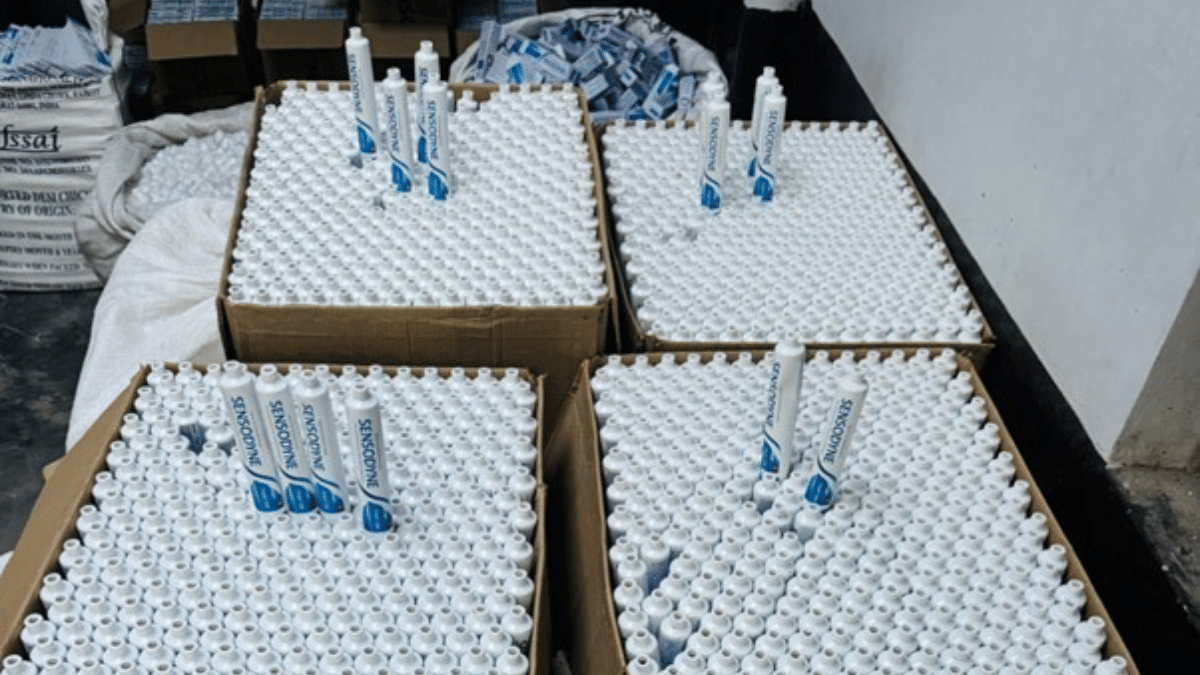
“Authorised representatives inspected the material and confirmed that Sensodyne toothpaste being manufactured and packed at the unit was counterfeit and produced in highly unhygienic conditions, making it unfit for use. No valid documents, bills, license, or authorisation were produced by the accused,” said DCP (Crime Branch) Pankaj Kumar.
He said the alleged mastermind has been arersted.
During interrogation, the accused revealed the godown was taken on rent, the tubes were filled with locally prepared paste, and packed for sale in the market, without any valid license or authorisation from the authorities concerned or the brand owner.
Expired & near-expiry food, beverage racket
In a similar manner, the Delhi Police Crime Branch on 31 March busted another racket for “reconditioning” expired food and beverages. DCP (Crime Branch) Harsh Indora said that the accused used chemical thinners to erase original manufacturing dates from thousands of cans of popular soft drink brands, re-printing them with fresh expiry dates in 2026.
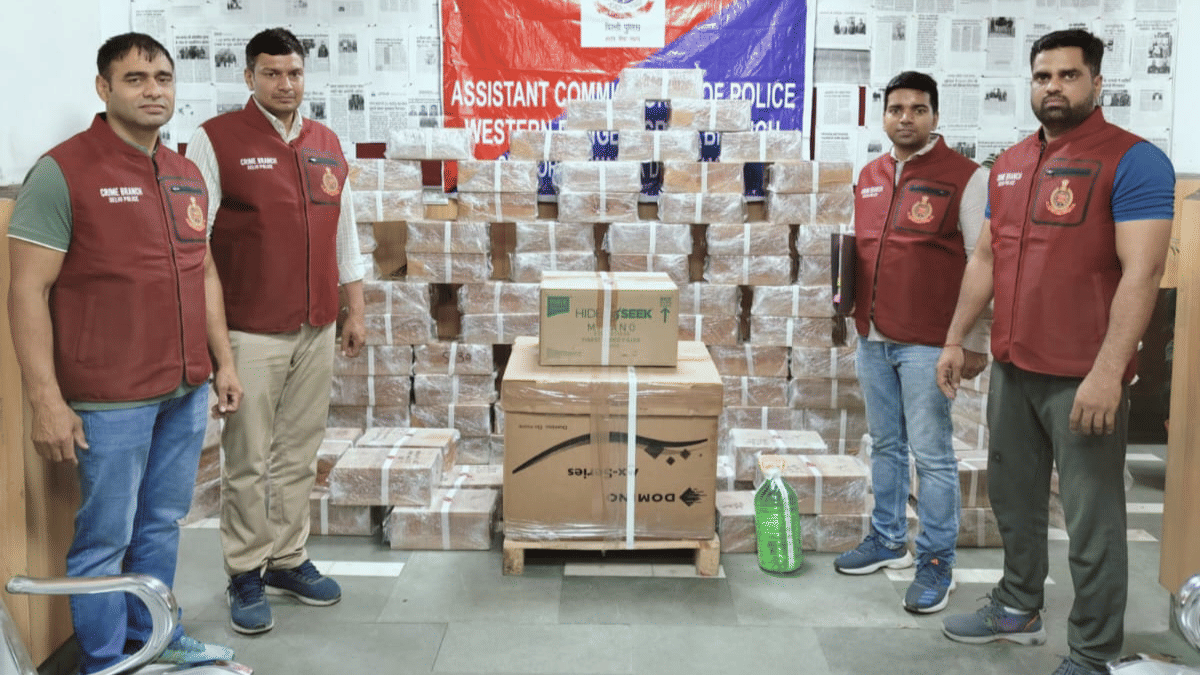
They used a Domino printing machine to print forged manufacturing and expiry dates. During the raid, police recovered 600 such cans of ThumsUp, 840 cans of Sprite, 480 cans of Limca, 1,176 cans of CocaCola, along with branded biscuits.
Surat’s adulterated paneer
The Surat Food Safety Department, along with the Surat Special Operations Group, seized 1,401 kg of suspected adulterated paneer in the first week of March. It was being manufactured in a unit in Pandesara. FSSAI officials said that the unit was operating without an FSSAI license.
The laboratory reports of the seized product confirmed that it was of sub-standard quality, DCP Rajdeepsingh Nakum said.
#Gujarat Strict action against food adulteration in #Surat!
Surat Food Safety Dept seized 1401 kg of suspected adulterated Paneer. The unit was operating without an FSSAI license. Samples have been sent for testing to ensure consumer safety. #FSSAIAction #FSSAIinStates pic.twitter.com/5bRBHIkQta
— FSSAI (@fssaiindia) March 5, 2026
During the raid, police also seized machinery, industrial-grade acetic acid, and palm oil collectively valued at Rs 28 lakh. They have also arrested the suspected operator of the unit.
Hyderabad’s fake ginger-garlic paste
In the last week of March, Hyderabad Police’s Task Force arrested Hasan Ali Rupani, the owner of SKR Food Products, following a surprise inspection conducted by officials.
During the inspection, officials found that the unit was operating in highly unhygienic conditions, using inferior quality raw materials, including garlic peels, and mixing substances such as acetic acid and xanthan gum powder.
The paste was being prepared and stored in open plastic tubs exposed to dust, flies and other contaminants, posing a significant risk to public health. The accused failed to produce food-grade certification.
#WATCH | Hyderabad: Telangana police have arrested one accused involved in manufacturing and selling adulterated ginger and garlic paste.
(Source: IPS Vaibhav Gaikwad Raghunath) pic.twitter.com/pkdNdfr7ho
— ANI (@ANI) March 31, 2026
A total of 4,032 kilograms of purported ginger-garlic paste in various packaging sizes was seized during the raid, along with 6,210 kilograms of loose inferior quality ginger and garlic, including husk.
Sub-standard cashews in Telangana
In a surprise inspection on 29 March, the flying squad of the Food Safety Department of Telangana found a cashew repacking agency at Mallapur, Hyderabad, where multiple violations were recorded.
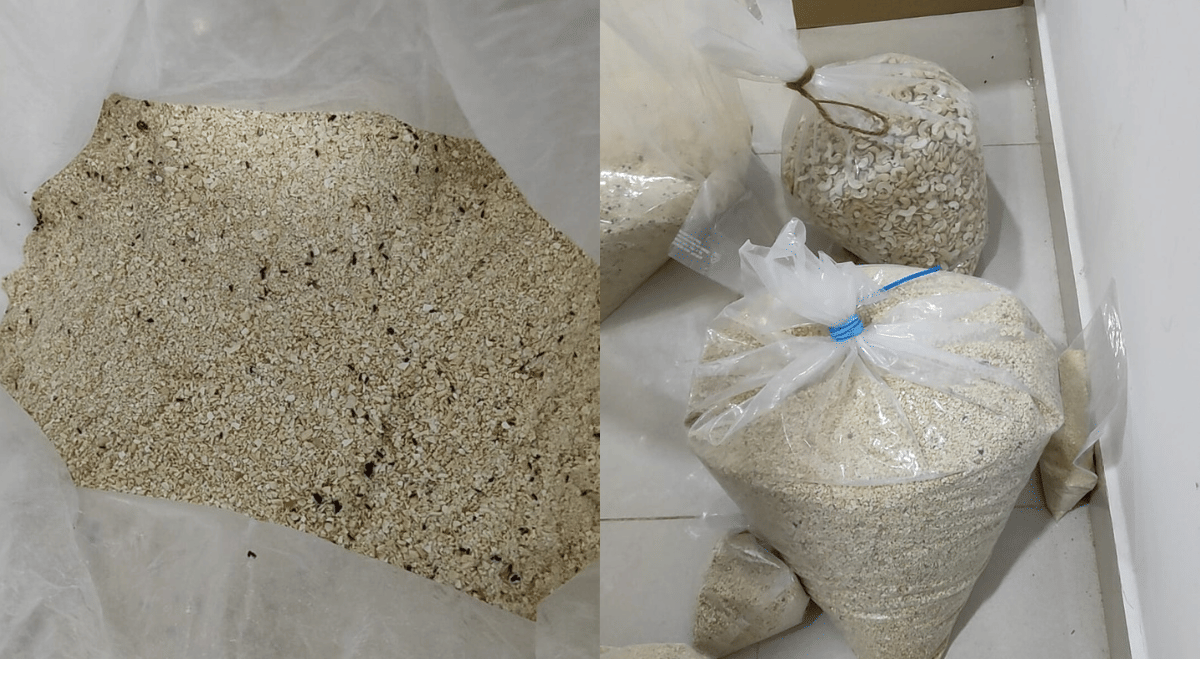
The FSSAI found 36 kg cashew infested with insects— discarded on the spot, and 210 kg cashew (worth about Rs 1.5 lakh) seized on suspicion of quality.
Action taken by FSSAI
The Union Minister of State for Health and Family Welfare Prataprai Jadhav told Rajya Sabha on 17 March that the FSSAI is responsible for laying down science-based standards and ensuring overall coordination.
The State Food Safety Authorities are primarily responsible for enforcement at the field level.
Designated officers (DOs) and Food Safety Officers (FSOs) under the Commissioner of Food Safety in the States/UTs are entrusted with the responsibility of enforcing the provisions of the FSS Act, 2006.
Surveillance drives, monitoring, regulatory inspections and random sampling of food products, including milk, ghee, spices, honey and paneer, are conducted throughout the year by state food safety departments and FSSAI’s regional offices.
These exercises aim to ensure compliance with quality and safety standards laid down under the Food Safety and Standards Act, 2006, and related regulations.
Over the last three years (2022–23 to 2024–25), a total of 5,18,559 food samples were analysed at different laboratories. During this period, 88,192 cases were decided with penalties, 3,614 cases resulted in convictions, and 1,161 licenses were cancelled, he said.
The FSSAI has also developed a Risk-Based Inspection System (RBIS) where the frequency of inspection is decided based on risk associated with food businesses and issued guidelines. Annual inspections are to be conducted for all food categories identified as high risk.
The total number of risk-based inspections done in the last three years (2022-23 to 2024-25) are 56,259, he said, adding that to strengthen the food regulatory ecosystem in the country, the FSSAI has notified 252 food testing laboratories for analysis of food samples and 24 Referral Food Laboratories for the analysis of appellate samples.
The FSSAI has also provided funds for the Mobile Food Testing Laboratory (MFTL) referred to as “Food Safety on Wheels” (FSW) to states/UTs.
The minister said it is an important means to combat adulteration as FSWs are equipped with basic infrastructure for on-spot testing of adulteration in various food commodities. Currently, 305 FSWs are deployed across 35 States/UTs.
On 10 February 2026, the Ministry of Health and Family Welfare provided the details of enforcement action on various food safety (including food adulteration) in the FY 2025-2026, according to which there were 1,55,306 samples tested, out of which 27,567 were found non-confirming.
(Edited by Ajeet Tiwari)
Also Read: ‘Coordinated conspiracy of national scale, foreign funding’—FSSAI’s case against social media users
High petrol taxes to fund freebies have made it unprofitable for firms to operate. So, they are doing adulteration to make profits.
Stop freebies and cut petrol taxes at State level.