





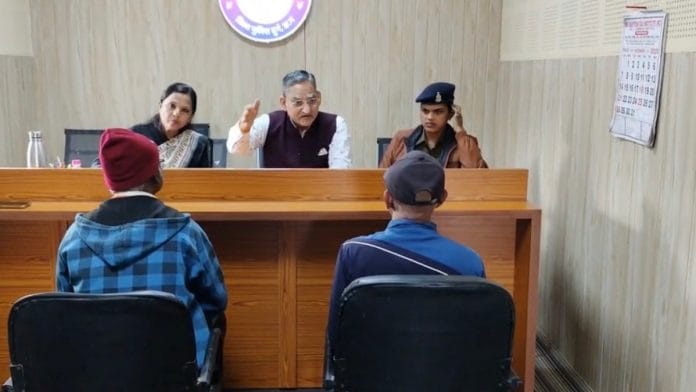



New Delhi: Mahila Thanas have long been the port of call for women with abusive husbands and in-laws. But something unusual has been unfolding inside the Mahila Thana in Chhattisgarh’s Durg. Every Sunday, the police station’s counselling centre, meant to hear women’s complaints, opens its doors to men who claim their wives beat, humiliate, or subject them to psychological abuse.
The Durg police station is the newest entrant into India’s nascent but growing men’s rights movement.
The initiative to counsel “mahila-peedit purush”— men victimised by women—was introduced in December 2025 by Senior Superintendent of Police Vijay Agarwal soon after he took charge in Durg. To make sure the aggrieved men are in a gender-balanced space, the thana has engaged a male counsellor.
While women still report domestic violence at triple the rate of men, Agarwal said the rise in male complainants had made the initiative important.
“Out of 10 domestic violence complaints we receive, let’s say roughly seven are from women but three are from men. And they had nowhere to go,” he told ThePrint. “When grievances go unheard, frustration builds up, and sometimes it leads to serious crimes. Counselling gives them a space to vent before the situation escalates.”
Also Read: Atul Subhash suicide was a ‘sacrifice’ for India’s men’s rights movement. It’s mainstream now
The Sunday bench
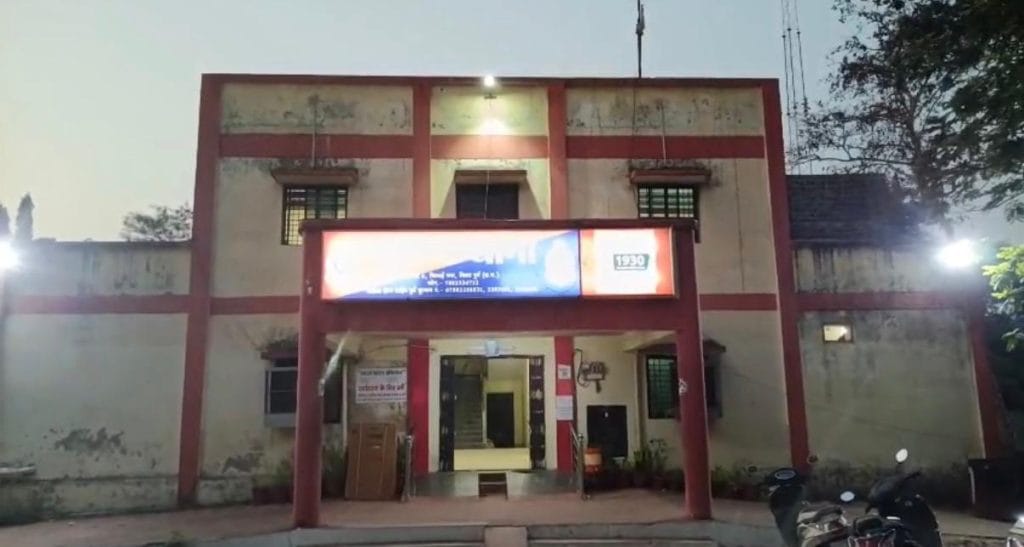
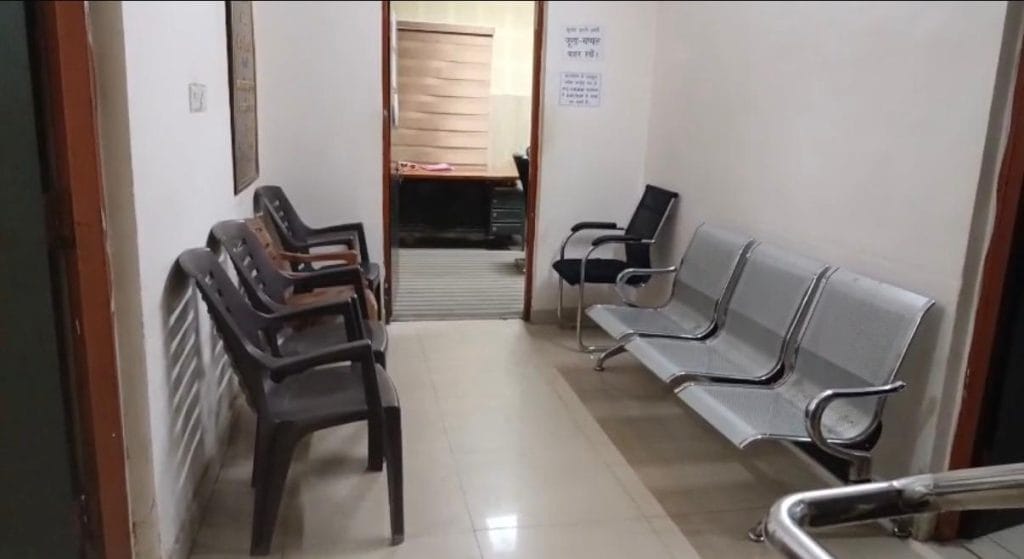
Every Sunday, a special ‘bench’ of psychologists, counsellors, and retired police officers gathers on the newly refurbished first floor of Durg’s Mahila Thana. While the ground level looks the worse for wear, with yellow plaster peeling from the walls, this floor boasts three soundproof, wood-panelled counselling rooms and a tidy verandah waiting area.
Inside one room, couples are called to sit face-to-face with the panel, which attempts to untangle a range of accusations: extramarital affairs, disputes over money, allegations of child neglect and, sometimes, physical violence. The other two rooms are set aside for couples who need privacy to talk things through between sessions.
“We get complaints ranging from the wife beating the husband to the wife’s brother beating the husband. Or even cases where the wife won’t let the father meet his children after separation,” Agarwal said.
What began as a small experiment has since expanded into the ‘Parivaar-Paramarsh Kendra’ (Family Counselling Centre), which also runs another Sunday bench for senior citizens facing abuse or neglect at home.
“Senior citizens come with issues like the daughter-in-law not giving them food, sons taking over their property and throwing them out, or children addicted to drugs beating their parents,” Agarwal said. “Both benches meet every Sunday with psychologists and retired officers. We spend time listening, and if a case needs domestic violence proceedings, we refer it.”
The point, he added, was to segregate cases as footfall rose and more men began walking into the thana with domestic complaints.
Tackling ‘bias’ in the system
Cases involving male complainants often require deeper engagement and a little more probing.
“When a husband is accused of domestic violence, the pattern is usually clear. But when the complainant is a man, the matter becomes more complicated,” said Amita Kumar, who has been practicing as a family councillor for over 20 years. “Three sessions are mandatory, but we keep calling them back until we’re satisfied that there’s actual harmony.”
Sometimes, things are not as they seem. Not all male complainants turn out to be victims.
“Sometimes a man files the application, but during sessions we find it’s his fault. But even in those cases one needs counselling to ensure harmony in households,” Kumar added.
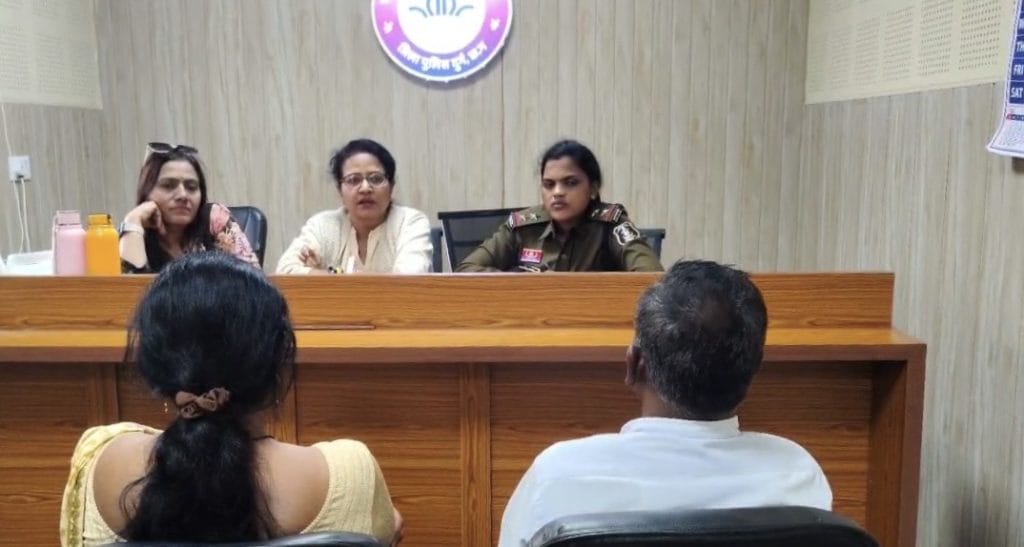
For six days a week, counselling at the thana is handled by three women — a psychologist, a sociologist, and a legal advisor. On Sundays, however, two male and two female panellists, including a retired police officer, sit together to hear cases.
“The change with the Sunday sessions is that it is a mixed-gender bench so that neither party can claim bias,” said Dr Anjana Srivastava, who has worked as a counsellor for 31 years.
The past few years have seen a “social shift”, she added, with more men willing to speak up, and word-of-mouth has been strong.
“People come from all age groups — those who have been married for decades, young couples married for 2 to 3 years, even those married for a few months. They feel this space is neutral, unlike family, which takes sides,” Srivastava said.
The initiative has filled a long-standing gap and addresses men’s concerns that the law is stacked against them, according to Ashok Joshi, a retired Additional SP now serving as a “male consultant” on the Sunday bench.
“Men often feel that legal remedies are mostly for women. There is no law under which men can seek relief for domestic issues,” he said. “Earlier, when a man came with such a complaint, we used to tell him to go to court. But even courts have no special provisions for men. That frustration pushes some toward alcohol, affairs, or losing focus at work. Ultimately, it’s their parents and children who suffer.”
Despite new focus on male victims of domestic violence, the data shows that women are the primary seekers of help at Durg’s Mahila Thana. Over the last three years, their share has been roughly four to five times that of men.
In 2023, women accounted for 1,333 of 1,598 cases, compared to 265 by men. In 2024, women registered 1,074 of 1,349 complaints and men 275. In 2025, it was 1,067 and 223 respectively.
The first Sunday counselling session for men was held on 7 December 2025. Since then, the thana has received 130 applications. Of these, 40 were settled through “compromise”, 20 were referred to court, and 52 men are still undergoing counselling.
Also Read: A Meerut wedding that got too risky. Dalit bride, Muslim groom, parents, venue ready
What men complain of
The grievances are a mosaic of the mundane and the murky. Some men say their wives refuse to take on household work or insist on hiring help. Others allege extramarital affairs, or complain that their wives spend more time caring for their own parents.
In rural areas, Joshi said, more women entering local politics due to reservations has become a new cause of marital tension.
“Men say their wives are too busy in panchayat work to give them attention. There are also disputes over the husband buying property in his parents’ name instead of the wife’s name,” he added.
Some who attended the sessions told ThePrint they were driven by a need to be understood, while others described it as a pragmatic alternative to court.
Shubham Das, married for a year, said he first approached the Mahila Thana because he believed “women officers” would understand his problems better.
He was then sent to the Sunday counselling bench to talk about the breakdown of his love marriage over everyday disputes. Shubham was upset that his wife didn’t cook regularly, spoke rudely to his mother, and relayed every household argument to her own family, which escalated matters.
“I’m barely home because of work so I have no idea what happens when I am not around. My wife would tell her mother about fights with my mother, and that was causing problems. And yes, I would lose my patience after drinking,” he said.
The counsellors asked him to stop drinking, and advised his wife to “keep family matters within the home”.
Roshan Yadav, married since 2023, was referred to the Sunday bench after approaching his local thana. He said the issues started with what he described as “small provocations.” According to him, his wife often snapped at him and picked fights over trivial matters. One such argument turned physical, leaving him with a fractured nose. His wife, in turn, went to the police and alleged mental harassment by his family — even though, he said, “we live in a rented house and my parents are in another city.”
After hearing both sides, the police sent him for counselling.
“After three sessions things settled, the police made us both give it in writing that we won’t repeat our mistakes,” he said.
Nasru, married for 12 years, refused to spell out her marital issues but said she had reached the point where she was unwilling to live with her husband anymore. She agreed to a “compromise” mainly because the alternatives were expensive and draining. In this case, her husband approached the thana first and the couple was called for joint counselling.
“They gave us dates and we had to go every time. Each session was about half an hour. They explained what was at stake, how our fights were affecting the children. I eventually agreed to settle because I have four children, and going to court again and again would have been costly and a headache.”
The Durg police, for its part, frames the initiative more as a social exercise than a policing tool.
“We want to avoid divorce cases wherever possible, reduce crimes linked to rising domestic violence, and maintain family values,” its press release reads. “Most importantly, we want to provide relief to men who feel unheard.”
(Edited by Asavari Singh)