





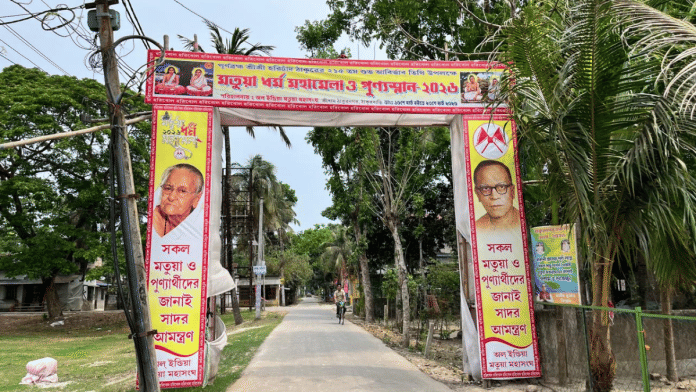


Bangaon/Gaighata (West Bengal): Radhakanto Haldar, a 70-year-old priest at a local temple in North 24 Pargana’s Thakurnagar—the nerve centre for Matuas, a Hindu religious sect founded in Bangladesh—is an agitated man.
And not without reason. Haldar’s father, a lower caste Namasudra from the Matua community, migrated to Bengal from then East Pakistan (now Bangladesh), after India’s partition in 1947 and settled with his family in Gaighata in North 24 Parganas, close to the Bangladesh border.
Radhakanto, who makes his living performing puja and religious rituals in the village, grew up in Gaighata. But in the Special Intensive Revision (SIR) of electoral rolls, his name was struck off while the names of six members of his family, including his wife, two sons and daughters-in-law, were included.
“I was told I do not have the required documents. I don’t have my birth certificate and there is not much I can do about it. I do not have Indian citizenship either. I haven’t applied yet. Let me see who dares to come here to throw me out,” Radhakanto told ThePrint in Thakurnagar.
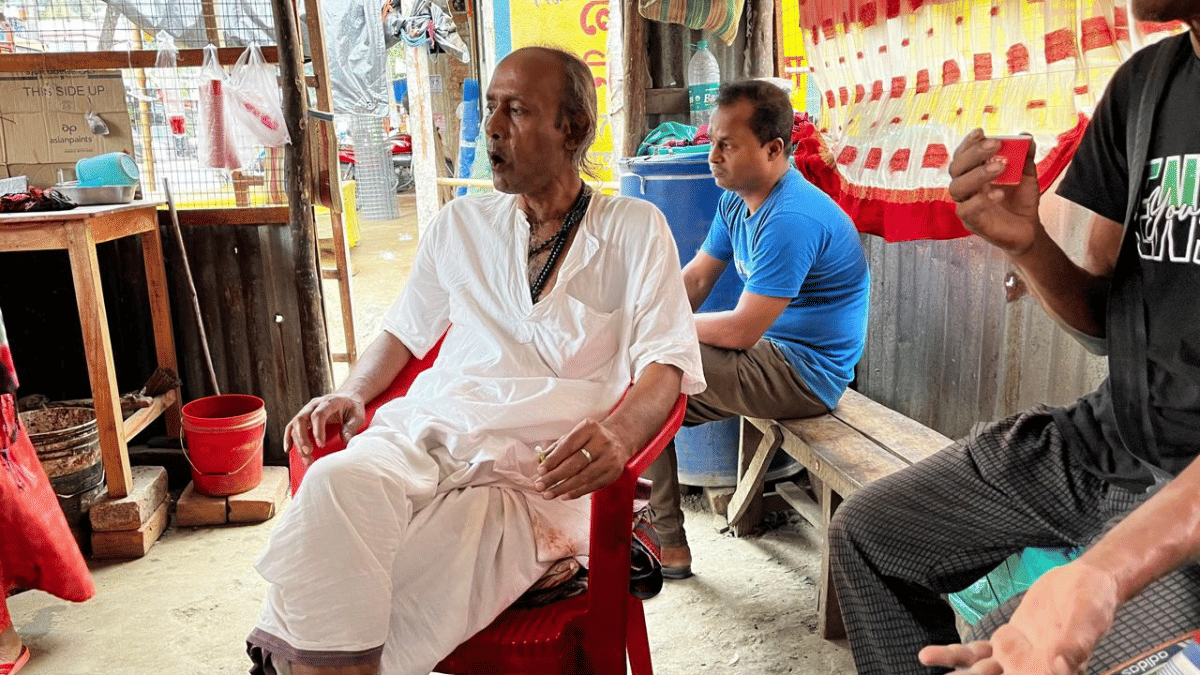
The septuagenarian has taken it as a personal affront that he can’t vote. “I have lived here almost all my life and now they are telling me I can’t vote but my family can? Is it some kind of a joke?” he asked, blistering with anger.
It’s a sentiment that is shared by Haldar’s neighbour Haraprosad Das, 53, who works in the medical sector. “There are so many people in our village who have someone or the other in their family, whose name has been deleted in the SIR. They have been told to knock on the doors of the appellate tribunals. But where are these tribunals?” Das said.
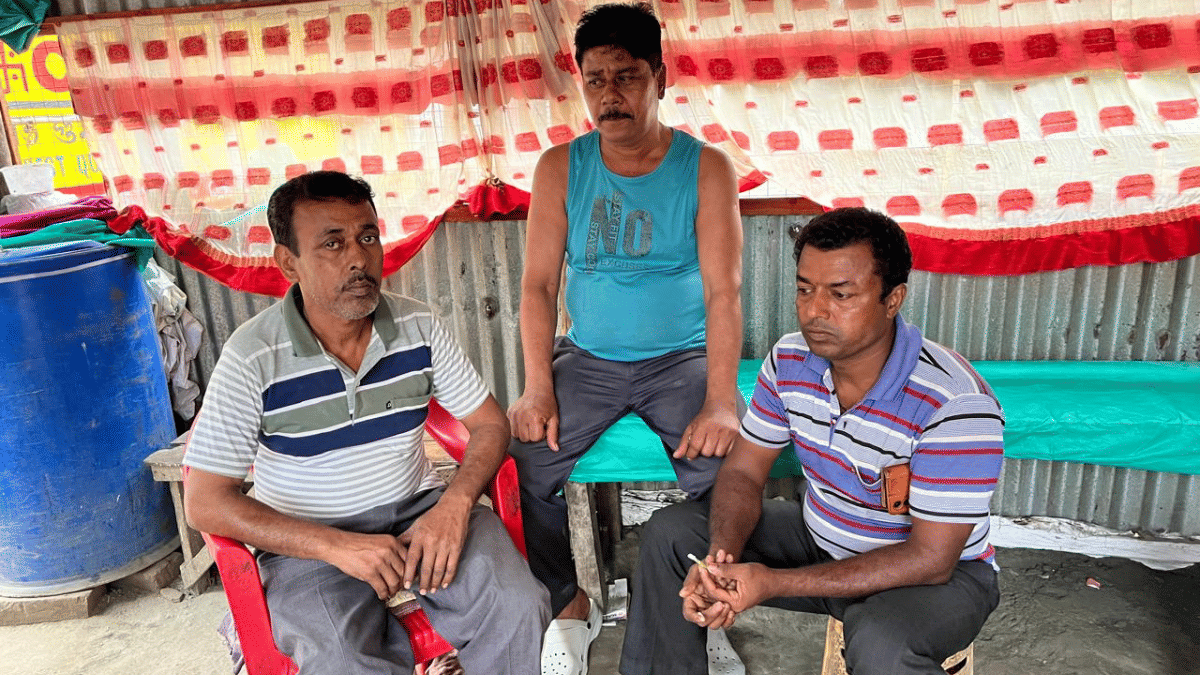
In North 24 Parganas, home to a significant number of Dalit Hindu Matuas, some 3.25 lakh names have been struck off the voters’ list following the SIR exercise and adjudication by judicial officers. An average of 9,869 names have been deleted in each of the 33 assembly constituencies in the district.
Matuas constitute approximately 30 per cent of North 24 Parganas’ total population of one crore and have over the years been wooed by both the ruling Trinamool Congress and the opposition BJP. Dalit Hindus, they have in recent years mostly supported the BJP.
While most of them migrated from Bangladesh to Bengal around Partition and during the 1971 India-Pakistan war, they have continued to come in later years too whenever they faced religious persecution in Bangladesh. But they do not have Indian citizenship. The 2019 Citizenship Amendment Act (CAA) was supposed to address this gap.
Also read: SIR fallout spills over to streets of Malda’s Sujapur as local residents block NH-12
SIR deletions & slow pace of granting citizenship
Das said that large-scale deletion of names in the SIR has created resentment among locals, who are already miffed at the snail’s pace at which they are being granted citizenship.
Since December 2019, when CAA was passed, just about 100 people in Gaighata, which has a population of over 4,000, have got citizenship, Das said.
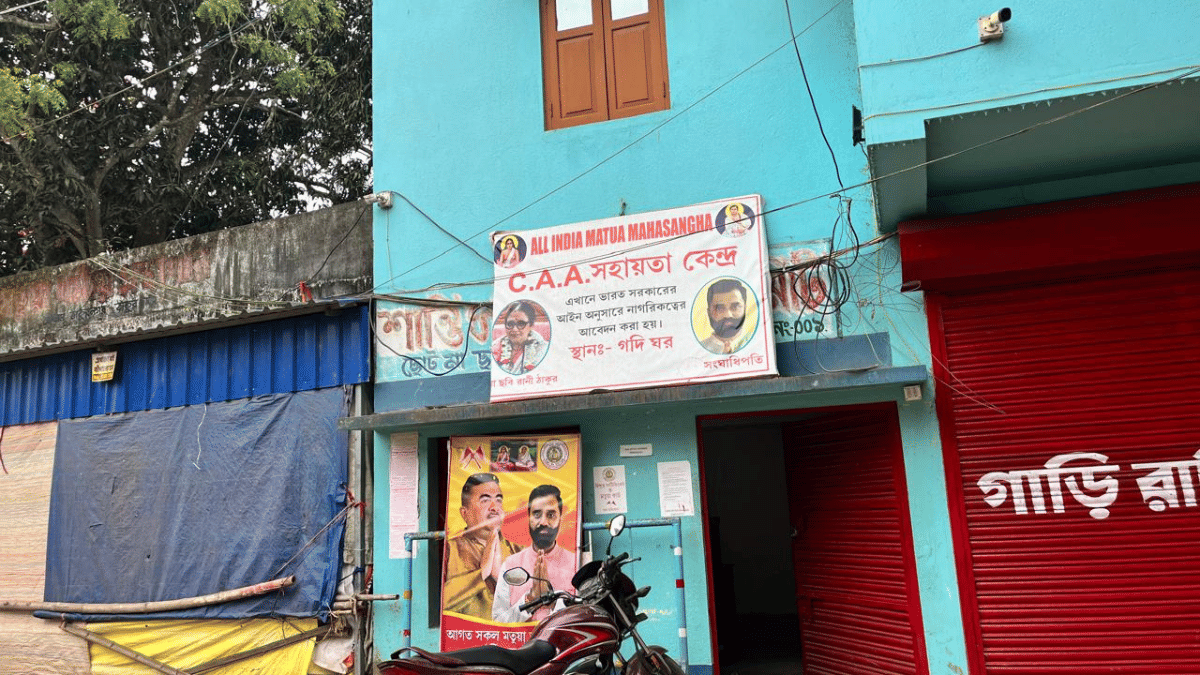
Camps have been put up in different spots across Bangaon and Gaighata to assist people applying for citizenship. In Gaighata’s Thakurnagar—the spiritual hub of the Matua community—a CAA help centre has been set up by the All India Matua Mahasangha inside the house of Shantanu Thakur, BJP Lok Sabha MP from Bangaon.
But Haldar said people in the villages are apprehensive about applying. A person applying for citizenship has to mention the address in Bangladesh, where he was living before migrating to India. “Villagers are apprehensive that once they give their Bangladesh address, the government might send them back. It is not true but nothing is being done to quell this misconception. This has resulted in many not coming forward to apply,” Haldar said.
District administration officials admit that the pace of giving citizenship has been slow across Bengal. Of the approximately 1.12 lakh applications received across West Bengal since March 2024 when the CAA rules were notified, only about 15,000 people have been given citizenship.
Of the 1.12 lakh applicants for citizenship, a little over 50,000 are from the two districts of North 24 Parganas and Nadia, a source told ThePrint.
CAA mandates providing citizenship to persons belonging to Hindu, Sikh, Buddhist, Jain, Parsi and Christian communities who have migrated to India after facing religious persecution in Pakistan, Afghanistan and Bangladesh.
Gopal Gayali, leader of BJP youth wing Bharatiya Janata Yuva Morcha, is the state coordinator for CAA (is this an official govt post or he is just doing it) and is helping people apply for citizenship. He told ThePrint that “vested interests” are spreading rumours that revealing one’s address will result in the government deporting them to Bangladesh. “These are lies being spread and we are trying to dispel such misinformation,” Gayali said.
Both Trinamool Congress and the opposition BJP blame each other for the slow pace of granting citizenship.
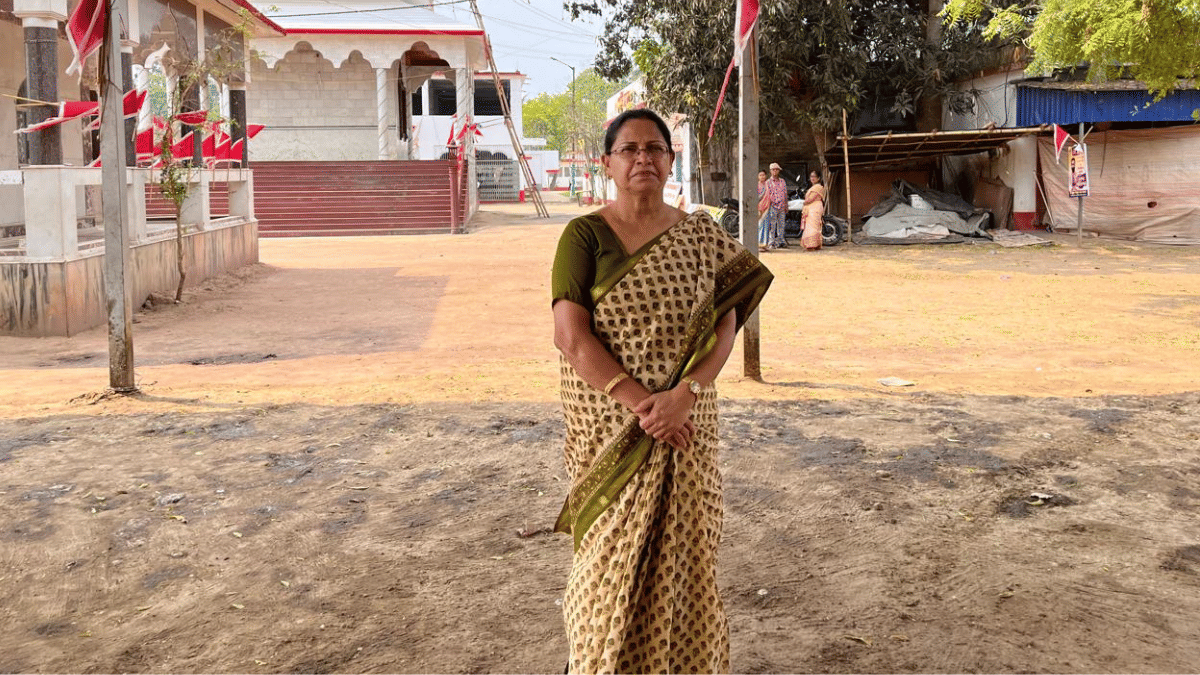
Mamata Bala Thakur, Trinamool Rajya Sabha MP and a prominent figure from the Matua community told ThePrint in Thakurbari that BJP was just fooling people in the name of CAA. “They (BJP) start talking about CAA only before elections. Once elections are over, they forget about it. Almost 90 per cent of the people living in Bangaon and Gaighata are refugees from Bangladesh. You can count on your fingers how many of them have got citizenship,” she said.
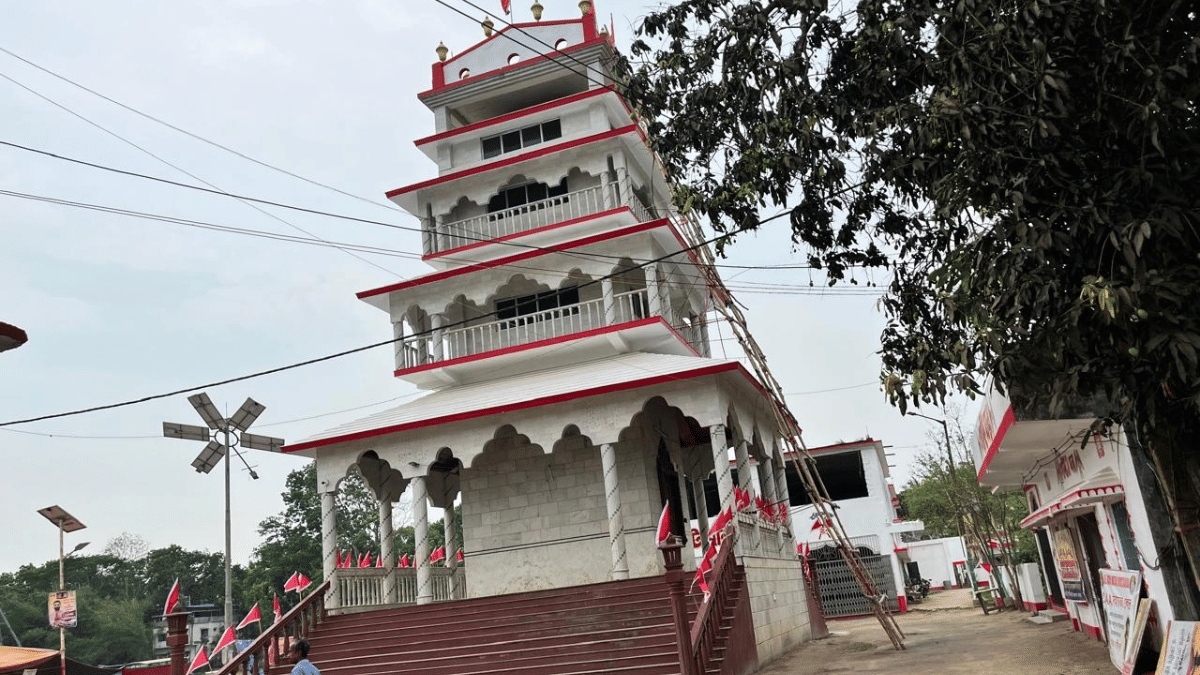
The Matua factor and a divided Thakurbari
Matuas are present in sizable numbers in the 33 assembly seats of North 24 Parganas and that is the reason both the ruling Trinamool Congress and opposition BJP in Bengal have wooed them.
In December 2025, Union home minister Amit Shah had said in Kolkata that the voting rights of individuals from the Matua community, who have applied for citizenship under CAA, will be preserved.
In March 2021, ahead of the assembly elections, Prime Minister Narendra Modi visited Orakandi in Bangladesh, the birthplace of Harichand Thakur, the founder of the Matua religious sect and his son Guruchand Thakur.
The ruling Trinamool Congress, on the other hand, established a university in North 24 Parganas, naming it after the founders of the sect in 2018. They have announced other welfare measures too for the people of the community.
Over the years, Matua politics has also divided Thakurbari, with the Thakur clan divided into two camps.
While Pramatha Ranjan Thakur—the great grandson of Harichand Thakur, who founded the Matua Mahasangh in Bangladesh—was a Congress MLA in the West Bengal Assembly in 1962, after his death the family gravitated to the TMC.
Pramatha Ranjan Thakur’s wife, Binapani, who was revered as the family matriarch and referred to as Boro Maa (older mother), never actively joined politics but was close to Trinamool chief Mamata Banerjee till her death in 2024.
Both her sons were initially with the Trinamool, but in 2015, the youngest, Manjul Krishna, joined the BJP along with his elder son Subrata, the sitting MLA from Gaighata. He is contesting from the seat this time too.
Subrata’s younger brother Shantanu is a Lok Sabha MP from Bangaon and is the junior shipping minister in the Modi government. His wife Soma is contesting on a BJP ticket from Bagda.
On the other hand, Binapani’s daughter-in-law, Mamata Bala Thakur is a Trinamool Congress Rajya Sabha MP. She lost the 2019 LS polls to Shantanu and was nominated to Rajya Sabha in February 2024.
Her daughter Madhuparna is contesting the assembly elections from Bagda on a Trinamool ticket against her sister-in-law Soma.
“Today, Thakurbari is divided on political lines. We never wanted this. We wanted the family to remain united. The people from the community are also watching us,” Rajya Sabha MP Mamata Bala Thakur said.
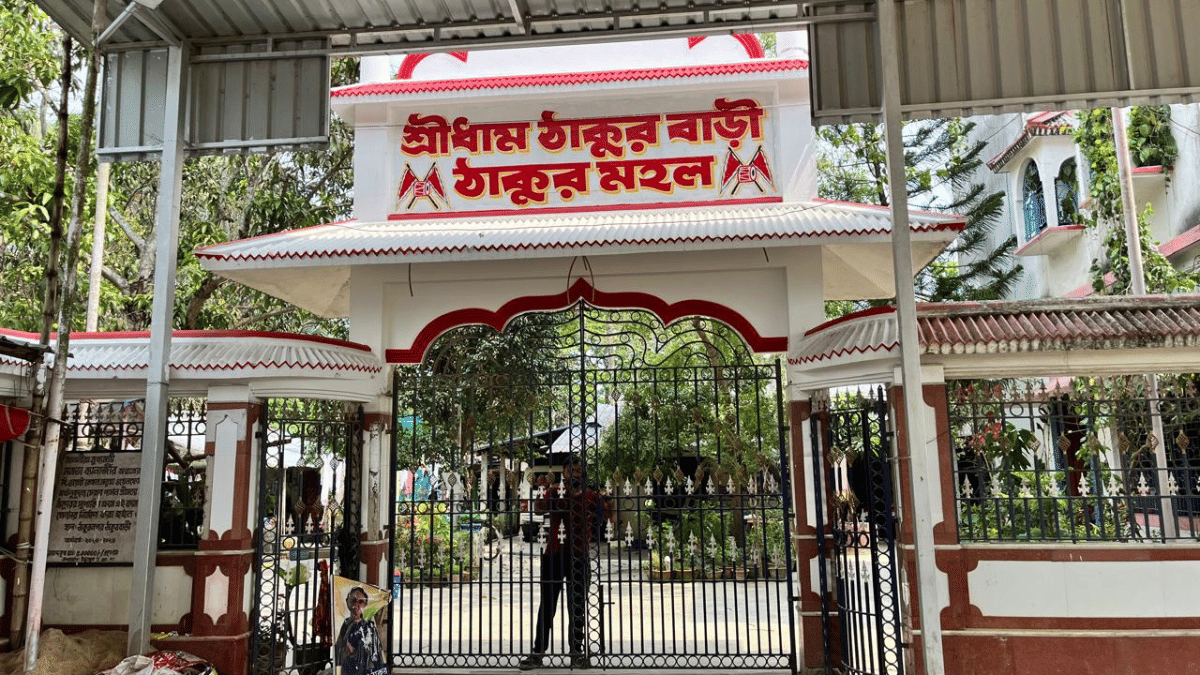
Thakurbari’s legacy has also got divided in the process. While Shantanu and Subrata claim to represent the BJP faction of the Matua Mahasangh, Mamata Bala said that she is carrying forward the legacy of Boro Ma, the family matriarch.
“We had wanted only one person from the family to enter politics. But that was not to be. My nephews have joined the BJP to further their own interests. In the process, the Matua votes have also got divided,” Mamata Bala said.
The Thakurbari factionalism will have a bearing on the Matua votes in the upcoming assembly elections too.
Swarno Dey, who runs a small business in Thakurnagar village said that the Matua leaders are using the people from the community as pawns. “They have entered politics to further their self interest. They are not interested in the community’s development. Nobody is bothered about us,” he said.
The septuagenarian Haldar agrees. “There is hardly any development here, roads are broken… There are no jobs, but the politicians do not see this. We were told in 2019 that we will get citizenship under CAA. Seven years down the line, even that has not come. Now, our names have also been struck off the electoral rolls. And there is nobody to hear us.”
As elections draw closer, the question that lingers is not just who will the Matua community vote for, but whether they will be allowed to vote at all—and whether the state will finally resolve the uncertainty that has defined their lives for decades.
(Edited by Viny Mishra)