





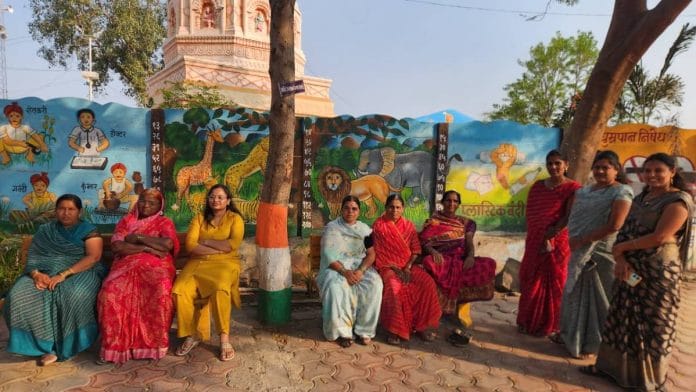



Soundala: As dusk settles over Soundala, a small village in Maharashtra, a young woman steps out of her home with a tray of tea, offering cups to a group of men, including the village sarpanch, gathered at her porch. The men sip the hot tea, smile and thank the woman.
It is an unremarkable ritual in rural Maharashtra—except that until a few years ago, the men seated there, all “upper caste”, would not have crossed the threshold of the house. In this village in Ahilyanagar district, where caste once quietly dictated distance, sharing tea has become a small but radical act of equality.
Soundala has rather attempted something audacious: the gram sabha on 5 February passed a resolution declaring the village “caste-free”—a declaration that forbids asking anyone’s caste and insists that public life be shared without hierarchy and residents speak the language of humanity.
The change is visible in simple gestures: residents sipping tea together at a Dalit family’s home, children playing without inherited boundaries, festivals celebrated together rather than apart.
The resolution was passed unanimously in a special “gram sabha” called by the sarpanch of the village located about 350 km from capital Mumbai, and in a district that has previously made headlines for polarisation and social boycotts.
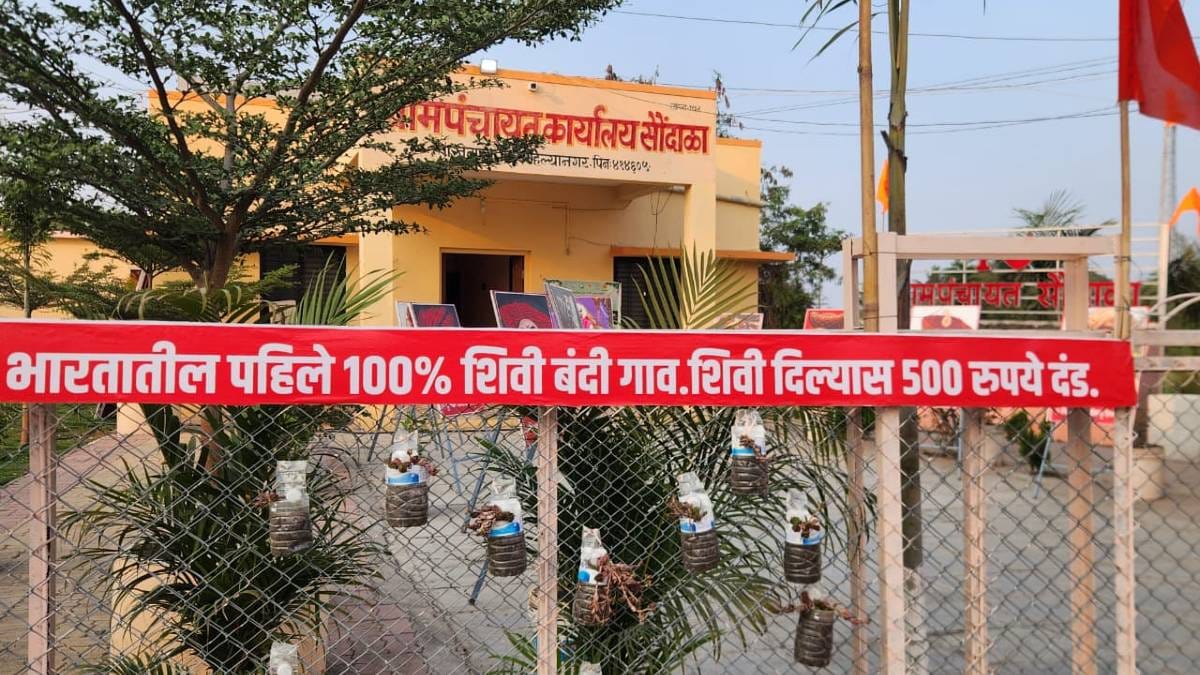
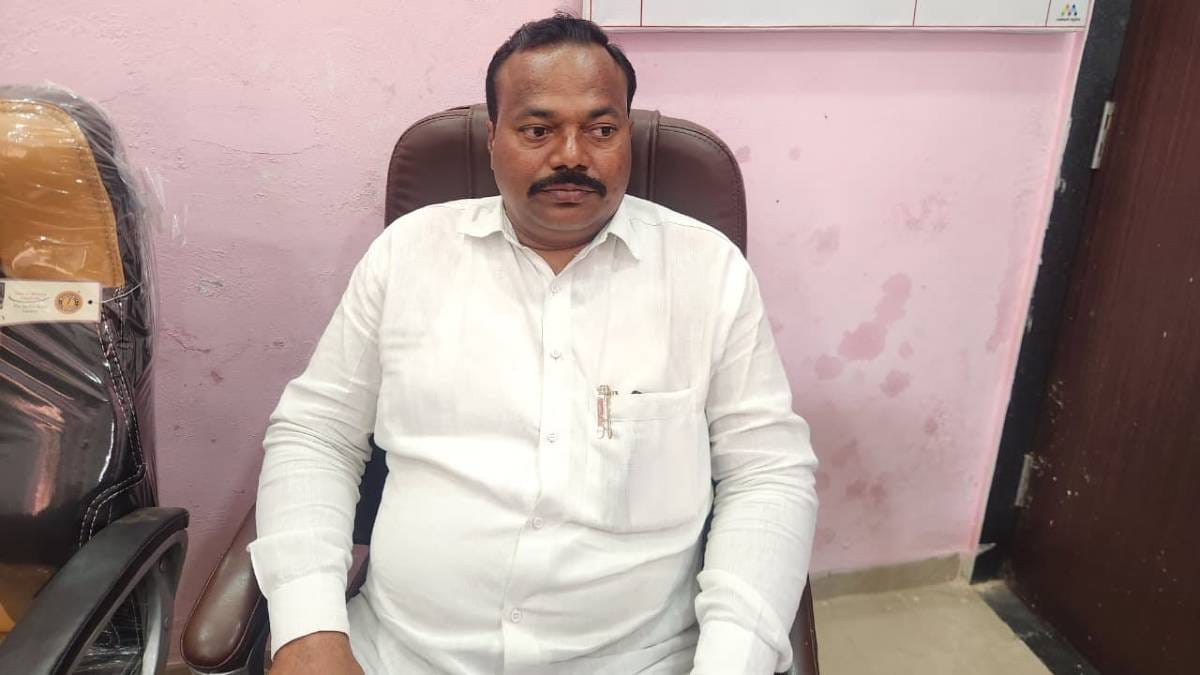
Sharad Argade, sarpanch of Soundala, spoke to ThePrint about the initiative and how his urgency was shaped partly by developments in neighbouring areas and across Maharashtra, where caste and communal tensions have sharpened in recent years.
“We consider the cow as our mother but we refuse to accept fellow humans as humans. This needs to be changed. People are refusing to buy goods from a person of a particular caste, at some places people are refusing to be treated by a lower caste doctor,” he said. “It was not long before such attitudes got entrenched in my village as well and I did not want that to happen. I had started fearing this and so decided to take action.”
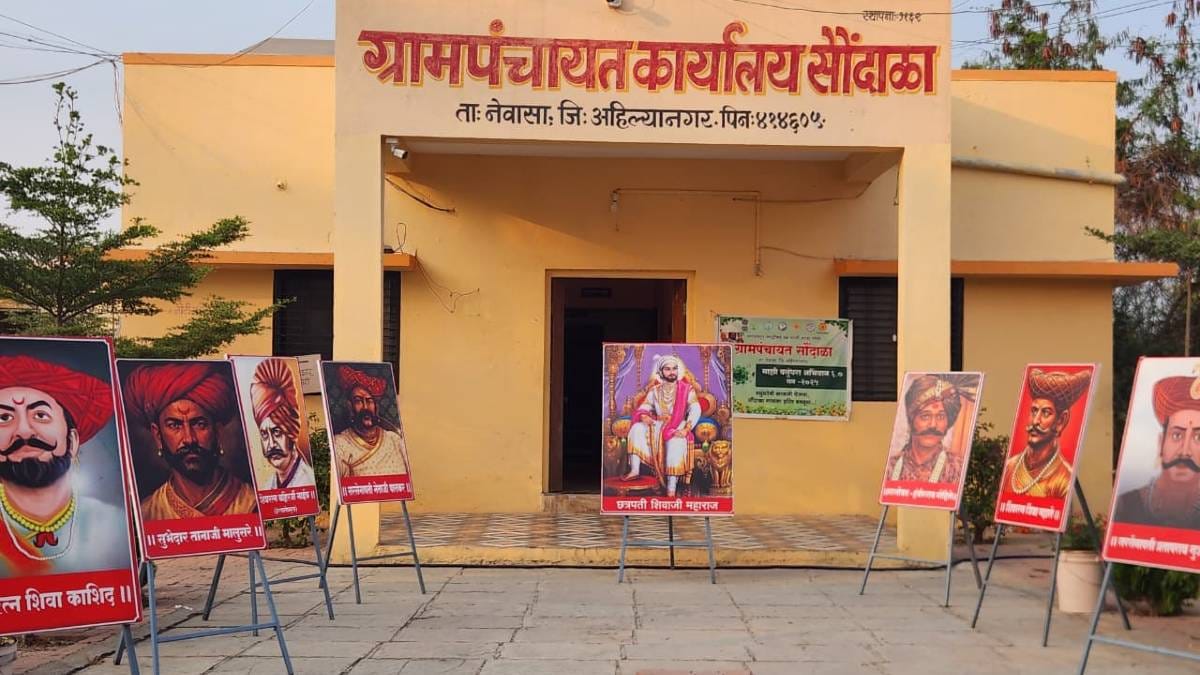
Outside the gram panchayat office, photos of Maratha king Chhatrapati Shivaji Maharaj and his mavalas (loyal warriors) are on display. This, Argade said, is meant to highlight the secular nature of Shivaji and how he did not differentiate between his mavalas on the basis of caste and creed. The photos serve as a reminder to villagers that an empire was built only because people were united and not divided on religious or caste lines, explained the sarpanch.
According to Argade, the caste-free village idea was suggested to him by a social worker, Pramod Zinjade, while his father’s influence and wife’s efforts also played a role in changing attitudes.
Soundala has not just declared itself as caste-free but residents have also undertaken other reforms, such as making the village free of slurs and verbal abuse, encouraging widow remarriage and women’s education.
Citing the example of neighbouring Beed district, currently facing open hostilities between Marathas and OBCs (Other backward Classes), Argade said: “Today, whatever is happening in our state is really concerning. People are getting divided and riots are taking place. In the future, it looks like we won’t have to fight Pakistan but might be baying for our own blood.”
The district of Ahilyanagar, known as Ahmednagar until 2023, has been in the headlines for the last two years over incidences of polarisation and communal tensions in multiple villages. Hate speeches, calls for social and economic boycott of Muslims, and disputes over religious structures have been commonly reported.
Also Read: Only 54% Indians are now looking to marry within caste, says report. Number was 91% in 2016
Slow transformation
Soundala has a population of about 2,500 and comprises around 450 families. Nearly 70% of residents belong to the “upper castes” and the rest are Dalit. Around 4 families are from the Muslim community while 10-15 families follow Christianity, according to the residents.
The 5 February resolution did not emerge overnight. Villagers credit Argade and his wife Priyanka, a former sarpanch, with slowly preparing the ground for it.
Argade has been active in local politics since 2003 while his father, Baba Argade, was a veteran communist leader in the village. When Argade first became the sarpanch of Soundala in 2003, (it is his third term now), he started introducing progressive ideas in the village. It was challenging in the beginning but attitudes started changing over time, he said.
When Priyanka became the sarpanch in 2018, she began visiting the houses of village residents as part of her duties and it became an unexpected site of personal transformation.
“Initially, even I was sceptical about going inside the houses of lower-caste people. I used to think about public opinion, that what would people say if I had water in their homes. I was hesitant,” she told ThePrint.
The hesitation reflected how deeply social conditioning runs. But with her husband pushing for reforms, she decided to confront it. “They say charity begins at home. Similarly, I had to bring the change I wanted to see,” she said.
Over time, people started warming up to each other. Pleasantries started getting exchanged and visits to each other’s homes started increasing—softening long-held distances.
Two months before the caste-free resolution, the village had passed another symbolic resolution: that every morning, around 10 am, the national anthem would be played on a loudspeaker atop a temple. People began standing in honour of the anthem even if they were working in their fields.
“By doing so, I wanted to let people know that we are Indians first. That we are just sons of our country and not divided on caste-lines,” Argade said.
Then, on 5 February, the panchayat convened a special gram sabha. A blood donation camp was organised that morning. In the afternoon, Argade placed the resolution before the village.
“Just like (freedom fighter) Bhagat Singh said, I told them that our blood is neither saffron nor green nor any other colour. All of us have the same red blood that once mixed cannot be separated. The creator did not make this difference,” Argade said. “And I made them understand that some selfish people wanted to divide the society.”
The resolution—a copy of which was reviewed by ThePrint—declares that Soundala “will not differentiate based on caste, religion, creed or colour” and will function on the motto: “My caste is humanity”.
It further states that all public spaces, temples, crematoriums, water sources, schools, functions and government services will be equally accessible to all, and there should not be any communal tension over statements related to caste or religion or religious boycott or injustice because of caste. No member of the village should share any incriminating post on social media and, if caught, would invite punishment.
Also Read: Did the British invent caste in India? Yes, at least how we see it now
A different time
According to many residents, overt discrimination was already on the decline in Soundala. But older villagers also remembered a different time.
Sanjay Gore, in his 40s and in whose house the sarpanch and others had tea, recalled being pulled away from wedding meals as a child because he belonged to a Scheduled Caste. He said his community was made to sit separately, often near cattle, and bring their own utensils. Sometimes, they were served leftovers or waste food.
“Caste divide was very prevalent 25-30 years ago,” he told ThePrint.
“When I was a child, if there was a marriage in our village of open category (upper castes), we SC community would not be invited. And since I was a child, if I sat to eat with them, I was pulled up by my arm and thrown out. I have experienced it all,” Gore said. “But today, things are different.”
Mangal Bodhak, 59, remembered separate wells for different castes and being called late to village functions. Lower-caste families were expected to stand at a distance. “We were made to stand far off and were asked to remove our chappals (footwear) at a distance,” Bodhak said.
Ruksaana Shaikh, one of the few Muslims living in Soundala, also shared her experience while visiting the homes of others after her marriage.
“Even if they used to offer me food, they used to ask me to pick up my utensils and wash them. After that I stopped going to their houses,” she said.
Residents said such practices had already begun fading over the past two decades but the resolution now formalises the anti-discriminatory stance.
“That has now changed. In the festivals that we celebrated since 5 February, we all sat and ate together, which was not the case earlier,” said Bodhak.
According to several residents, their relatives in other villages continue to feel outcast but in Soundala, there is a feeling of equality.
Caste, however, remains embedded in government policy, particularly in matters of reservation for education and jobs.
“Yes, the policies of the government will remain so. I am not saying that reservation needs to go. But what I want my village to do is keep caste only on government paper, and not in everyday behaviour,” said the sarpanch.
Since the 5 February resolution, the villagers have celebrated two festivals together, including Shiv Jayanti. “My generation faced difficulties but my kids do not feel the difference. They go to school and play with everyone without ever being sidelined,” Jyoti Bodhak, another villager, told ThePrint.
Other social experiments
The caste-free declaration is not Soundala’s first collective reform.
Residents have also passed a resolution penalising the use of abusive language. A fine of Rs 500 is imposed on those found guilty, with CCTV cameras installed in parts of the village to verify complaints. Panchayat members said so far, 13 people have been punished for abusing each other and that alcohol-fuelled quarrels have declined since the rule was enforced.
A year ago, the village formally discouraged discriminatory widowhood practices and began supporting widow remarriages. The gram panchayat provides financial assistance of Rs 11,000 in such cases and has already facilitated at least one remarriage.
There is also support for girls’ education, with uniforms, books and stationery provided up to Class 12.
In an unusual move, the village has instituted a mandatory two-hour “no mobile” window for students each day, during which panchayat members conduct rounds to encourage study.
“We believe prevention is better than cure,” Argade said. “Instead of regretting later, it is better to take precautions now.”
(Edited by Nida Fatima Siddiqui)
Also Read: As HC asks UP DGP to justify mentioning castes in FIRs, a look at past court rulings on the practice
Not enough. It has to come from the upper echelon of the religious society. These Shankarcharyas have to change their mindset. How many of them have talked about elimination of caste which just keeps Hindus divided and vulnerable to external forces.
The day I see a Dalit person being the head priest in a big temple is the day I believe caste has truly ended. I whole heartedly advocate for its elimination for the sake of Hindu society. Separation of smriti and Shruti is a must. It’s a shame that people like us living in urban areas just don’t understand how bad it is in some rural areas. Modernity is here and if you can’t reform then you are screwed.