





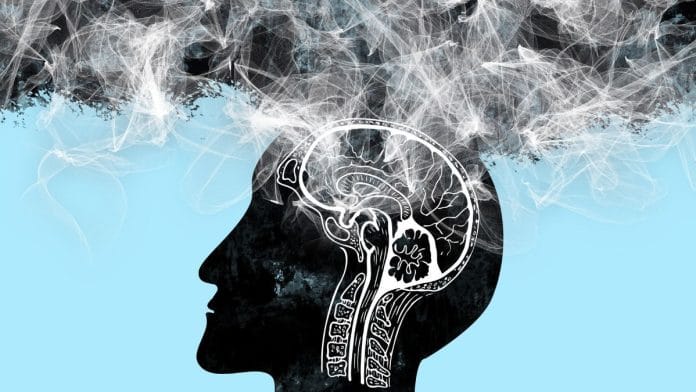



New Delhi: Nearly two-thirds of those stricken with Alzheimer’s disease are women. For decades, this gap was largely explained so far by women’s longer life spans, but a new review now points out that biological changes during midlife—especially menopause—are a key factor shaping risk.
Published in The Journal of Clinical Investigation Monday, the study by neuroscientist Dr Lisa Mosconi of Weill Cornell Medicine, a New York-based academic medical centre, argues that Alzheimer’s may begin much earlier than previously thought, often between the ages of 45 and 65.
This period overlaps with menopause, when hormone levels—particularly estrogen—decline sharply, triggering changes in the brain. Estrogen is a hormone present in both men and women, but it is produced in much higher concentrations in women where it plays a key role in regulating the menstrual cycle, reproductive health and supporting brain function, including memory and how brain cells work.
Alzheimer’s is the most common form of dementia—a group of conditions that affect memory, thinking and behaviour, and usually seen in older age. While symptoms of Alzheimer’s typically appear later in life, the disease develops slowly over many years, with early changes in the brain often going unnoticed.
“Alzheimer’s is not a single-risk disease. It is multifactorial in its causation. The biggest irreversible risk factors are genetics and ageing. Gender becomes a significant risk factor after menopause in women,” said Dr Manjari Tripathi, Professor of Neurology at All India Institute of Science (AIIMS) in New Delhi. She said that some genes can increase a person’s chances of getting Alzheimer’s, but they are not the only reason someone develops the disease.
“There are many other contributors—uncontrolled hypertension, diabetes, smoking, alcohol intake, sedentary lifestyle, exposure to pollution, poor diet, lack of physical activity, and not engaging the brain. Social isolation, not learning new things, sleep disturbances like insomnia and sleep apnea, and chronic stress—all of these are risk factors,” Dr Manjari told ThePrint.
Also Read: A new blood test can ‘clock’ age when Alzheimer’s symptoms may begin. What doctors feel about it
Estrogen and the brain connection
The review brings together decades of research on women’s brain health, hormonal changes, and Alzheimer’s disease. Instead of presenting new trial data, it compiles findings from brain imaging studies, biomarker research, population-level data and studies on hormone therapy.
During menopause, falling estrogen levels reduce the brain’s ability to regulate energy use and protect against damage. This can lead to changes linked to Alzheimer’s, including buildup of amyloid and tau proteins—proteins that can accumulate abnormally and damage brain cells—and reduced brain activity, meaning the brain is not functioning or using energy as efficiently as it should.
Doctors say these effects are visible in clinical practice as well. Dr Tripathi said, “There are neuroendocrine effects on the brain when hormonal levels, particularly estrogen, decline around menopause and post-menopause. This endocrine effect on the brain causes an increase in memory lapses and can cause mental fogginess and eventually in high-risk individuals and women, eventually lead to cognitive decline and dementia, particularly of the Alzheimer’s kind.”
She added that a decline in estrogen also increases the vascular risk factors, making postmenopausal women vulnerable to strokes as well as heart attacks, leading to vascular cognitive decline. The study also highlights that a 45-year-old woman has about a one-in-five lifetime risk of developing Alzheimer’s—roughly twice that of a man of the same age.
At the same time, factors such as early menopause or surgical removal of ovaries may increase that risk further by shortening exposure to estrogen.
The study finds that the timing of menopause affects dementia risk. Women who reach menopause later, after age 55, have a lower risk of Alzheimer’s and other forms of dementia, while early or surgically induced menopause may increase risk significantly. It also highlights that ‘brain fog’ and self-reported memory issues during menopause are common and may not be harmless—these could be early signs of changes linked to cognitive decline.
Call for a paradigm shift
The study calls for a major shift in how Alzheimer’s is understood, urging a move away from seeing it only as a result of ageing.
“A paradigm shift: from viewing Alzheimer’s disease risk as a by-product of generalised aging to validating midlife neuroendocrine aging as a distinct window of vulnerability, and an opportunity for prevention,” the study says.
The research points to the existing debate on whether menopause hormone therapy (MHT) can reduce the risk of Alzheimer’s. Medical experts say it is biologically plausible, since estrogen supports brain function, but clinical findings remain inconsistent. Dr Tripathi explained that any approach to reduce cognitive decline has to be multipronged, pointing to the need to manage biological and lifestyle risks, together with early signs like changes in memory, attention, mood, or behaviour during midlife.
According to the World Health Organization, there were 57 million people with dementia worldwide in 2021 and over 60 per cent lived in low-and middle-income countries. Every year, there are nearly 10 million new cases.
The Global Burden of Disease study published in The Lancet Public Health in 2019 found that India had an estimated 3.84 million people living with dementia. However, there is no centralised system in the country that maintains official data on dementia cases.
The study also highlights the scale of the challenge, noting that the number of women entering menopause is set to rise sharply in the coming decades. “By 2050, over 1.2 billion women worldwide will be in or approaching menopause. The stakes are global, and the opportunity is urgent: to redefine AD prevention through sex-specific, time-sensitive, and biologically informed strategies that translate science into scalable, actionable care,” the study warns.
However, Dr Annu Aggarwal, consultant neurologist and specialist in Cognitive and Behavioural Neurology at Kokilaben Dhirubhai Ambani Hospital in Mumbai, said, “There is a lot of focus on midlife as a ‘window’, but it should not be overstated. Menopause can cause symptoms like brain fog and irritability, but not all women will go on to develop Alzheimer’s.” She explained that once estrogen declines, women lose some of the natural protection they had, and need to be much more careful about blood pressure, weight, diabetes, and overall health.
“Don’t wait for menopause—start in your mid-40s. Regular exercise, healthy eating, stopping smoking, limiting alcohol, and routine health checks are key. It is about preparing for menopause, not reacting after it happens. Prevention here is not one treatment—it is about building habits early so that health issues don’t hit hard later,” Dr Aggarwal said.
(Edited by Nardeep Singh Dahiya)
Also Read: 5 ways to lower the risk of dementia