





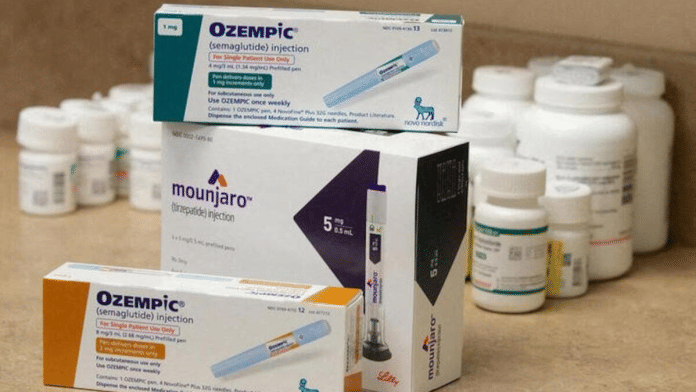



New Delhi: Until now, they were largely regarded as a ‘wonder drug’ to treat diabetes and obesity. But a new study suggests that the blockbuster GLP-1 drugs may have another unexpected effect: they may also lower the risk of addiction to substances such as alcohol, nicotine and opioids.
Glucagon-like peptide-1 (GLP-1) receptor agonists, a class of drugs that mimic a gut hormone that regulates blood sugar and appetite in people with Type 2 diabetes, may also lower the risk of substance use disorder, according to the study published in The BMJ on Wednesday.
The study, based on the electronic health records of more than six lakh people with Type 2 diabetes, found that people taking these medicines were less likely to experience severe outcomes such as hospitalisation, overdose or death related to addiction.
The findings of researchers at the Washington University School of Medicine in St. Louis come at a time when GLP-1 drugs are transforming the treatment of diabetes and obesity worldwide. Medicines like semaglutide are widely prescribed not only to control blood sugar but also to help patients lose weight and maintain long-term weight control.
Developed by Denmark-based pharma giant Novo Nordisk, semaglutide is the main active ingredient in the anti-obesity drugs sold under brand names Ozempic and Wegovy, and is among the most commonly used drugs in this study.
Other drugs used in the study include liraglutide, developed by Novo Nordisk, and dulaglutide, developed by US-based drugmaker Eli Lilly.
Originally developed to treat Type 2 diabetes, these medicines work by helping the body release insulin, slowing stomach emptying and sending signals of fullness to the brain. Over the past decade, clinical trials have shown they can also produce substantial weight loss, which has led to their growing use in obesity treatment.
Also Read: Weight-loss drugs are changing. Here’s what to know about GLP-1s
Large study of 6 lakh patients
In the new study, researchers analysed electronic health records of more than six lakh people with Type 2 diabetes receiving care through the US Department of Veterans Affairs, the country’s healthcare system for former military personnel.
Participants were divided into two groups: those without a pre-existing substance use disorder and those who already had one.
The researchers tracked their health records for up to three years from the time they began treatment with either a GLP-1 receptor agonist—most commonly semaglutide, liraglutide or dulaglutide—or another class of diabetes drugs known as SGLT2 inhibitors.
SGLT2 inhibitors work by blocking the kidneys from reabsorbing glucose into the bloodstream, causing excess glucose to be excreted through urine.
After three years of follow-up, patients taking GLP-1 drugs were about 14 percent less likely to develop substance use disorders involving alcohol, opioids, cocaine, cannabis and nicotine compared with those taking SGLT2 inhibitors.
Depending on the substance, the risk reduction ranged from about 14 percent to 25 percent, with the largest decline seen in opioid addiction.
“In addiction medicine, a lot of treatments target just one thing—for example, a nicotine patch helps with smoking, but not alcohol—but there is no medication that works across addictive substances, let alone all of them,” said senior author Dr Ziyad Al-Aly, a WashU Medicine clinical epidemiologist.
“The revelation about GLP-1 medication is that it really works against all major substances, and it works uniformly, not because it acts against alcohol or opioids or nicotine specifically, but because it is likely acting against the craving itself. It blunts that craving that pulls people toward whatever they’re addicted to,” he added.
The analysis also showed lower risks of severe outcomes among people who already had substance use disorders at the start of the study.
In this group, emergency department visits related to addiction dropped by about one-third, hospital admissions declined by around a quarter, overdoses fell by 39 percent, and deaths linked to substance use disorders reduced by roughly 50 percent.
Researchers around the world are exploring whether these medicines could help treat addiction directly.
For instance, Eli Lilly is testing a follow-up drug to tirzepatide called brenipratide in phase 3 trials for alcohol use disorder. The company is also studying whether the drug can help prevent relapse in people who have recently quit smoking.
Brenipratide is an experimental drug being developed by Eli Lilly. It is a once-monthly injection currently being tested in Phase 2 and Phase 3 trials for addictions such as alcohol, nicotine and opioid use, as well as mental health conditions including depression and schizophrenia.
Why these drugs may affect cravings
Doctors say the findings match what some patients have reported after starting GLP-1 medicines.
Chennai-based diabetologist Dr V. Mohan, an obesity researcher and chairman of the Madras Diabetes Research Foundation (MDRF), explained that GLP-1 receptor agonists act on areas of the brain that control pleasure and reward. “In the brain, there is a centre which controls hedonic pleasures,” he said.
Hedonic pleasure refers to the sense of enjoyment or reward people get from activities such as eating certain foods, drinking alcohol or smoking.
“These drugs work on that centre and give a feeling of satiety,” Dr Mohan added, noting that patients often say they no longer feel the same urge to snack or eat sweets once they start treatment.
“The size of the study is one of its main strengths,” said Dr Ambrish Mithal, chairman and head of endocrinology and diabetes at Max Healthcare.
However, he noted that the research is based on existing health records and is not a randomised clinical trial. Some patients report an aversion to alcohol or smoking while taking these drugs, but others may not experience the same effect.
Researchers say clinical trials will be needed to test whether GLP-1 medicines can be used directly to treat addiction.
(Edited by Sugita Katyal)
Also Read: 3 popular GLP-1 drugs may work on rare & hard-to-treat genetic obesity, Japanese researchers find